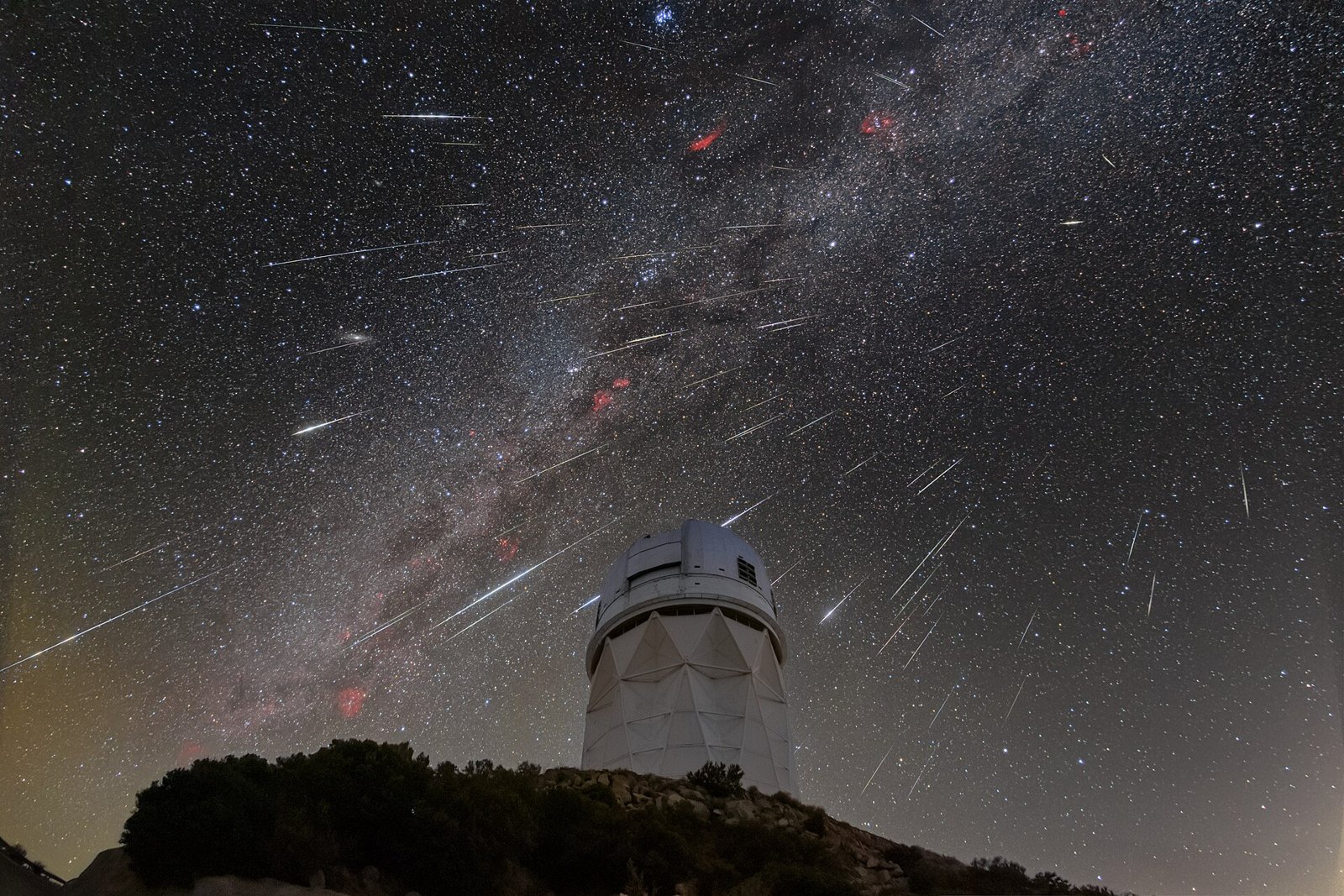
After the Orionids (Oct. 21–22), the best meteor showers left in 2026 are the Leonids, peaking Nov. 16–17, and the Geminids, peaking Dec. 13–14. The Geminids get a thin crescent Moon (about 15% lit) this year, making them the best photo opportunity of the season.
Dates and Moon phases below come from the American Meteor Society's 2026 calendar. For a full how-to on settings, see our guide to photographing the Orionids.
2026 meteor shower calendar
| Shower | Active | Peak night | Moon at peak | Notes |
|---|---|---|---|---|
| Orionids | Oct. 2 – Nov. 7 | Oct. 21–22 | 74%, waxing gibbous | 10–20/hr; shoot after moonset |
| Southern Taurids | Sept. 20 – Nov. 20 | Nov. 4–5 | 25%, waning crescent | Low rates, slow fireballs |
| Northern Taurids | Oct. 20 – Dec. 10 | Nov. 11–12 | 4%, waxing crescent | Near-dark skies |
| Leonids | Nov. 6–30 | Nov. 16–17 | 39%, waxing crescent | Best after midnight |
| Geminids | Dec. 4–17 | Dec. 13–14 | 15%, waxing crescent | Year's strongest; starts in the evening |
| Ursids | Dec. 17–26 | Dec. 21–22 | 89%, waxing gibbous | 5–10/hr; Moon interferes |
| Quadrantids | Dec. 28 – Jan. 12 | Jan. 3–4, 2027 | 18%, waning crescent | ~25/hr; short peak favors Europe |
Which showers are worth a night out?
Geminids (Dec. 13–14): The headline event. The radiant in Gemini is up by mid-evening, and the crescent Moon sets early.
Northern Taurids (Nov. 11–12): Few meteors, but a nearly moonless sky and a reputation for slow, bright fireballs.
Leonids (Nov. 16–17): Modest rates in most years, but they're fast and the Moon sets in the evening.
Ursids and Quadrantids: The Ursids fight a bright Moon. The Quadrantids can be strong, but the peak is short, and AMS predicts it near 3:30 UT on Jan. 4, 2027, which favors Europe and western Asia.
What gear do you need?
- A camera with manual exposure and a wide, fast lens (14–24mm, f/1.4–f/2.8)
- A sturdy tripod and an intervalometer
- Spare batteries and a lens warmer for cold, dewy nights
- A red flashlight to protect your night vision
What are the quick settings?
| Setting | Starting point |
|---|---|
| Aperture | Widest available |
| ISO | 1600–3200 |
| Shutter | 10–20 seconds |
| Focus | Manual, on a bright star |
| Format | Raw |
| Drive | Continuous intervals for hours |
Where should you aim?
Meteors can appear anywhere in the sky. Aim about 45 degrees from the radiant toward the darkest part of the sky, and include a foreground such as trees, a ridge or a building for scale.