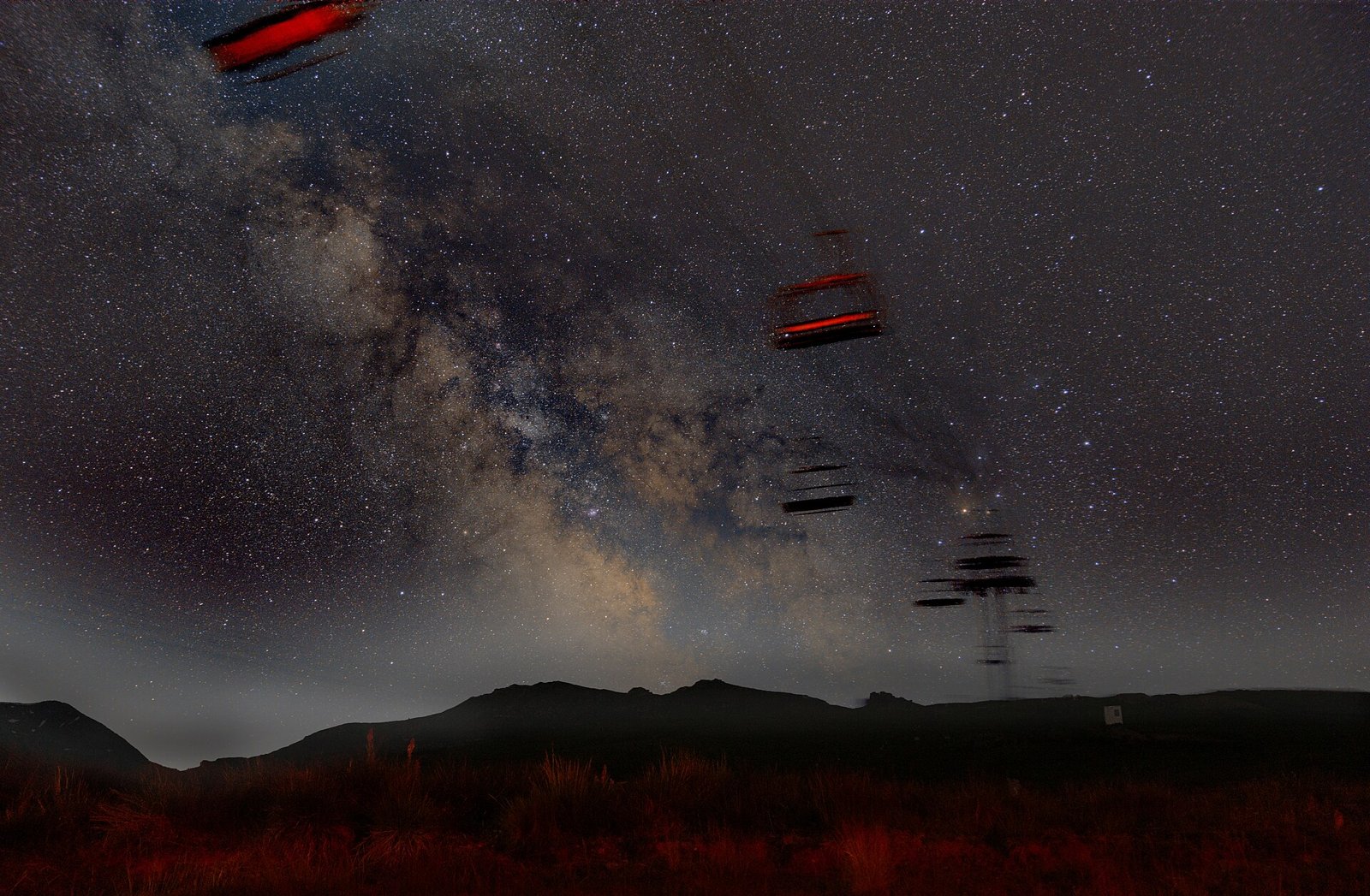
To photograph the Milky Way, go to a dark site near the new Moon, put your camera on a tripod, and use a wide lens at f/2.8 or faster, ISO 3200 and an exposure of about 15 to 25 seconds. Use the 500 rule to set the shutter so stars stay sharp, and focus manually on a bright star.
You don't need a telescope or star tracker to start, just a camera with manual control and a fast wide lens. This guide covers settings, the 500 rule, gear and processing. To put the skills to work this fall, see our guide to photographing the Orionids and the 2026 meteor shower calendar.
Milky Way camera settings
| Setting | Starting point |
|---|---|
| Mode | Manual |
| Lens | 14–24mm full frame (10–16mm APS-C) |
| Aperture | f/1.4–f/2.8 (wide open) |
| ISO | 1600–6400 (start at 3200) |
| Shutter | Per the 500 rule, usually 10–25 sec |
| Focus | Manual, magnified on a bright star |
| White balance | About 3800–4200K |
| File | Raw |
| Stabilization | Off |
| Timer | 2–10 sec delay or remote |
How does the 500 rule work?
Max shutter (sec) = 500 ÷ (focal length × crop factor)
| Lens and sensor | Max exposure |
|---|---|
| 14mm full frame | ~35 sec |
| 20mm full frame | ~25 sec |
| 24mm full frame | ~20 sec |
| 16mm APS-C (1.5x) | ~20 sec |
| 35mm APS-C (1.5x) | ~9.5 sec |
The rule ignores aperture and pixel size. On high-megapixel cameras, stars can look slightly stretched at the full result, so many shooters use about two-thirds of it.
What gear do you need?
- Camera with manual exposure and good high-ISO performance
- Fast wide lens, the most important piece
- Sturdy tripod
- Remote release or self-timer
- Red headlamp to protect night vision
- Spare batteries and a lens warmer for dew
- Optional: star tracker for longer exposures
How do you focus on stars?
Autofocus usually fails in the dark. Switch to manual focus, magnify live view on the brightest star or planet, and turn the ring until it's the smallest possible point. Tape the ring so it doesn't move. Don't trust the infinity mark; many lenses focus past it.
How do you process astrophotos?
- Set white balance and lift exposure moderately.
- Reduce noise, then add clarity or dehaze to bring out the Milky Way.
- Correct vignetting and lens distortion.
- For cleaner results, stack several frames, which averages out random noise.
- Shoot a separate, longer foreground exposure and blend it in.
What mistakes do beginners make?
- Shooting under a bright Moon or near city lights
- Leaving autofocus or stabilization on
- Using exposures too long for the focal length, causing star trails
- Forgetting to check focus by zooming into the playback image