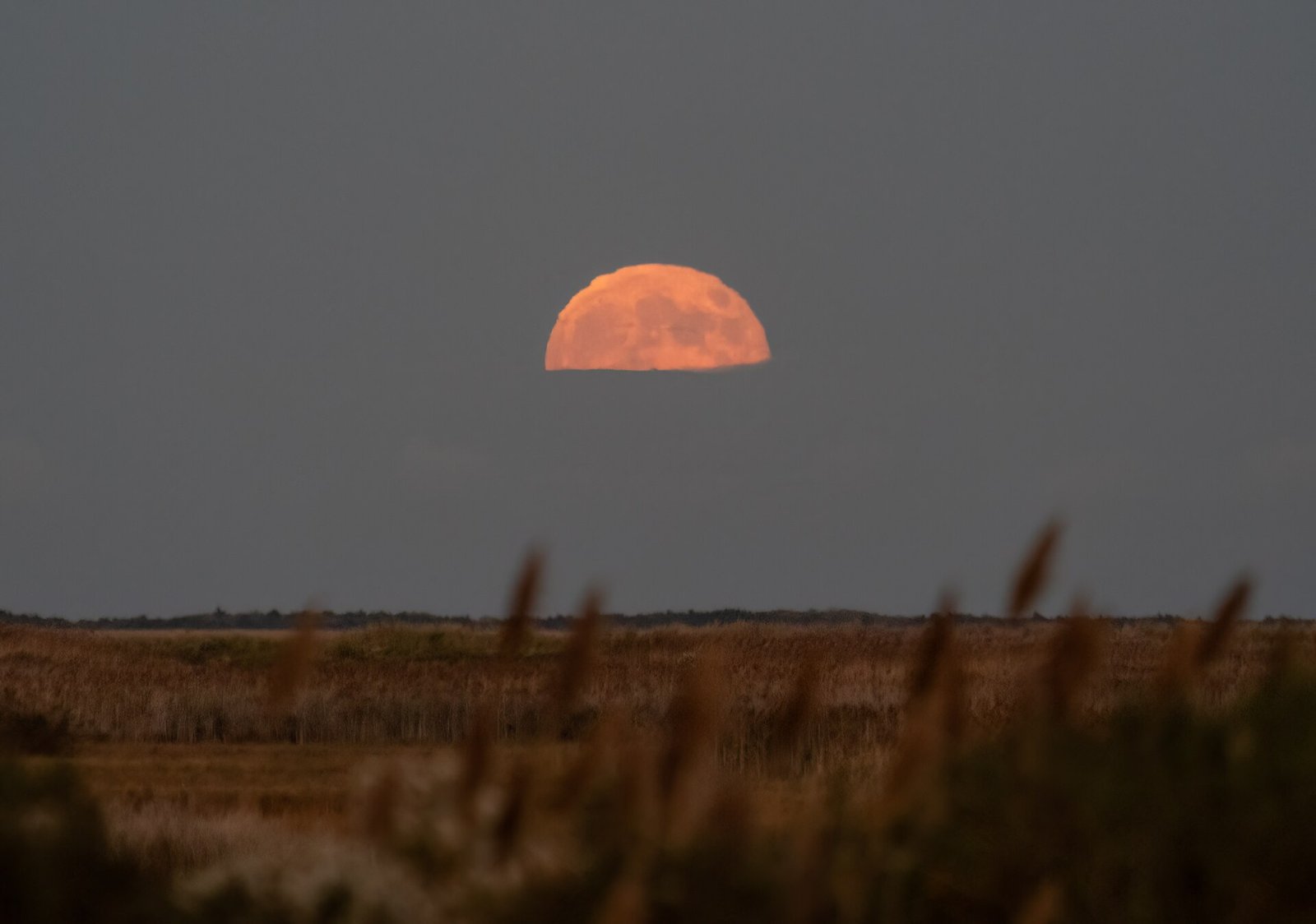
October's full Moon, the Hunter's Moon, is full at 04:12 UTC on October 26, 2026. That's the evening of October 25 in the U.S. (12:12 a.m. EDT on the 26th). The best photos come at moonrise, using a telephoto lens at about f/8, ISO 100 to 400 and 1/125 to 1/250 sec.
The Moon will look full on both October 25 and 26, giving two chances to shoot. Earlier in the week, the brightening Moon also sets about 2 to 3 a.m. during the Orionid meteor shower, so plan meteor shots for the pre-dawn hours.
Hunter's Moon 2026: key times
| Time zone | Exact full Moon |
|---|---|
| UTC | 04:12, Oct. 26 |
| EDT (New York) | 12:12 a.m., Oct. 26 |
| CDT (Chicago) | 11:12 p.m., Oct. 25 |
| MDT (Denver) | 10:12 p.m., Oct. 25 |
| PDT (Los Angeles) | 9:12 p.m., Oct. 25 |
| GMT (London) | 4:12 a.m., Oct. 26 |
U.S. clocks don't fall back until November 1, so daylight time still applies there. The UK returns to GMT on October 25, the day before.
Best camera settings for the full Moon
| Shot | Aperture | ISO | Shutter |
|---|---|---|---|
| Moon detail (high in sky) | f/8 | 100–200 | 1/125–1/250 |
| Moonrise with landscape | f/5.6–f/8 | 400–800 | 1/30–1/125, bracket |
| Moon through clouds | f/5.6–f/8 | 200–400 | 1/60–1/250 |
Check the histogram rather than the screen. The Moon is a sunlit surface, so it overexposes easily. Bracket exposures for moonrise scenes and blend them later if needed.
How do you get a giant Moon over a landscape?
- Pick a foreground, such as a lighthouse, ridge, city skyline or tree.
- Stand far back, sometimes a mile or more, and use your longest lens.
- Use a planning app to line up the moonrise direction with your subject.
- Arrive early and shoot as the Moon clears the horizon, while twilight still lights the landscape.
How do you photograph the Moon with a phone?
- Switch to the longest telephoto lens.
- Tap the Moon, then pull the exposure slider down until craters appear.
- Brace the phone on a tripod, wall or car roof.
- Avoid heavy digital zoom, which smears detail.
What gear helps most?
- A telephoto lens (200mm or longer; 400–600mm for frame-filling shots)
- A sturdy tripod and remote release
- Image stabilization off when on a tripod