The Tamron 16-50mm f/2.8 A (Model B091) is a new constant-aperture standard zoom for APS-C mirrorless cameras that costs $529 to $549 at launch. The Sony E and Canon RF versions go on sale October 29, 2026, followed by Nikon Z on November 19 and Fujifilm X on December 17.
Tamron announced the lens on October 14. It's notable for arriving on four mounts at once and for being unusually light for an f/2.8 zoom, at about 305 grams. Tamron is also the subject of a bigger corporate story this year; see Sony's bid for Tamron.
Price and release date by mount
| Mount | Price (at launch) | Release date |
|---|---|---|
| Sony E | $529 | October 29, 2026 |
| Canon RF | $549 | October 29, 2026 |
| Nikon Z | $549 | November 19, 2026 |
| Fujifilm X | $529 | December 17, 2026 |
What are the Tamron 16-50mm f/2.8 specs?
| Spec | Tamron 16-50mm f/2.8 A |
|---|---|
| Format | APS-C mirrorless |
| Equivalent range | 24-75mm (Sony, Nikon, Fuji); 25.6-80mm (Canon RF) |
| Aperture | f/2.8 constant, to f/16 |
| Optics | 14 elements in 10 groups (1 LD, 2 GM aspherical, 2 hybrid aspherical) |
| Aperture blades | 7, circular |
| Autofocus | VXD linear motor |
| Minimum focus | 0.15 m (wide), 0.29 m (tele) |
| Max magnification | 1:4.5 (wide), 1:4.8 (tele) |
| Filter | 55 mm |
| Weight | 305 g (Sony, Fuji, Canon); 315 g (Nikon) |
| Protection | Moisture-resistant build, fluorine coating |
Who is the Tamron 16-50mm f/2.8 for?
It's built as an everyday "go-to" zoom: wide enough at 16mm for landscapes, architecture and group shots, long enough at 50mm for casual portraits. Tamron also highlights video use.
The draw for Canon and Nikon APS-C shooters is especially big, because both systems have had few fast, affordable third-party standard zooms. Fujifilm users get it last, in December.
What are the trade-offs?
- No optical stabilization: rely on in-body IBIS, if your camera has it.
- Depth of field: f/2.8 on APS-C gives roughly the background blur of f/4 on full frame at the same framing, as Fstoppers notes.
- Shorter reach: it stops at a 75mm equivalent, so you'll need a telephoto for distant subjects.
How does it compare with Tamron's 17-70mm f/2.8?
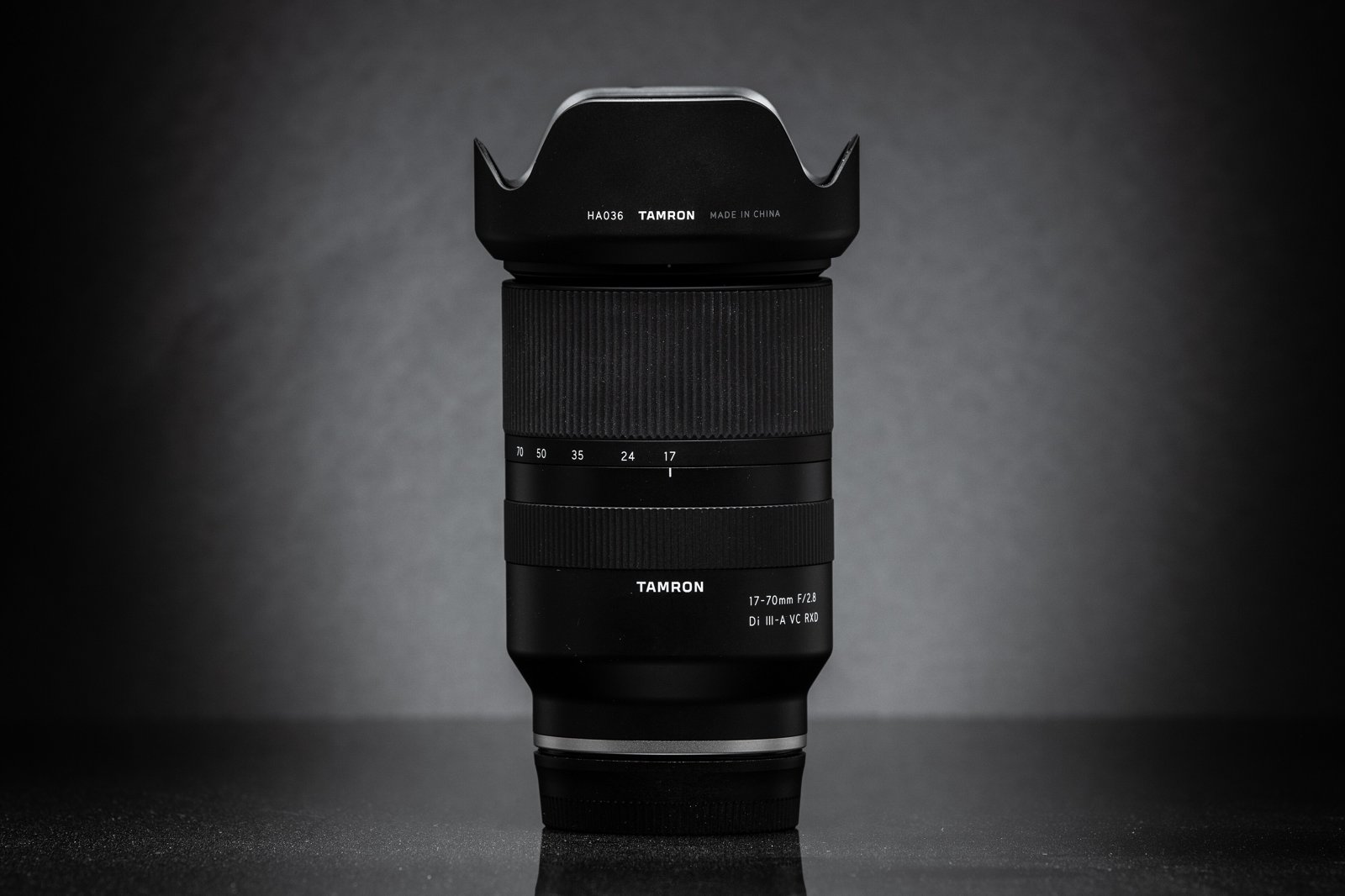
The older 17-70mm f/2.8 Di III-A VC RXD reaches further and has optical stabilization, but it's larger and heavier. The new 16-50mm trades reach for a wider start, lighter weight and a smaller 55mm filter thread.