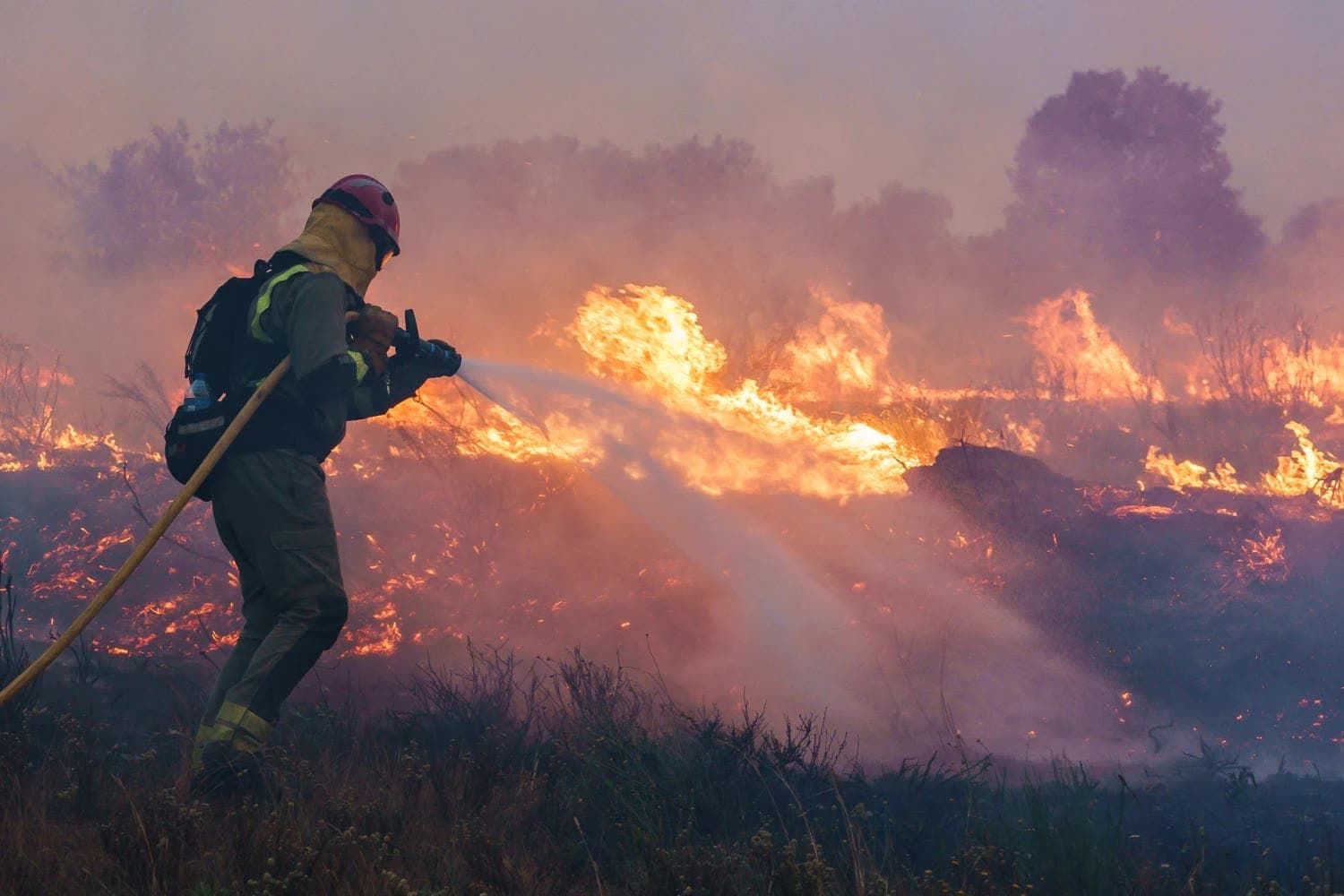
A severe heat wave gripping southern Europe is fueling fast-spreading wildfires across Spain, France and Greece, forcing mass evacuations, killing firefighters and stretching emergency crews thin as temperatures push past 40 degrees Celsius. Crews worked through Wednesday to hold back blazes that have already scorched tens of thousands of hectares, with forecasters warning the danger will stay elevated across much of the region for days.
Spain: the year's worst fire near Guadalajara
Spain's most destructive wildfire of the year so far has burned an estimated 32,000 hectares in the Guadalajara region. The blaze forced evacuations across 34 municipalities, with confinement orders — instructions to shelter in place — issued in more than a dozen others.
There were early signs of progress. According to the regional INFOCAM fire service in Castilla-La Mancha, the fire had begun to stabilize, allowing residents of five villages to return home. But the reprieve is fragile: the national weather agency warned that wildfire risk remains very high or extreme across most of the Spanish mainland and the Balearic Islands. Temperatures were peaking between 39 and 42°C on Wednesday, with Mediterranean areas expected to hit 42 to 44°C before a temporary cooldown arrives on Friday.
France: two firefighters killed, thousands of hectares lost
In France, the human cost has already been severe. Two firefighters lost their lives battling flames in the southwestern Gironde region. In the southeastern Var, a wildfire charred roughly 2,500 hectares and displaced about 400 people, with some 1,100 firefighters working through the night to contain it.
"The situation has been very difficult. Some 1,100 firefighters fought all night," Commander William Vogl, a spokesperson for the Var fire service, said in a radio interview. To reduce the risk of new, human-caused ignitions, French authorities banned barbecues and canceled traditional summer fireworks displays.
Greece and a continent-wide heat
The heat is not confined to the western Mediterranean. Eastern and mainland Greece endured a third consecutive day of extreme temperatures, forecast to top 41°C, prompting authorities to ban outdoor work during the peak midday hours and to urge employers to let vulnerable workers stay home. Across Western Europe more broadly, the average daytime high was running roughly 3°C above the seasonal norm for late July measured over the 1961-to-1990 period.
Part of a brutal European summer
This week's fires are not an isolated flare-up but the latest chapter in a punishing season. Europe has endured three back-to-back heat waves this year, and health researchers have linked the earlier episodes to thousands of excess deaths across the continent between May and June — a reminder that heat itself, not only the flames, is a lethal hazard.
The pattern fits a longer trend that climate scientists have flagged repeatedly: Europe is warming faster than any other continent, and the hot, dry conditions that turn a spark into a 32,000-hectare fire are becoming more frequent and more intense. Each severe summer now arrives against a backdrop of drier vegetation and longer fire seasons.
What comes next
The forecast offers some relief. A temporary cooldown is expected to begin Friday, which should ease the most extreme temperatures and give exhausted crews a window to gain ground. But officials cautioned that the respite is likely to be brief and that the underlying fire risk will not vanish with a few cooler days — the landscape is parched, and the season is far from over.
For now, the immediate priorities are the familiar ones of a European fire summer: keeping evacuation routes open, protecting the firefighters on the front lines, and urging residents in high-risk zones to heed local warnings. With temperatures still climbing before Friday's break, authorities across Spain, France and Greece are bracing for the possibility that the worst of the week is not yet behind them.