Five adults drowned in the Scioto River near Columbus, Ohio, on Sunday, in an accident that authorities say began when one member of a fishing group started to struggle in the water and the others went in, one after another, to try to save them. All five were pulled under and died. The two women in the group were recovered Sunday; the three other victims were found the following day.
The Delaware County Sheriff's Office described a chain of attempted rescues — an instinctive response that turned a single emergency into a collective loss. The stretch of the Scioto where it happened, near a riverside fishing area in Powell, is known locally for steep banks and a sudden drop-off into deeper water.
What the pastor saw
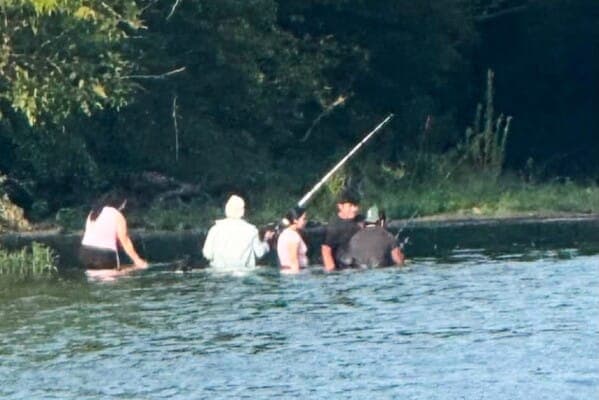
Part of what has drawn attention to the tragedy is an account from Marcus L. Martin, a Baptist pastor who has boated the river for a decade. On Sunday evening, Martin said, he felt an immediate unease when he passed five adults wading thigh- and waist-deep in the water, with two children playing on the grassy bank nearby. He knew the area to be treacherous, and years earlier had warned young people at the same spot to be careful.
This time he hesitated. With two or three boats between him and the group, Martin said, he decided against calling out a warning because he didn't want to cut across the other boats and stir up the water. He and his family drifted on to enjoy the summer evening. When they passed the same spot about two hours later and saw the group still in the river, something moved him to raise his camera. "I don't know what it was. I said, I just need to capture this picture," he told The Associated Press.
Only later, when news broke that five people had drowned there that afternoon, did the moment take on its weight. "I believe the picture I took may have been the last picture of them being alive," Martin said, adding that he has lost sleep over his decision not to say something. Authorities have not formally confirmed that the people in his photo are the five who died, and the sheriff's office and local EMS did not immediately verify the image; Martin said it is rare to see anyone fishing or swimming along that stretch, and he feels certain it is them.
Who they were
The human cost extends well beyond the riverbank. Honduran authorities confirmed that four of the five adults were citizens of Honduras. Two of them were a married couple: José Mario Pineda Días, 33, from the department of Lempira, and his wife, Marina Suyapa Regalado, 28, from Cortés. A second married couple was also among the dead. The names of the other victims are being withheld until relatives can be notified.
Two children — ages 8 and 10, the children of one of the couples — were left orphaned. On the day of the accident, a passing driver spotted a boy calling out for his mother and alerted 911. The children have been in the care of Franklin County Children Services since Monday while the agency works with relatives and family friends in Columbus to arrange a temporary home; a spokesperson said the two were given therapy dogs to help them cope with the trauma.
Honduras's government said it is in contact with the victims' families and is ready to repatriate any of the dead if relatives request it — a process that could take about six weeks. The consulate said it has checked on the children's wellbeing and will help once the families decide on next steps.
A familiar, preventable danger
The deaths are a stark reminder of how quickly calm-looking rivers can turn deadly, and of the particular risk of "drowning chains," in which would-be rescuers are pulled under trying to save someone in distress. Water-safety experts consistently urge people who see a struggling swimmer to reach or throw something rather than entering the water themselves, and to be wary of unfamiliar rivers where currents, cold water and sudden depth changes are hidden beneath a still surface.
For now, the focus in Columbus and in Honduras is on identifying the remaining victims and caring for the two children left behind — the youngest survivors of an outing that was meant to be an ordinary summer evening by the water.
This is a developing story, and authorities may release additional details as the victims are formally identified.