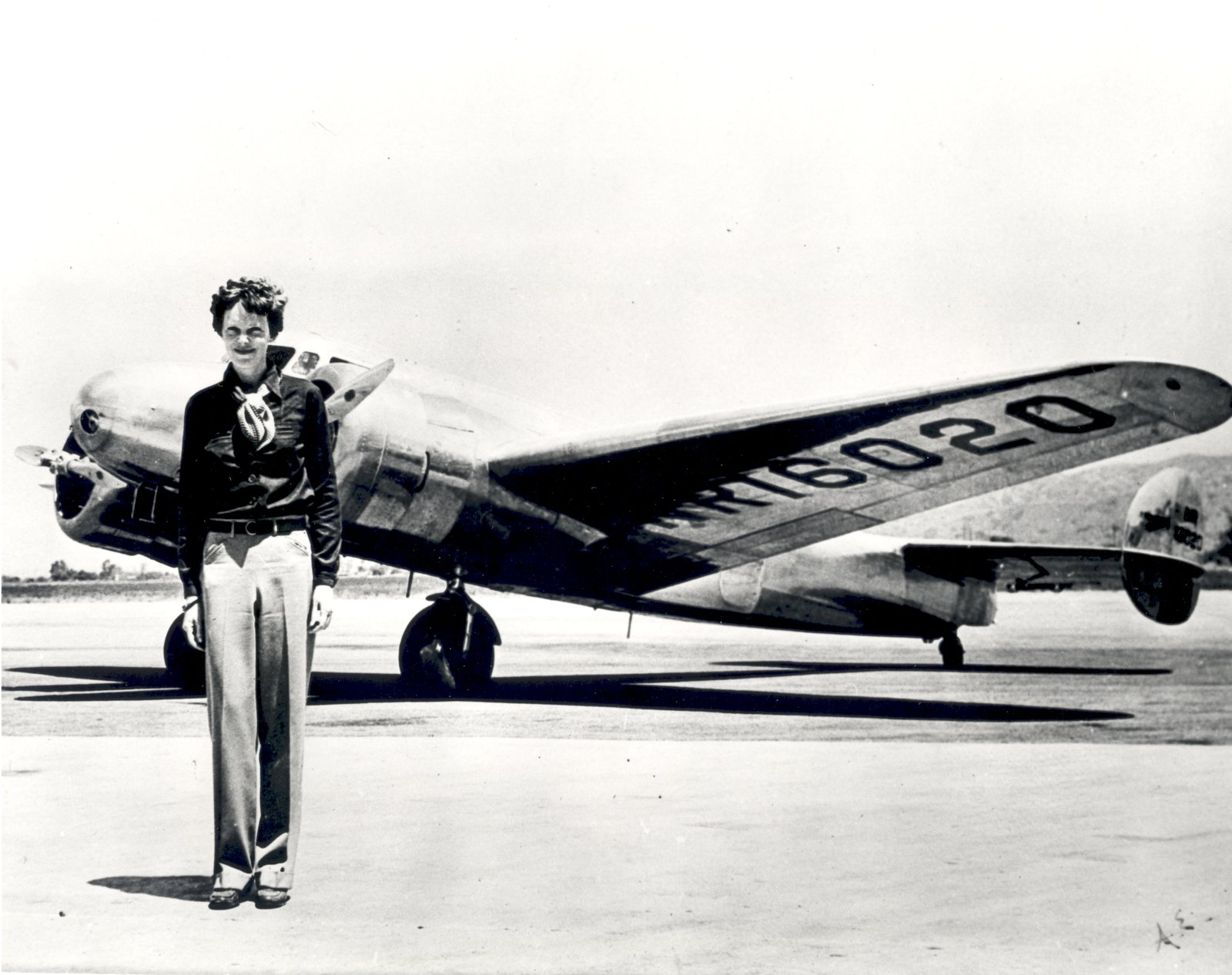
A 17-member expedition to the remote Pacific atoll of Nikumaroro has found no evidence of Amelia Earhart's plane. The team concluded that the "Taraia Object," a shape in the island's lagoon that some hoped was her Lockheed Electra, was likely a pile of large trees, Purdue University announced.
"We accomplished our goal to determine what the Taraia Object was," project director Rick Pettigrew said, according to CBS News. But the team says the search for Earhart will continue.
What did the expedition find?
The team found that the anomaly was likely "a collection of large trees deposited along the peninsula's sandspit," Purdue said. By the time the team arrived, most of the debris had washed away, leaving a single Y-shaped segment.
That segment looked shiny in images because of a carbonate coating, not metal. Other nearby items had a similar hardened crust of coral sand.
The team did recover a steel tube about 30 inches long from the lagoon, plus other maritime and land artifacts. Those are being studied for clues about how objects move through the lagoon. None has been linked to Earhart.
Who went, and what slowed them down?
The expedition was organized by the Archaeological Legacy Institute, Purdue Research Foundation and Purdue University.
| Left from | Tarawa, Kiribati, Oct. 6 |
| Travel | About 5 days by sea each way |
| Time at island | 7 days nearby, 4 onshore |
| Team size | 17 |
| Leader | Rick Pettigrew, Archaeological Legacy Institute |
| Purdue | Steve Schultz, plus alumni Sirisha Bandla and Marc Hagle |
| Also aboard | Three Kiribati representatives, RECON Offshore archaeologists, a medic, filmmakers |
Rough seas and storms kept the team off the island on several days, and limited fuel and supplies meant the trip could not be extended, CBS News reported.
What was the Taraia Object?
A Navy veteran spotted the shape in satellite imagery in 2020, during the pandemic. It also appears in aerial photos from 1938, a year after Earhart vanished. It sits in a lagoon off Nikumaroro's Taraia Peninsula.
Before the trip, the team called the evidence that it might be Earhart's plane "very strong," and Pettigrew said it might be metal rather than a tree, according to CBS.
Why look on Nikumaroro?
Earhart and navigator Fred Noonan disappeared on July 2, 1937, about 22,000 miles into an attempt to make Earhart the first woman to fly around the world. They were trying to find Howland Island to refuel.
Nikumaroro is about 400 miles southeast of Howland. Supporters of the "castaway" theory believe Earhart and Noonan landed on its reef and survived for a time, pointing to relics from the 1930s and human remains found there in 1940 that were later lost.
Others believe the plane ran out of fuel and sank near Howland. No wreckage has ever been confirmed.
This was not the first false lead. A 2024 sonar image of what looked like an aircraft turned out to be a rock formation, CBS reported.
Is the search over?
No. The team still supports the castaway theory, and Purdue has pledged to keep looking.
"She kept flying, and we will keep searching," Schultz said.
President Trump also recently ordered the declassification of government records related to Earhart, CBS reported, which could give researchers new material.