UPDATED — Thursday, August 27. The confirmed dead has gone from dozens to 162, per Nepal Police, with hundreds still unaccounted for. More importantly: the debris that caused this is still in the river. A barrier lake is filling behind it on the Nepal–China border, and ICIMOD now says authorities consider a second flood imminent. The new material is further down.
At 8:40 on Wednesday morning, a wall of water came down the Bhote Koshi river into Rasuwa district in northern Nepal and took away roads, bridges, a customs post, a market and an unknown number of people.
The most important sentence in the story is this one, from the district's own chief officer, Narendra Pariyar: there was no rainfall in the district headquarters.
It had not been raining. The water came from somewhere else, and it came without warning.
The second flood
This is the part that has changed most since Wednesday, and it is the reason to keep watching.
The blockage never cleared. The avalanche debris that generated the surge is still lodged in the channel near the Nepal–China border, and water is pooling behind it. ICIMOD's Qianggong Zhang, Head of Climate and Environmental Risks:
"The same site devastated by last year's Rasuwa flood is once again under threat… With a blockage still lodged upstream on the Nepal–China border, authorities warn a second flood is imminent and evacuation orders are now in place for Jilong port."
Chinese authorities put numbers on it. The barrier lake was estimated at roughly 2 million cubic metres and already overflowing, with a further 3 million cubic metres expected to flow in over three days — described as a high risk of breach within roughly 72 hours.
Read that against the central fact of this story. The first flood arrived with no warning because nobody was watching the valley it formed in. The second one, if it comes, is being counted down in public, in cubic metres, by the country the water is sitting in.
That is the difference a monitored hazard makes, and it is arriving about thirty-six hours too late for the people in Timure.
What the numbers actually are
We said on Wednesday to be careful with the death toll. That caution turned out to be the most useful thing in the piece, so here is how much the figures actually moved.
Within roughly twenty-four hours, credible outlets carried 95, 100, 157, 162, 165, 175 and 353 as the number of dead. Those are not corrections of one another. They are different institutions — the police, the NDRRMA, the Home Ministry, embassy sources — counting different things at different moments, and being reported as though they were the same count.
The most defensible figures as of Thursday:
| Bodies recovered in Nepal | 162 (Nepal Police) |
| NDRRMA figure | 165 |
| Deaths reported in Tibet | 3 (Chinese state media) |
| Rescued by air from Timure | 123 (94 Nepali, 29 foreign) |
The missing are counted separately by at least three bodies and the lists do not reconcile. Nepal's Tourism Board has published a nationality breakdown of missing travellers:
| Americans | 33 (also reported as 47) |
| Australians | 34 |
| Canadians | 24 |
| Malaysians | 19 |
| Germans | 4 |
| Israelis | 1 |
And separately, out of contact in the affected area:
- 44 Nepal Army personnel
- 28 Nepal Police
- 13 Armed Police Force officers
Chinese authorities are running their own count for Gyirong county on the Tibetan side. How much these lists overlap is not currently knowable, and anyone presenting a single tidy global total today is adding them up on your behalf without telling you.
And the infrastructure number, which is staggering for a country this size:
Nepal's energy ministry says roughly 430 MW of generation was knocked out — about one-eighth of the country's entire installed capacity.
An eighth of the national grid, in a morning, because of weather that did not happen in Nepal.
Where the water came from
The working explanation, and it is still preliminary, is an ice-and-rock avalanche falling into the Lhende Khola — a tributary of the Bhote Koshi — roughly 20 kilometres northeast of the Rasuwagadhi crossing, on the Tibetan side. ICIMOD and partner institutions in Nepal and China are investigating, and an early reading of Planet Labs satellite imagery is consistent with an ice-and-rock landslide.
A correction to what we published on Wednesday. We noted, via Kathmandu University glaciologist Rijan Bhakta Kayastha, that an earthquake had occurred on the Tibetan side at around the same time. That needs qualifying. ICIMOD has since confirmed that seismometers at Jilong (about 12km away) and Zhangmu recorded anomalous signals during the period of the disaster — but states plainly that no causal link between seismic activity and the flood has been established. An avalanche of that size would itself register on a seismometer. The signal may be the flood, not its cause.
ICIMOD has also been careful on the question everyone reaches for: while climate change is altering glaciers, snow, permafrost and slopes across the Hindu Kush Himalaya, scientists say it is too early to say what role it played in this specific event.
How fast it actually moved
The hydrology is worth seeing, because it explains why nobody outran it.
Downstream on the Trishuli, the gauge at Galchchi rose nine metres in thirty minutes. At Malekhu, seven metres over a similar period.
Several monitoring stations along the river were damaged or washed away by the flood they were measuring. Galchchi survived, which is the only reason those numbers exist.
Saswata Sanyal, ICIMOD's DRR Specialist, on what this class of event is:
"These are cascading hazards: a cryosphere event becomes a flood in a settlement within hours."
Pariyar, speaking to Xinhua, was blunt about the limits of what anyone knows:
"We cannot say for certain whether a glacial lake burst somewhere upstream or something else happened. The flood appeared suddenly."
Why nobody could have been warned
This is the part that generalises beyond Wednesday.
A glacial lake outburst flood — a GLOF — is water held back by ice, moraine or avalanche debris, released all at once when the barrier fails. It does not need a storm. It does not announce itself. In a valley that has had no rain, under a clear sky, the river simply becomes something else.
The trigger for this one is believed to be inside Chinese territory, in a high valley Nepal does not monitor and cannot monitor. Early-warning systems work by watching a threat approach. There is no useful warning time when the threat forms in another country and travels down a mountain.
The International Centre for Integrated Mountain Development (ICIMOD) had already flagged this exact watershed. In a published study it identified the Poiqu watershed in the Tibet Autonomous Region — the river that becomes the Bhote Koshi and then the Sun Koshi once it crosses into Nepal — as "highly prone to glacial lakes outburst floods."
The warning existed. It named the river.
This is the second time in thirteen months
On July 8, 2025, a flash flood hit the same Bhote Koshi. Nepal's Department of Hydrology and Meteorology attributed that one to a glacial lake outburst.
Same river. Same border. Thirteen months.
And the wider frequency data is the thing that should stop people:
- In the 2000s, a glacial-origin flood was expected in the Hindu Kush Himalaya roughly once every five to ten years.
- In May and June 2025 alone, ICIMOD recorded three — in Nepal (Limi), Afghanistan (Andorab valley) and Pakistan (Chitral and Hunza).
Saswata Sanyal, ICIMOD's Disaster Risk Reduction Lead:
"The acceleration of these types of events is completely unprecedented in the Hindu Kush Himalayan region. We need to delve deeper into the triggers that are resulting in cascading impacts."
An event with a one-in-five-year return period is now happening several times a season across the range, and twice on one river in just over a year.
The other flood, and why the difference matters
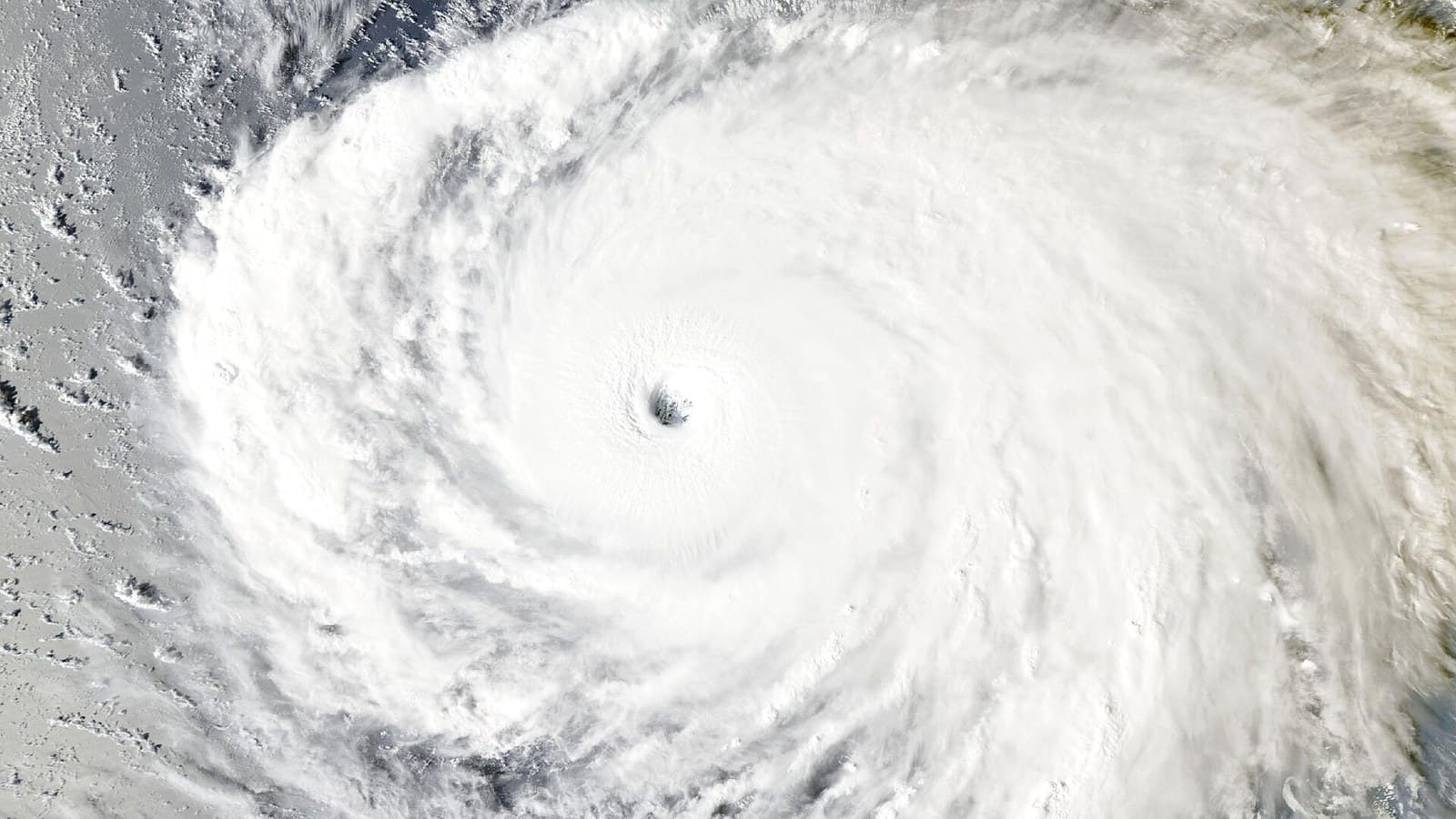
Nepal was not the only place under water this week. Several hundred miles east, Typhoon Narra has been sitting over the Beibu Gulf, dumping rain on southern China and northern Vietnam.
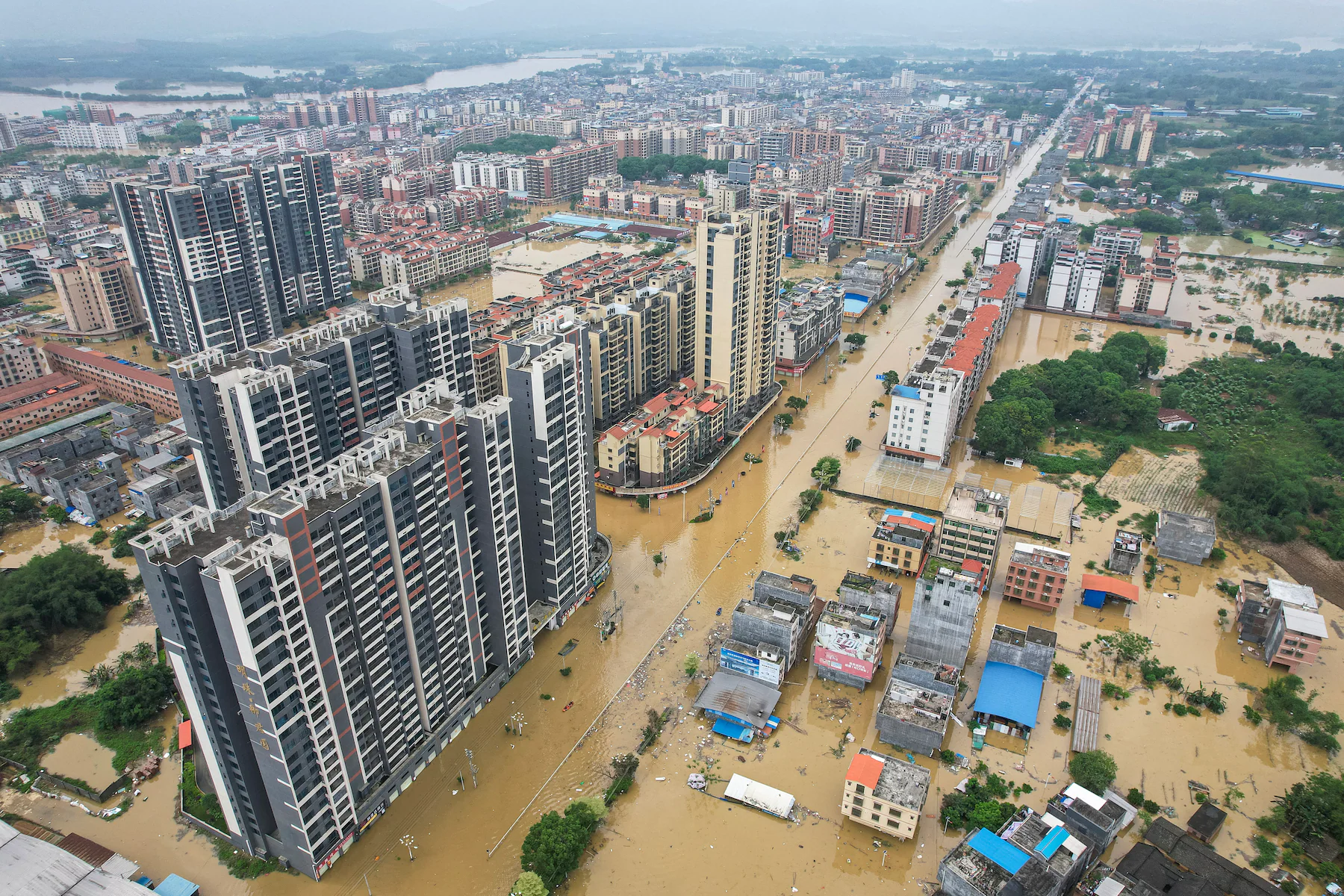
The photograph at the top of this story is that flood, not this one. We have used it deliberately, because we do not have an image of Rasuwa — and the reason we do not is the story.
In Guangxi, more than 54,000 people were evacuated, including 8,087 into emergency shelters. In the city of Chongzuo, nearly 700mm of rain fell in three days and river levels passed the record set in 2008 — the largest flood ever recorded in the upper reaches of the Zuojiang river. China activated a Level 4 national disaster relief response, and Guangxi alone deployed 459 firefighters, 114 vehicles and 80 rescue boats.
Now hold those two events side by side, because the contrast is the whole argument.
Guangxi knew. A typhoon is visible for days. It has a name, a track, a forecast cone. Tens of thousands of people were moved before the water arrived, into shelters that had been designated in advance, by agencies working from a national response tier. That is what a warning system is for, and it worked.
Rasuwa had none of that. No storm, no forecast, no rain. A slab of ice let go in a valley on the other side of an international border, dammed a river nobody was watching, and the dam failed. The first anyone in Nepal knew about it was when the Bhote Koshi rose seven metres.
Same week, same continent, same element. One disaster you can see coming for three days; one you cannot see coming at all.
What this means downstream
The Bhote Koshi runs into the Trishuli, and the Trishuli eventually crosses into India as the Gandak. Water that starts as ice in Tibet ends up in the Ganges basin. The people at risk from a high-altitude avalanche in one country live in three.
That is the reason this story is not really about a flood. Nepal's exposure here is not a failure of its own forecasting. It is a monitoring problem that stops at a border, on a range that is losing its ice faster than anybody planned for.
What to watch
The lake, first and above everything else. Whether the barrier holds, is breached deliberately, or fails on its own — and whether the evacuation orders now in place at Jilong get extended down the Nepali side of the valley, where rescue teams are currently working on riverbanks below an impounded 2 million cubic metres.
After that: whether the toll settles, and where. Whether satellite analysis — the EU has activated its Copernicus emergency mapping service — confirms the avalanche interpretation. How long the 430 MW takes to come back. And whether anything at all changes about cross-border monitoring of the Poiqu, which was named in a study before it did this twice.
On that last point, ICIMOD's Neera Shrestha Pradhan made the argument more precisely than we did on Wednesday:
"A cross-border early warning system could be a strong example of cooperation between the two countries. Our experience shows that providing information alone is not enough. Communities also need to be aware about how to translate this information and prepare themselves to act on it without panicking."
Which is the uncomfortable version of the point. It is not only that Nepal could not see the water coming. It is that a warning arriving thirty minutes ahead of a nine-metre wall is only useful to people who have already been told what to do with it.
This is a developing story, last updated Thursday, August 27. Casualty figures, the number of missing and the cause of the flood are all provisional and subject to revision. Reported death tolls vary substantially between outlets and between the institutions issuing them; where they conflict, we have said so rather than picking one.