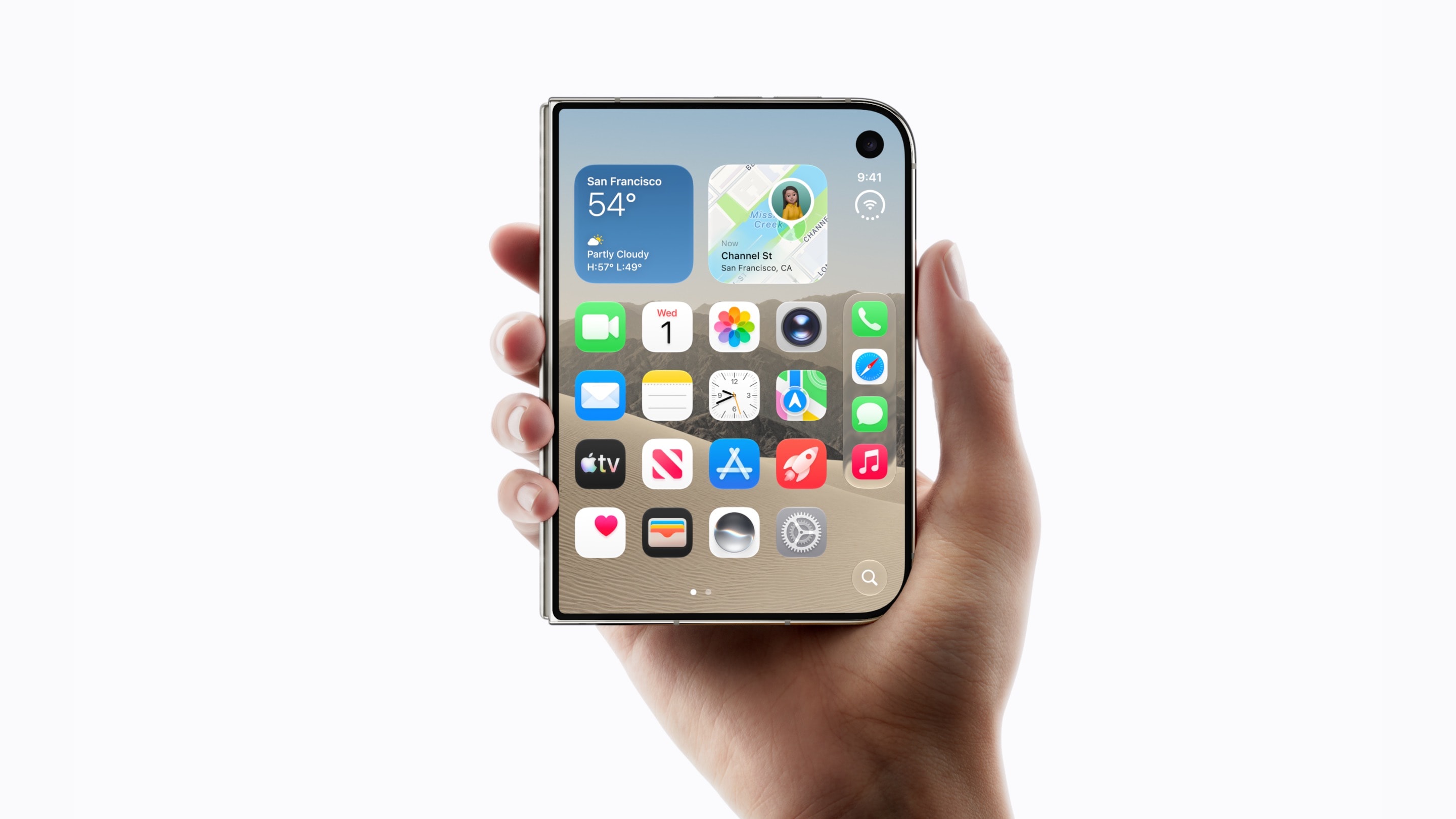
Apple's first foldable iPhone, the iPhone Duo, opened for preorder at 5 a.m. Pacific on Friday. Within minutes it was sold out.
New US orders now show delivery in late January 2027. The original date was October 23. On eBay, people who got in early are reselling their orders: a 2TB model reportedly sold for $4,999.99, about $1,800 over Apple's price.
This is the launch Apple wanted, at $1,999 and up. It also exposes the problem underneath it.
The problem is the factory
Apple did not misjudge demand. It cannot build enough.
In September, a Foxconn insider told China's Jiemian News that final-assembly yields were "only slightly above 60%." Roughly four in ten phones were not passing Apple's checks. The same source said it could take six months to a year for yields to mature.
The worst-hit supplier was reported to be Samsung Display, which makes the foldable screens and hinges. The report blamed last-minute design changes by Apple. Suppliers were said to be lobbying Apple to relax some quality standards so they could ship more.
Apple's production target for 2026 was reported at six to eight million units. A single iPhone Pro model typically sells 20 to 30 million over its life. The Duo was always going to be scarce. Friday showed how scarce.
Samsung wins either way
Here is the awkward part for Apple. The company whose display factory is part of the bottleneck is also its main foldable rival.
After Apple revealed the Duo in September, a Korean report said sales of Samsung's Galaxy Z Fold 8 rose about 10%. The theory: people had been waiting to see Apple's foldable, saw it, and bought the one they could get now. In the US, the Fold 8 is also about $100 cheaper.
Every Duo that cannot ship until January is a reason for someone to buy a Fold instead. And every Duo that does ship has a Samsung-made screen.
What you are actually waiting for
| iPhone Duo | |
|---|---|
| Price | $1,999 (256GB), $2,199 (512GB), $2,599 (1TB), $3,199 (2TB) |
| Screens | 5.4-inch outside, 7.6-inch inside, both 120Hz |
| Chip | A20 Pro |
| Rear cameras | 48MP wide and 48MP ultra-wide; no telephoto |
| Unlock | Touch ID in the side button (no Face ID) |
| Size | 11.3mm thick folded, 5.2mm open |
| Weight | 254g |
| Battery | Up to 24 hours of typical use, per Apple |
| Colors | Star White, Night Sky |
Apple's own accessories went on sale at the same time: the iPhone Duo Case for $79, and the Duo Folio with Kickstand for $129. If the inner screen's top layer gets damaged, Apple lists a $19 replacement under AppleCare+.
A few trade-offs are worth knowing. There is no telephoto camera, which the iPhone 18 Pro models have. There is no Face ID. And it costs $800 more than an iPhone 18 Pro.
If you want one
Try a store on October 23. In-store sales begin that day in more than 70 countries, but supply will be thin.
Think twice about eBay. Most listings are "confirmed preorders," which carry real risk of scams or transfers that fall through. Prices are expected to come down as more units ship.
Or wait. If the factory reports are right, supply should improve through the first half of 2027. The first version of any new product category also tends to be the one with the most problems.
Published Saturday, October 17, 2026. Delivery estimates change frequently and vary by model and color. Production and yield figures come from supply-chain reports in Chinese and Korean media and have not been confirmed by Apple; resale prices are as reported and unverified.