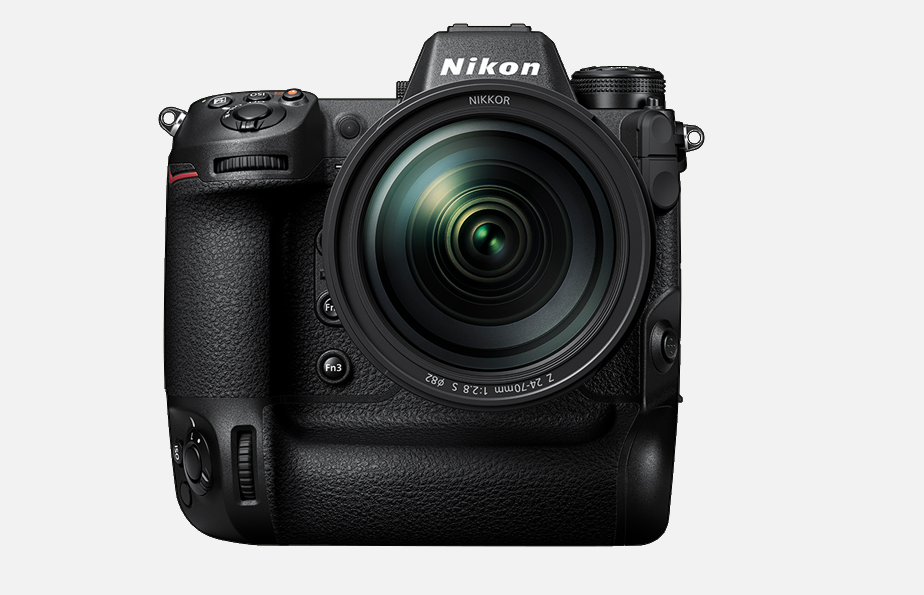
Nikon has not announced a single new camera body in 2026.
It has announced two finished lenses — the Nikkor Z 70-200mm f/2.8 VR S II and the Nikkor Z 24-105mm f/4-7.1 — plus a development announcement for a 120-300mm f/2.8 that is not a shipping product. Nikon Rumors reported on August 13 that the consensus from multiple sources is that almost everything else is delayed, cameras, lenses and firmware alike, with some of it now sliding into 2027.
That is the story everyone is running. The more useful one is in Nikon's own filing, and it names a cause the coverage keeps skipping.
Nikon says "higher memory prices." Twice.
From the Q1 results for the year ending March 2027, published August 6:
"Operating profit was flat YoY as profit tailwinds from increased sales and US tariff refunds (¥4.0B) were offset by lower sales volumes and higher memory prices in Imaging Products…"
And again, in the Imaging segment breakdown:
"Operating profit was down as reduced sales and higher memory prices outstripped FX tailwinds and US tariff refunds."
A camera company does not usually have to explain itself by pointing at the memory market. This year it does, and the reason has almost nothing to do with photography.
The AI build-out is now visible in the camera aisle
Memory makers have spent two years redirecting capacity toward high-bandwidth memory and high-capacity DDR5 for AI servers. Data centres are estimated to consume up to 70 percent of high-end memory output in 2026.
What that has done to price:
- DRAM spot prices: up roughly 700 percent over the past year
- DRAM contract prices: forecast up 13–18 percent quarter-on-quarter in Q3 2026
- NAND contract prices: up 10–15 percent over the same period
Samsung and SK hynix have both warned the shortage could run to 2027 and beyond.
Cameras are not the first place you would look for the consequences, but they are a natural one. A modern mirrorless body is a computer with a shutter: it needs a large DRAM buffer to sustain 20-frames-a-second raw bursts and internal video, and firmware storage on top. Nikon does not make that memory. It buys it, on a market where an AI data centre will outbid a camera manufacturer every time.
The industry read on why memory price rises have started to cool makes the point sharper still. According to TrendForce and others, the moderation is not because supply recovered — it is because consumer electronics makers can no longer absorb the cost. Nikon's filing is what that sentence looks like from the inside.
What the filing actually says
The headline group numbers for the quarter, which are not disastrous but are worse than they look:
| Measure | Result |
|---|---|
| Revenue | ¥164.1B (up ¥6.0B YoY) |
| Operating profit | −¥0.9B (up ¥0.2B YoY) |
| Profit attributable to owners | ¥1.2B (down ¥8.2B YoY) |
Revenue grew — but on segments outside Imaging, plus currency tailwinds. The company still posted an operating loss. And the ¥8.2 billion fall in bottom-line profit is largely an accounting artefact: a ¥9.3 billion tax benefit from the liquidation of Nikon Metrology NV was booked last year and did not repeat.
Two things propped the quarter up that will not necessarily recur: ¥4.0 billion in US tariff refunds, and foreign-exchange movement. Against those, Nikon booked ¥4.1 billion in inventory write-downs in Precision Equipment.
The forecast cuts:
- Interchangeable-lens cameras: 900,000 → 850,000 units
- Lenses: 1.30 million → 1.25 million units
- Total DCIL market size projection cut by 300,000 units
- Versus the previous forecast: revenue down ¥13.0B, operating profit down ¥3.0B
That last bullet is the one that matters. Nikon did not only cut its own numbers — it cut its estimate of how big the market is. A company revising its own share is having a bad year. A company revising the size of the pond is telling you something about the pond.
On demand, Nikon is specific: revenue fell on "reduced sales of DCIL cameras and lenses driven by demand contraction mainly in China."
A caution about the table everyone is quoting
The comparison doing the rounds — 2026: zero cameras, two lenses, against three or four bodies a year through the 2010s — comes from Nikon Rumors, which published it with a disclaimer most reposts have dropped:
"Here is an AI-generated list of Nikon cameras and lens announcements over the years (the list may not be 100% accurate, but you get the idea)."
The 2026 line is verifiable. The two decades of history above it are not sourced, and were assembled by a language model. It is a reasonable illustration and a bad citation, and it is now being reproduced as fact — including in Google's AI Overview for this story, which upgrades one rumour site's "consensus from multiple sources" into "multiple industry sources confirming."
The underlying claim looks sound. The specific numbers in that table should not be quoted as data.
The other signals
Two smaller items from the same fortnight point the same direction.
On August 7, Nikon Japan temporarily suspended orders for the Nikkor Z 600mm f/6.3 VR S — the behaviour of a company that cannot build to demand.
On August 14, Nikon ended its relationship with Pro Distributors in the United States, a distribution change rather than a supply one, but not the move of a business expanding its footprint.
What to watch
Whether Nikon publishes anything before Christmas. The company was told, per Nikon Rumors' sources, that 2027 will be much better — which is both plausible and exactly what a company in a component squeeze would say.
More concretely: whether memory contract prices keep moderating into Q4, and whether Nikon's next quarterly filing still names them. If it does, the delays are a supply story and they end when the memory market does. If the language shifts to demand, this is a different and more serious problem.
Nikon has not issued a public statement on the reported delays, and no specific product delay has been confirmed by the company. Rumoured timings are attributed to Nikon Rumors' sources; financial figures come from Nikon's own investor relations disclosures.