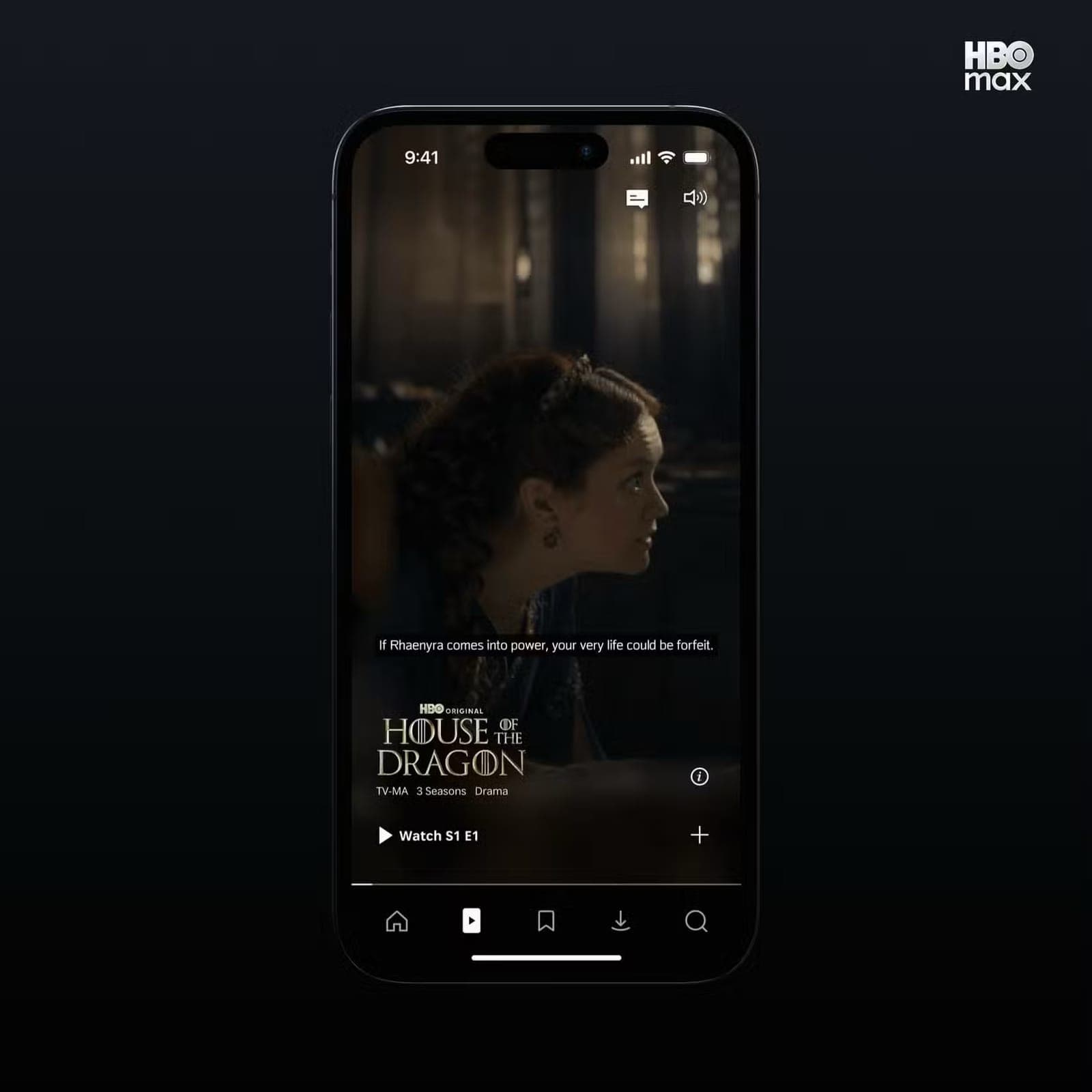
HBO Max has added Shorts — a vertical, scrollable feed of clips from its library, reached from a new icon in the app's bottom navigation. Alongside it, an experimental conversational search tool called Ask HBO Max.
Both are sensible products. One of them has a structural problem that the announcement does not address.
The mechanism
Warner Bros. Discovery says the clips are selected by an in-house AI tool that uses scene-level metadata to comb thousands of hours of film and television and surface "the most compelling, high-impact scenes." HBO Max editors then choose which of those make the feed.
Read that again with the catalogue in mind.
HBO's library is not a library of pleasant moments. Its most compelling, highest-impact scenes are, disproportionately, the twists — the Red Wedding, the cut to black in a New Jersey diner, whatever just happened to a Roy. The reason those scenes score highest on any measure of impact is precisely the reason you must not see them first.
An algorithm optimising for impact, pointed at a catalogue whose value is built on surprise, is a spoiler engine by construction. The only thing standing between it and a viewer who has not seen Succession is the editorial layer — humans deciding which clips ship.
That check is real, and Warner Bros. Discovery was right to build it in. But it is the entire safeguard, and its workload scales with the size of the feed.
Personalised how, exactly
The feed is customised "based on watch history." That helps and does not solve it.
Watch history tells the system what you have started, not what you have finished — and certainly not which of the thousands of titles you have never opened you are eventually planning to. A feed that knows you like prestige drama and does not know you are four episodes into a show is well positioned to ruin it.
Whether the system models episode-level progress is the question that determines whether this is a real problem or a theoretical one. Nobody has said.
HBO is last here, not first
Worth correcting the framing in some of the coverage: this is not HBO leading a shift.
- Netflix launched generative-AI search in 2025
- Disney+ rolled out its vertical feed, Verts, in March 2026
- Peacock moved into AI-driven video the same month
- Amazon has had AI voice search on Fire TV since 2024
HBO Max is the last of the majors to arrive. The reason every one of them is doing it is not fashion — it is that catalogues have grown past the point where a grid of box art works, and audiences trained on TikTok and Reels now expect to be shown something rather than asked to choose.
The uncomfortable part for HBO specifically is brand. This is the company whose identity was built on appointment viewing — the opposite of the infinite scroll, and for decades the explicit alternative to it. Adopting the format is a concession that discovery now happens the way it happens everywhere else.
The split rollout
One practical note the coverage keeps blurring: Shorts is an iOS test in the US. Ask HBO Max is Android-only in the US. They launched together and are available to almost nobody together.
The context nobody mentioned
All of this ships while Warner Bros. Discovery's own future is unsettled. Its $111 billion sale to Paramount Skydance is frozen pending an antitrust trial that may not conclude before June 2027.
Building discovery features is what a product organisation does regardless. But the strategy these features serve — deepen engagement, hold subscribers, prove the platform's worth — is being set by a company that may not own itself in eighteen months.
What to watch
Whether the editorial layer holds as the feed scales past a test audience. Whether the system tracks episode-level progress. And the first time a Shorts clip spoils something for enough people to trend — which is the moment this stops being a product story.