In December 2023, BMW's senior vice president for connected company development, Stephan Durach, was asked whether the company would sell the screen inside its cars to advertisers.
He said no. He called the dashboard "a private space."
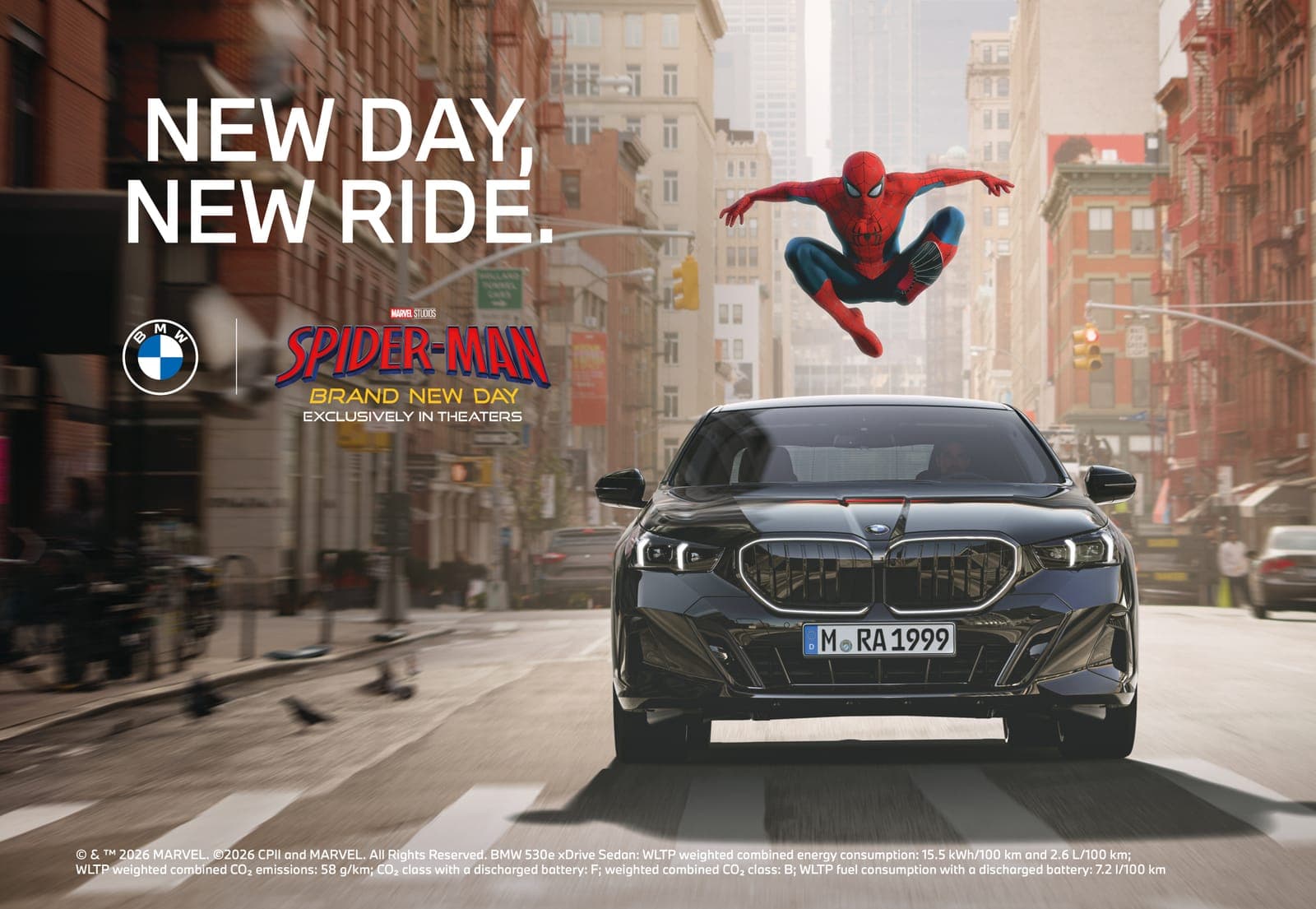
On July 27, 2026, BMW began pushing a full-screen advertisement for Spider-Man: Brand New Day to that space, by over-the-air update, into cars people had already bought.
What it does
A promotional banner appears on the Control Display every time the car is started. Tap it and you get a full-screen animation, with music, and synchronised ambient interior lighting.
It went to vehicles running iDrive OS 7 through X — a range that covers a large installed base of existing cars, not just new stock on dealer lots. Owners were not asked.
The campaign runs until August 10.
The part that isn't about Spider-Man
A fortnight of movie promotion is a nuisance. It is not, on its own, worth much outrage.
What happened last week is that BMW demonstrated a capability and established a precedent: it can decide, centrally, that a piece of commercial content should appear on the primary screen of millions of cars it no longer owns, and make that happen overnight, without asking.
That is the asset. The Spider-Man deal is just the first thing it was pointed at.
Every argument about in-car advertising until now has been theoretical — a thing manufacturers might do if the economics got attractive enough. The economics have been attractive for years. What was missing was the moment someone went first and found out how much it cost them.
Why the 2023 quote matters
Companies change positions. That is allowed, and a 2023 remark by one executive is not a contract.
But Durach's answer was not a vague reassurance about future intentions. It was a description of what the screen is for — a private space, belonging to the person in the seat, not inventory. That framing was doing reputational work for BMW at a moment when several manufacturers were being asked the same question.
Having used the framing, the company has now done the thing the framing ruled out, and has not explained what changed. It has instead presented the campaign as a cultural collaboration — BMW's own announcement describes bringing "modern mobility" to the Sony Pictures film.
Which is the part people have reacted to most sharply: not simply that the ad exists, but that it is being offered as a benefit.
The ownership question underneath
You bought the car. It is parked in your driveway. Overnight, a company several thousand miles away changed what appears on its screen when you turn it on, to promote a film you may not want to see, and there is no documented way to decline.
None of that is illegal, and all of it follows from how modern connected cars are built — the same over-the-air pipe that delivers safety fixes and navigation updates delivers this. The pipe does not distinguish between a brake-software patch and a movie trailer. Only the company's policy does.
That policy, as of last week, is different from what it was.
What to watch
Whether BMW offers an opt-out, whether the campaign is repeated after August 10, and whether any other manufacturer follows now that someone has gone first and absorbed the reaction. The answer to the last one will tell you whether this was an experiment or a business line.
Related: Tom Holland on Spider-Man: Brand New Day, the film the ad is promoting.