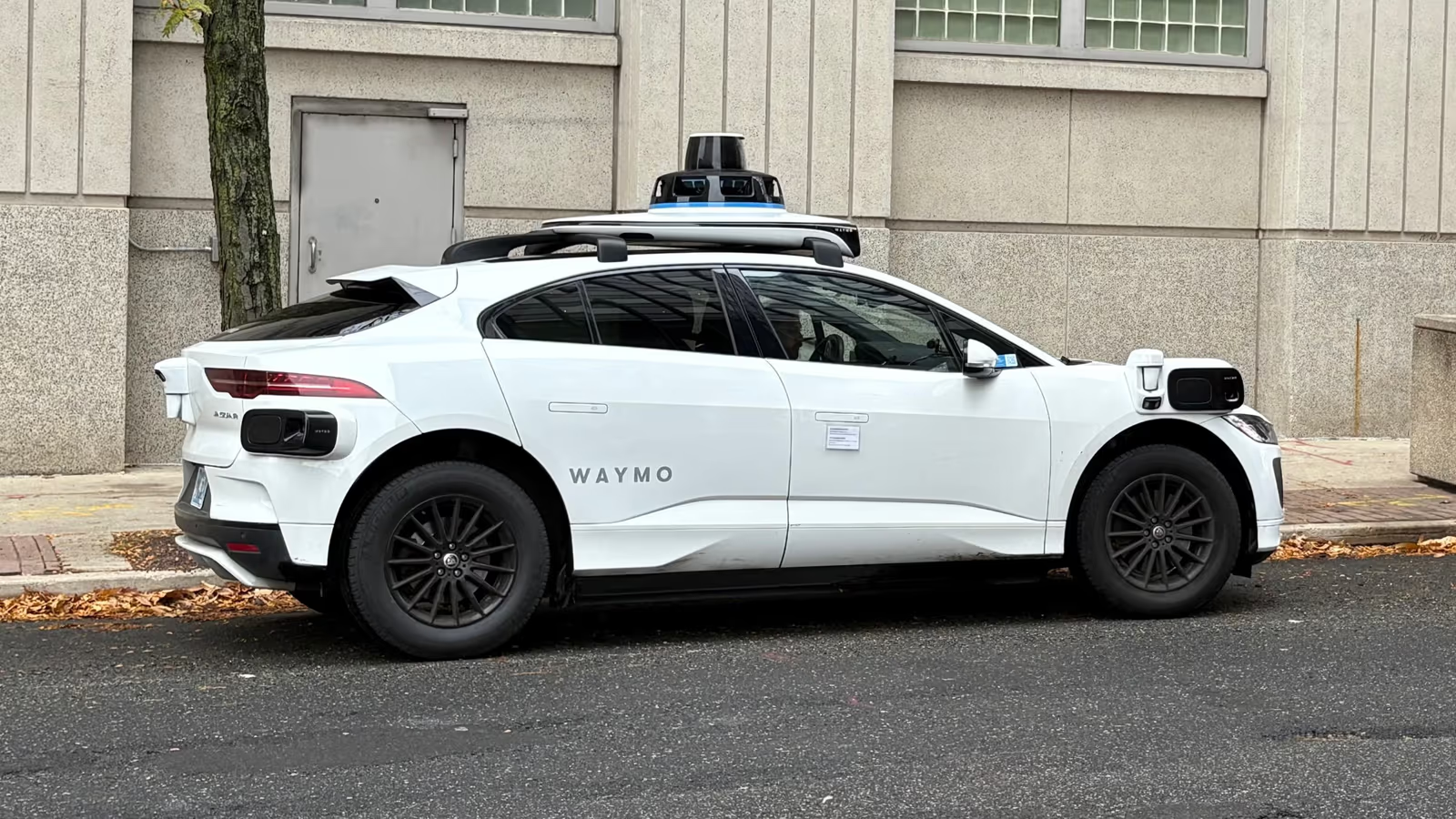
Waymo has told Uber it will launch its own app in Austin and Atlanta in January 2028, ending the exclusivity arrangement that has routed all of its robotaxi rides in those two cities through Uber for roughly three years.
This is not a clean break — not yet. Hundreds of Waymo vehicles are due to stay on the Uber platform through at least May 2028, the term of the existing contract. But the Financial Times has reported that Waymo is exploring an exit from the partnership altogether, which is a different and larger thing than dropping exclusivity.
Why the leverage shifted
The original logic of this deal was straightforward. Waymo had the vehicles; Uber had the demand. In 2023, a company with a few hundred driverless cars needed access to riders far more than a company with millions of riders needed driverless cars.
That calculation has inverted. Waymo now runs in 11 U.S. metro areas without Uber and delivers more than 500,000 paid rides per week. Once you have your own app, your own scale and your own customers in most of your markets, paying an aggregator for demand in two of them starts to look like a tax rather than a service.
This is the oldest tension in platform business: the supplier who becomes large enough to reach customers directly eventually asks what the middleman is for.
Uber's version
What makes this notable is that Uber has not accepted the framing quietly.
Uber has cited unsustainable economics and persistent safety problems, and said Waymo was not forthcoming about incidents. The examples it has pointed to are specific: vehicles driving into flooded roads, robotaxis illegally passing school buses in Austin, and dozens of empty Waymo vehicles circling a cul-de-sac in Atlanta in May.
Those are Uber's characterizations, made by a partner in the process of losing an exclusive. They are also concrete and checkable in a way that generic partnership friction is not, and they will be read closely by regulators in both states.
Waymo has not publicly disputed the account in the reporting available so far.
Phoenix already happened
This is not the first market where the arrangement has unwound. The two companies quietly ended their partnership in Phoenix after nearly three years, which now looks less like a local decision and more like the first instance of a pattern.
What to watch
Three things will determine how this reads a year from now: whether Waymo formally exits before the May 2028 contract expiry, whether Uber's safety allegations draw regulatory attention in Texas or Georgia, and what Uber replaces the capacity with — it has other autonomous partnerships, and it has every reason to accelerate them.
The competitive picture is also broader than these two companies. Tesla's robotaxi ambitions sit in the same market, and a Waymo that controls its own distribution is a more direct competitor to everyone than a Waymo distributed through someone else's app.