Kodak's second quarter is a genuinely good result, and the photography press has told a story about it that the filing does not support.
The numbers first, because they are real:
| Measure | Q2 2026 | Q2 2025 |
|---|---|---|
| Revenue | $311M | $263M |
| Gross profit | $82M | $51M |
| Gross margin | 26% | 19% |
| GAAP net income | $17M | −$26M |
| Operational EBITDA | $36M | $9M |
Fourth consecutive quarter of year-over-year growth on revenue, gross profit and operational EBITDA. Long-term debt cut from $208 million to $108 million. Interest expense down from $15 million to $6 million. That is a company that has stopped bleeding.
The 40 percent everyone is quoting is not film
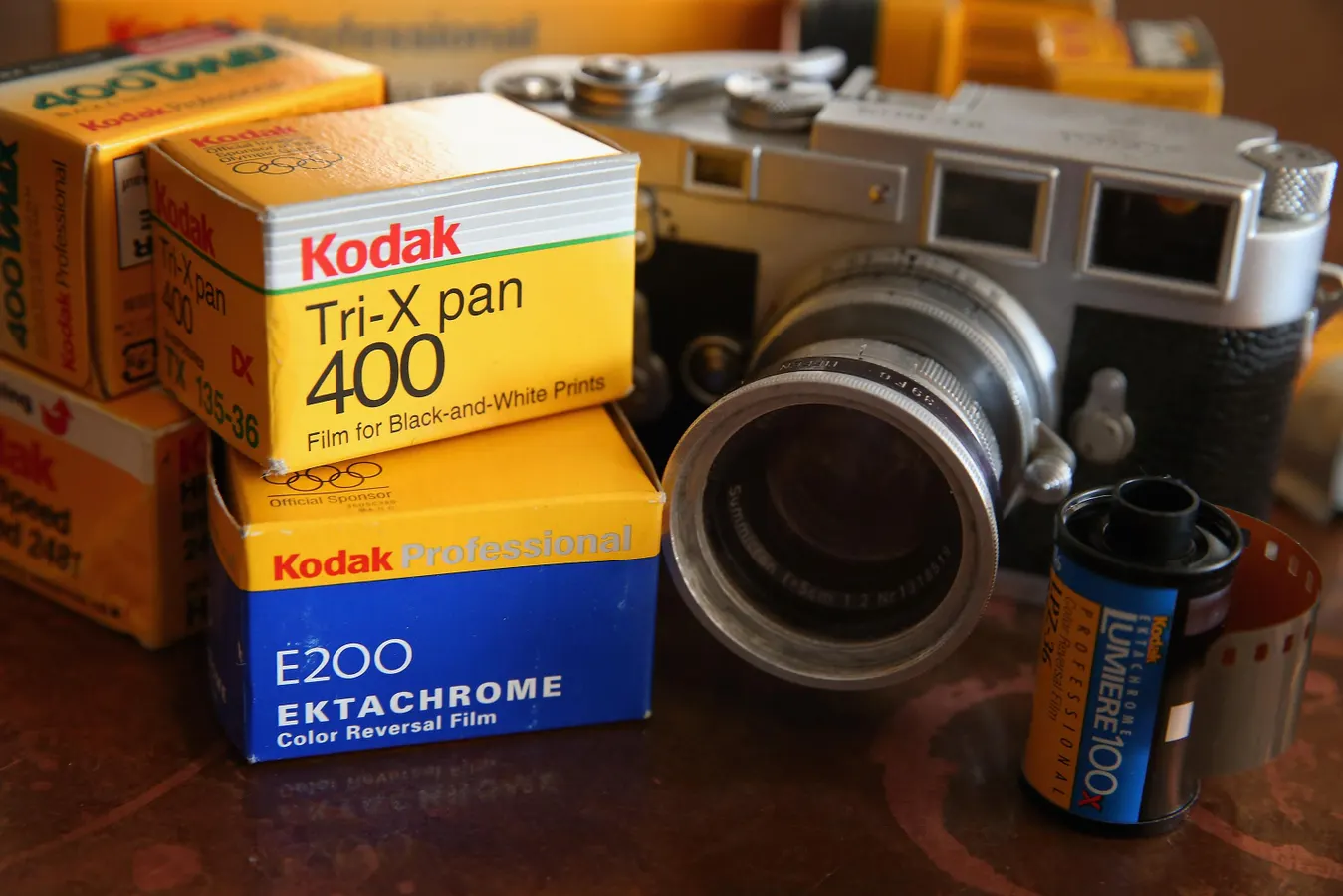
The headline running across photography sites is that Kodak film grew 40 percent.
What grew 40 percent — from $75 million to $105 million — is the Advanced Materials & Chemicals segment.
AM&C is not the film division. It contains film, specialty chemicals, and the pharmaceutical business Kodak has been building for years. On the same earnings call where Jim Continenza talked about motion picture film demand, he also reported a new pharmaceutical web store, the addition of saline products, and continued work toward Class II certification — which would let Kodak manufacture more complex, higher-margin drugs.
Kodak did not publish a revenue figure for film. Not in the release, not in the segment table. So the sentence "Kodak film grew 40 percent" is not a thing anyone outside Kodak can currently verify.
There is a decent chance film did grow strongly. Motion picture demand is real and well documented — recent Oscar-recognised releases including One Battle After Another and Sinners were shot on Kodak stock, and the company pointed to The Odyssey and a forthcoming Spielberg film on the call. Kodak reinvested in the business and that bet is visibly paying off.
But "AM&C grew 40 percent" and "film grew 40 percent" are different claims, and only one of them is in the filing.
Kodak does not describe itself as a film company
This is the part that should settle the argument. Here is the boilerplate Kodak puts at the bottom of its own press release:
"Kodak (NYSE: KODK) is a leading global manufacturer focused on commercial print and advanced materials & chemicals."
Film is not mentioned. Neither is photography.
That is not Kodak being coy. Print is 63 percent of the business — $195 million of $307 million in segment revenue — and Print delivered the more dramatic turnaround in profit terms, swinging from an operational EBITDA loss of $4 million to a gain of $8 million.
The film renaissance is a real cultural phenomenon and a genuine bright spot on Kodak's P&L. It is not what the company is.
Where the profit actually came from
The $43 million swing to net income is worth decomposing, because most of it happened below the operating line.
- Operations: improved $20 million, from a $5 million loss to $15 million of earnings. Real, and the core of the story.
- Interest expense: down $9 million, the reward for paying off debt.
- "Other (income) charges, net": swung $28 million, from a $20 million charge to an $8 million gain.
- Pension income: down $11 million, from $16 million to $5 million — working against them.
So roughly half the improvement is operational and half is financial structure and one-offs. That is normal for a turnaround and not a criticism. It is a reason not to annualise $17 million.
The number nobody put in a headline
Kodak's operations still consumed cash.
Net cash used in operating activities for the first six months of 2026 was −$25 million. Better than the −$30 million a year earlier, but still negative. Net earnings for the half were $1 million.
The cash balance fell $47 million to $290 million. The moving parts: $101 million repaid on the term loans, a $37 million inventory build — and $87 million redeemed from Kodak Retirement Income Plan reversion investments.
That last item deserves attention. Kodak is drawing down pension surplus to support the balance sheet while pension income in the P&L falls ($16 million to $5 million). Both are finite. Deleveraging funded by a pension reversion is a legitimate strategy and a one-time asset.
Silver is the constraint on the film story
Here is the tension buried in the same filing that everyone is reading as a film triumph.
Kodak lists higher silver and aluminium prices as a drag on operational EBITDA. And it attributes the $37 million inventory increase primarily to silver and aluminium commodities — Kodak is stockpiling.
Photographic film is silver-halide. Silver is not an overhead; it is the emulsion. Every additional roll and every additional foot of motion picture negative consumes more of a metal whose price the company has flagged as a headwind, in a market where industrial and investment demand has been climbing.
The film revival is good for revenue. It is structurally expensive at the gross-margin line, and it gets more expensive the better it goes. That is a more interesting question than the 40 percent, and nobody is asking it.
Two more things in the fine print
Dilution. Basic share count rose from 80.9 million to 97.8 million — about 21 percent — which is why $17 million of net income is $0.13 a share. Stock-based compensation in the quarter went from $1 million to $9 million.
Inventory. The $37 million build is defensible if it is raw-material hedging ahead of demand. It is less comfortable if silver keeps rising and volumes do not follow. The next quarter will say which.
The fair summary
Kodak had a good quarter. Revenue up 18 percent, margins up seven points, debt roughly halved, profitability restored, four straight quarters of improvement. Management deserves the credit it is taking.
Film is part of that and the reinvestment decision looks smart. But the company that made the money is a commercial printing and specialty chemicals manufacturer with a growing pharmaceutical arm, and the film line inside its results has never been separately disclosed.
If you want to know how Kodak film is really doing, the number you need is the one Kodak has not published.
Figures are from Kodak's second-quarter 2026 results as filed with the SEC on August 4, 2026. Operational EBITDA is a non-GAAP measure defined by the company.