SpaceX crushed Wall Street's third-quarter forecasts on Tuesday, reporting $14.58 billion in revenue, up 161% from a year earlier, and $4.4 billion in net income. On the earnings call, Elon Musk also confirmed that Tesla and SpaceX have each formed special committees to weigh a merger, calling it "a good idea" while stressing nothing is agreed.
SpaceX shares (Nasdaq: SPCX) closed at $147.79 and jumped about 6.6% to roughly $157.59 in after-hours trading, according to Investing.com. The results land a day before Tesla reports its own third-quarter numbers.
How did SpaceX do in Q3 2026?
The quarter was a blowout on almost every line, driven by the AI business SpaceX calls Super Intelligence.
| Metric | Q3 2026 | Estimate / prior |
|---|---|---|
| Revenue | $14.58B | ~$12.7B expected; $5.6B a year ago |
| Revenue growth | +161% year over year | — |
| Net income | $4.4B | $1.1B loss a year ago; $541M loss in Q2 |
| Diluted EPS | $0.35 | ~$0.12–$0.15 expected |
| Adjusted EBITDA | $8.8B | $2.2B a year ago |
| Capital spending | $19.6B | — |
| Cash | $53.4B | — |
Figures from SpaceX's results as reported by Benzinga, Investing.com and Tesla North; estimates from Benzinga and Bloomberg consensus.
Which SpaceX businesses grew the most?
Super Intelligence (AI): $7.6 billion in revenue, up 830% year over year and nearly triple Q2's $2.6 billion. Cloud compute deals, more Grok usage and the coding startup Cursor, acquired Aug. 14 at an implied $60 billion valuation, drove the jump. Cursor alone added $608 million through September. The segment turned a $431 million operating profit after losing $1.3 billion in Q2.
Connectivity (Starlink): $5.2 billion, up 69%. Consumer subscribers hit 13.6 million, up from 12.0 million in June, paying about $69 a month on average.
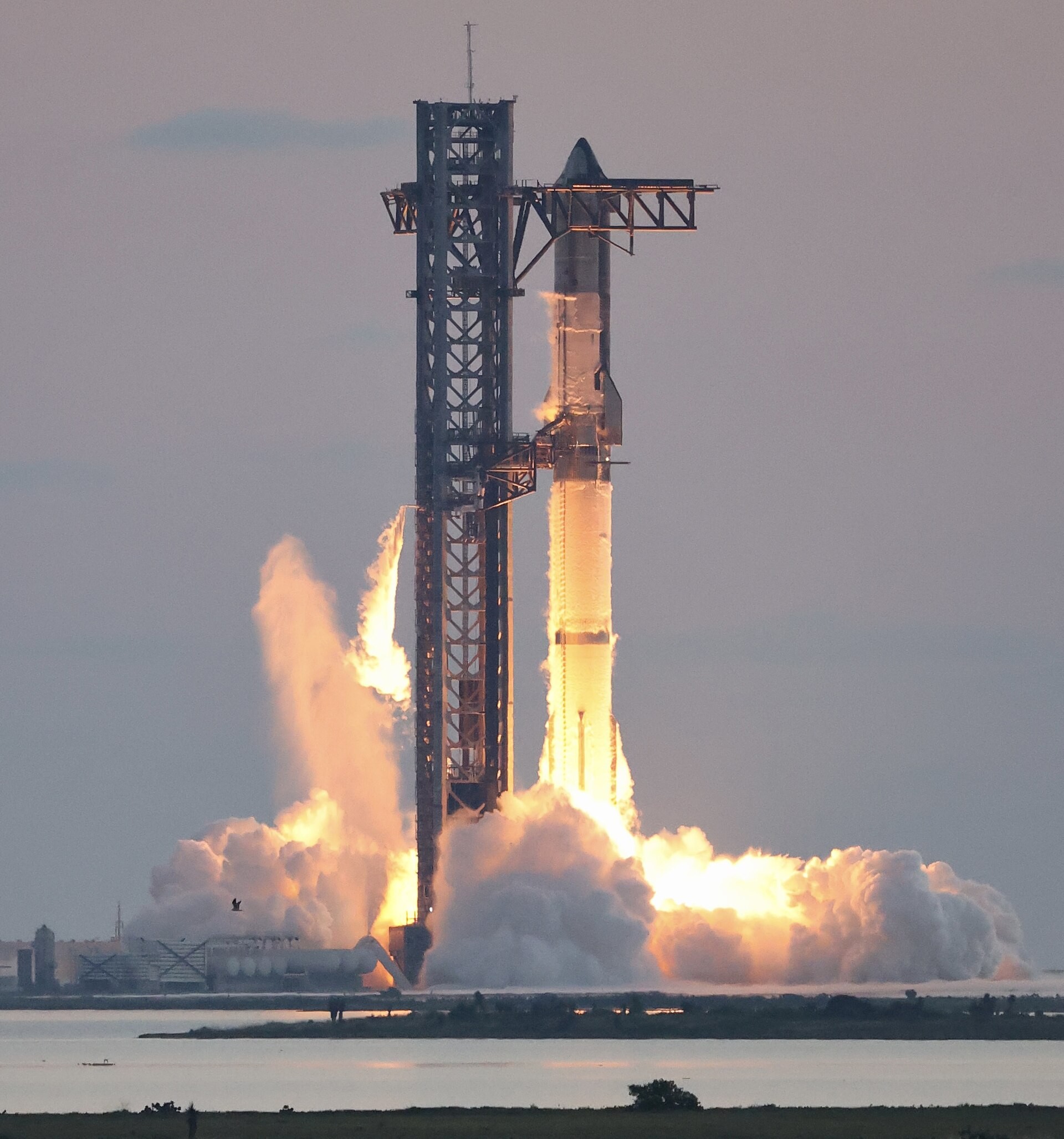
Space: $1.8 billion, up 6% year over year. That included Starship Flight 14, the company's first revenue-generating Starship mission, which carried 26 Starlink V3 satellites. SpaceX flew 35 missions in the quarter, 12 for customers, and 113 launches so far this year. (Read our earlier coverage of Starship Flight 13.)
Is Tesla merging with SpaceX?
Not yet, but it is officially being studied. Musk said both companies have set up committees of independent directors to evaluate a combination.
"Because I'm a conflicted party, I can't actually be in the discussions," Musk said, according to Axios. "I think it would be a good idea."
He cautioned that the committees have not agreed on terms, that a deal is not guaranteed, and that a Tesla vote would need approval from 50% of all outstanding shares — a high bar. SpaceX's market value is above $2 trillion and Tesla's is near $1.5 trillion, Axios reported. Analyst Gene Munster of Deepwater Asset Management put the odds of a deal within two years at 95%.
What is SpaceX's outlook?
SpaceX guided to $33 billion to $37 billion in revenue for the first quarter of 2027 and $35 billion to $40 billion in fourth-quarter capital spending, much of it for AI data centers such as Colossus II. Management said it expects to exit 2026 at a $100 billion annualized revenue run rate.
On compute, SpaceX had 1.7 gigawatts of capacity at the end of September and expects about 2.5 to 3 gigawatts by year-end. Musk said he is "highly confident" in adding 10 gigawatts in 2027, with possible upside to 20, and said the company is "hounded relentlessly" by customers seeking capacity. That buildout ties into projects like the company's planned Terafab chip plant in Texas.
What are the risks?
The spending is enormous. Morgan Stanley's Adam Jonas has called the need for more financing "a key overhang for sentiment," and Q4 capex guidance is roughly double the third quarter's. Investors will also be watching whether the merger talks move forward and how Tesla's results compare on Wednesday.
This article is for information only and is not investment advice.