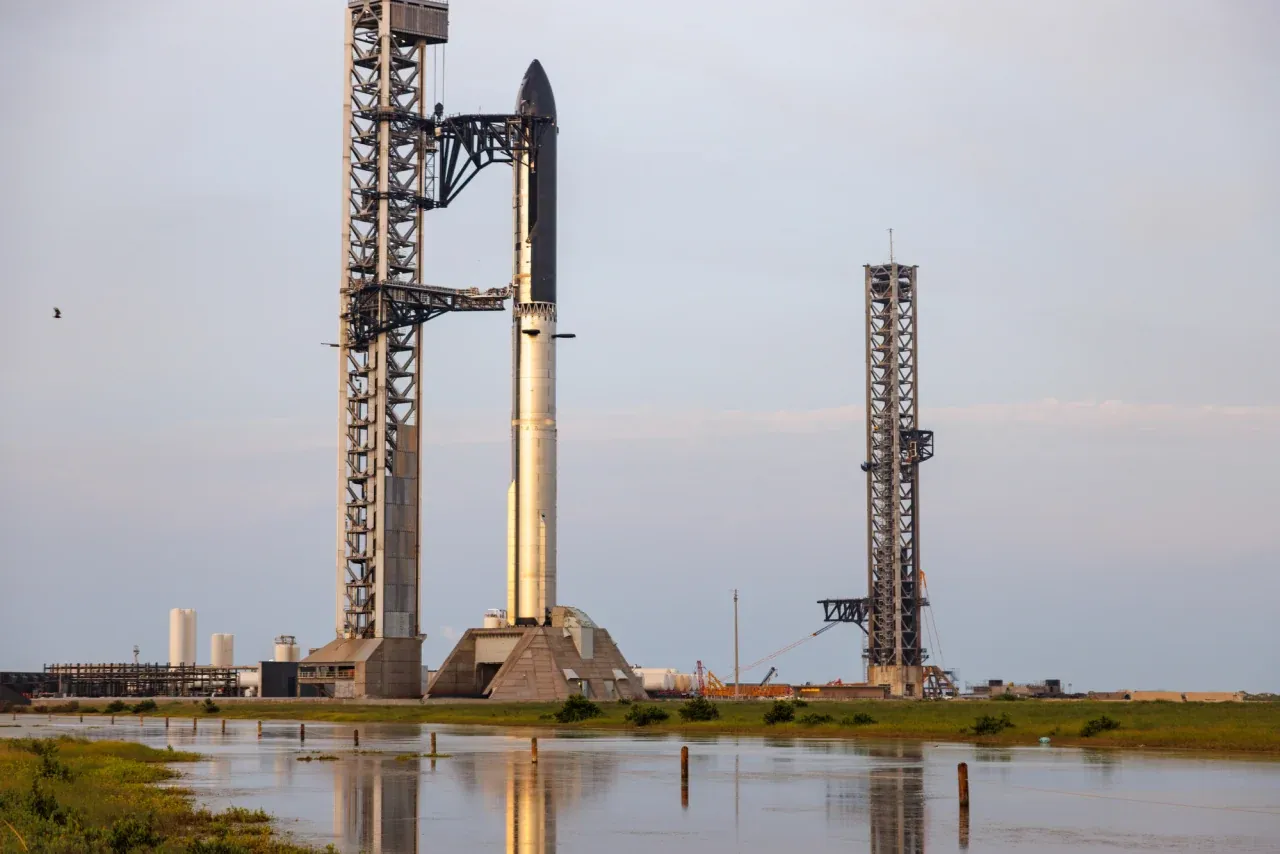
SpaceX is set to make its second attempt at launching Starship Flight 13 on Friday evening, with a 90-minute window opening at 5:45 p.m. CDT (6:45 p.m. EDT, 2245 UTC) from Starbase in southern Texas.
As of publication the rocket had not launched. This is a live situation, the window had not yet opened, and launch attempts routinely slip or scrub. Treat any specific claim about what happened as unconfirmed until SpaceX or its stream shows it.
What went wrong the first time
The first attempt ended in a post-ignition abort on Thursday, July 16 — the point at which engines have lit and the vehicle is moments from release. On-screen telemetry at the moment of the abort appeared to show four engines that had not ignited.
An abort at that stage is the system working as designed, but it is not a small event. SpaceX spent the following days replacing and testing multiple Raptor engines on the Super Heavy booster, which is why the turnaround took more than a week rather than a couple of days.
Then the weather
The rebuilt booster was ready before the sky was. SpaceX waived off a subsequent attempt as Tropical Storm Bertha moved through Texas, pushing the target to July 24.
What makes Flight 13 different
Previous Starship flights have carried mass simulators — metal stand-ins shaped like satellites, flown to test the deployment mechanism without risking hardware that matters.
This one carries 20 V3 Starlink satellites. Actual ones.
That distinction is the whole point of the vehicle. Starship's economic justification has always been that it can put Starlink hardware in orbit at a volume and cost that Falcon 9 cannot approach, and until this flight that argument has been made entirely on paper. The satellites are to extend their solar arrays and antennas after deployment and attempt to connect with ground stations in South Africa and with the broader Starlink constellation via high-capacity lasers.
If that sequence works, SpaceX stops describing Starship as a test program and starts describing it as a launch vehicle. If the deployment fails, the schedule slips again — and the schedule is what everything else depends on.
What to watch
Three moments matter tonight in order: whether all engines light and the vehicle clears the pad, whether the booster and ship separate cleanly, and whether the Starlink deployment sequence executes.
Everything before deployment SpaceX has done before. Deployment is the new part.
This story reflects the situation before the launch window opened and will need updating with the outcome.