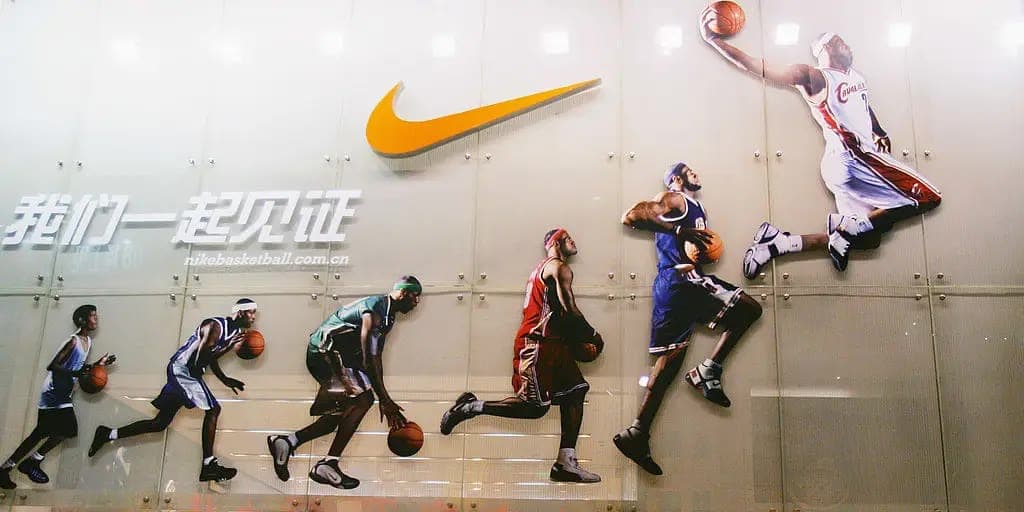
Nike is trying to reassert control over how it sells online in China, ending online sales agreements with a large swath of its wholesale distributors and steering shoppers toward its own official channels. It's a sweeping change aimed at reviving a business that has been sliding — and a gamble that trading short-term sales volume for brand control is the way to win Chinese consumers back.
What's actually changing
Starting in January, key sportswear retailers in China will stop selling Nike's clothing and shoes online, pivoting instead to in-store sales. Online, Nike's products will be funneled through new Nike-branded digital storefronts on the country's dominant e-commerce platforms — Tmall, JD.com and Douyin — as well as Nike's own website and app.
The scope is significant. Nike currently has more than 1,000 online sellers in China, and the majority of its 16 store partners there — companies that own and manage thousands of Nike stores between them — will stop selling online under the new plan. Some licensee partners are expected to be exceptions.
The logic: premium, not cluttered
The rationale, in Nike's telling, is about restoring order and trust. "Our marketplace has become so fragmented and cluttered," said Cathy Sparks, a 25-year company veteran appointed to run Greater China earlier this year. "What consumers want is an experience that's premium, true to the brand, trustworthy, and certainly connected between digital and physical." By restricting where its products appear, Nike says it can rebuild shopper trust and, crucially, sell at full price rather than watch discounting spread across a sprawl of third-party sellers.
The problem it's trying to fix
The overhaul is a response to real pain. China is Nike's third-largest market and has become one of its biggest worries. Sales in Greater China fell 17% on a constant-currency basis in the most recent quarter — a steep worsening from a 10% decline the quarter before. Fast-rising domestic brands Anta and Li Ning have been chipping away at Nike's share, while foreign challengers like On and Hoka have surged.
The China stumble underscores how much work remains in CEO Elliott Hill's turnaround. In nearly two years leading the company, Hill has pushed to refocus Nike on sport, rebuild wholesale relationships in North America, and freshen the product lineup — but the results in China keep reinforcing investor doubts.
Not everyone is convinced
The move drew sharp skepticism. BNP Paribas senior analyst Laurent Vasilescu called it a "strategic misstep" that would hand opportunities to competitors, arguing Nike is treating the wrong ailment. "Nike doesn't have a distribution problem in China and elsewhere. It has a product problem," he wrote.
The market reaction landed on Nike's own retail partners. Shares of Chinese sportswear retailers tied to Nike sales fell sharply on the news, with Topsports — which generates roughly 22% of its revenue from online sales of Nike products — dropping a record 23%, and Pou Sheng also sliding. For those partners, losing the right to sell Nike online is an immediate hit to a real revenue stream.
Nike's counter-bet
Nike's own view is that controlling the storefront is only half the answer, and it's signaling that the other half — better products for Chinese shoppers — is coming. Sparks said releasing merchandise more relevant to local consumers is a priority, and the company has appointed a vice president of local product creation for Greater China.
That's the crux of the wager. Nike is betting that a cleaner, premium, tightly controlled marketplace, paired with more locally resonant products, can reverse the slide. The skeptics counter that no amount of distribution discipline fixes a lineup shoppers aren't excited about. Which side is right won't be clear until the new storefronts go live in January — and until Chinese consumers decide whether a more curated Nike is one they want to buy again.