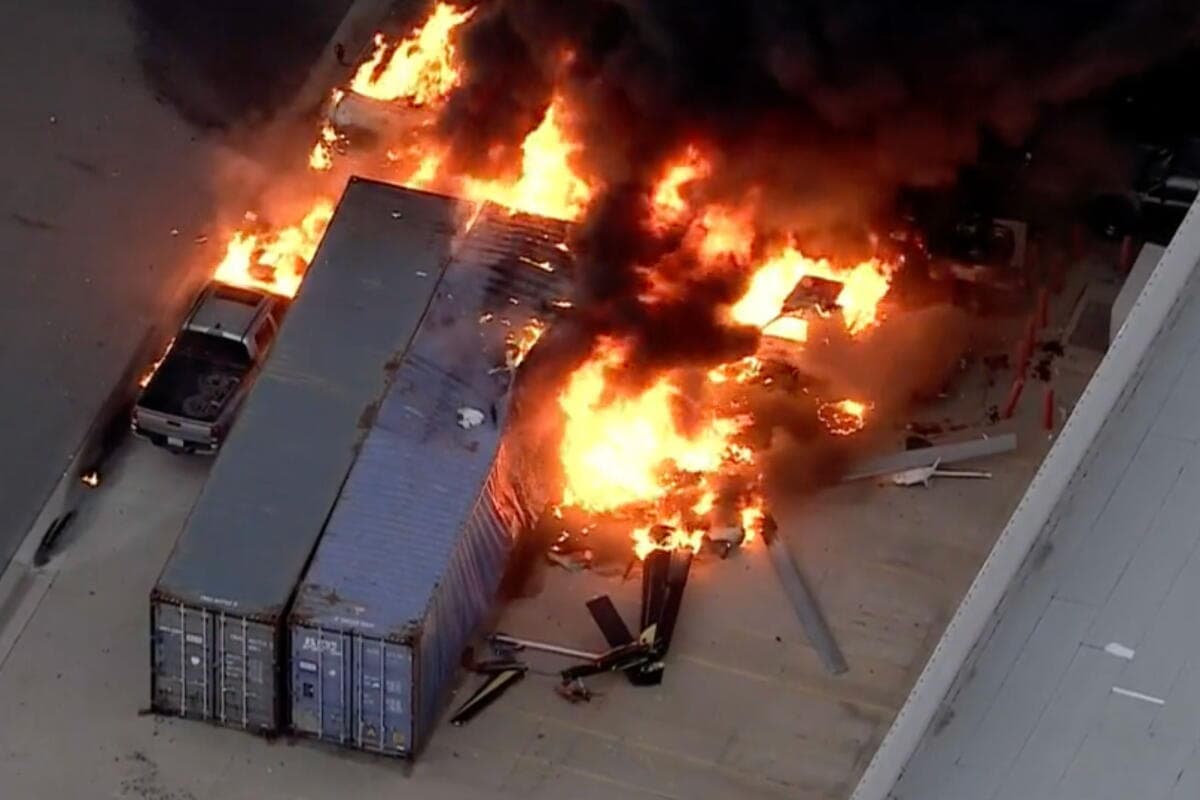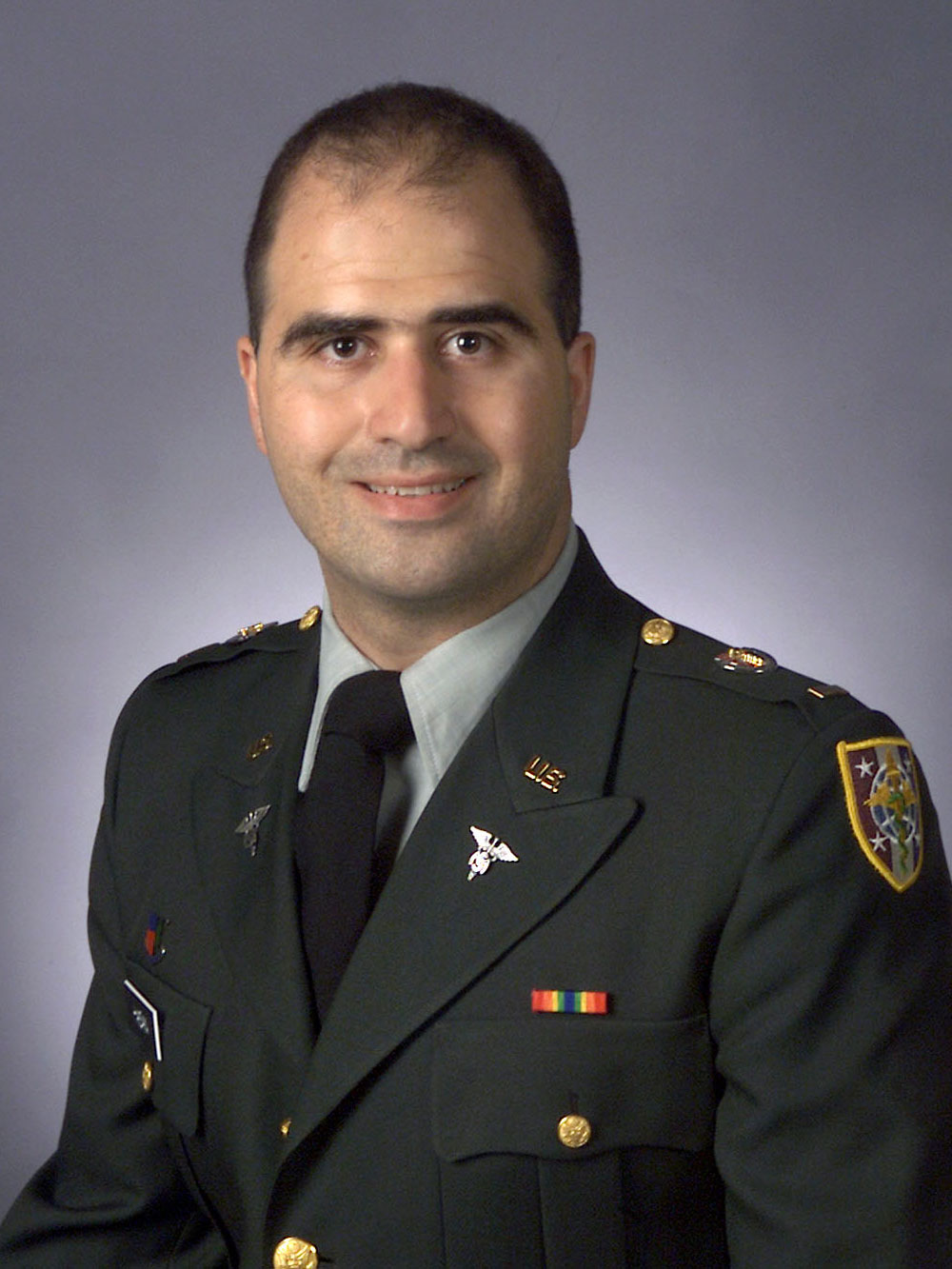
President Trump has approved death by US Army firing squad for Nidal Malik Hasan, the former Army major and psychiatrist who murdered thirteen people at Fort Hood on November 5, 2009.
Chief Pentagon Spokesman Sean Parnell announced it Monday:
"Secretary of War Pete Hegseth has recommended — and President Donald J. Trump has approved — death by U.S. Army firing squad for convicted terrorist Nidal Malik Hasan, the jihadist who opened fire on unarmed American soldiers at Fort Hood in 2009… Judgement day for Hasan has finally come."
Hold on to the two words in bold. We will come back to them, because the survivors of Fort Hood spent five and a half years fighting the Pentagon to get them said out loud.
First, three things the coverage is getting wrong or leaving out.
It is not sixty years. For this method, it is eighty-one
Nearly every outlet is calling this the first US military execution in more than sixty years. That is true in general terms, and it undersells what is being proposed.
The last US military execution of any kind was Pvt. John Bennett, hanged at Fort Leavenworth on April 13, 1961. That is sixty-five years.
But the last time the United States Army shot a condemned man was January 31, 1945, in a walled garden in eastern France. The man was Pvt. Eddie Slovik, executed for desertion — the only American executed for desertion since the Civil War, and a case still taught as a cautionary tale about military justice under pressure.
Eighty-one years. Nobody now serving in the United States Army has ever conducted one.
The Army's own rulebook says lethal injection
Here is the part that has gone almost entirely unremarked, and it is not a technicality.
Army Regulation 190-55 is the document that governs procedures for military executions. Since 1986, it has specified lethal injection. It still does. No published amendment replaces it with a firing squad.
So the announced method is not currently the method the Army's own regulation provides for. There are ways that gets resolved — the regulation can be revised, and the President's Article 71 approval authority is broad — but it has to be resolved by someone, in writing, before a detail of soldiers is assembled.
This is precisely the kind of gap that produces litigation, and Hasan will have counsel whether he wants them or not.
"Judgement day has finally come" is premature
Parnell's line is good copy. It is not quite accurate.
Hasan's direct appeals are finished. The Court of Appeals for the Armed Forces affirmed his conviction and sentence in March 2024, and the Supreme Court declined to hear the case in March 2025. That is what unlocked presidential approval in the first place.
But direct appeal is not the end of the road in a capital case. As the National Institute of Military Justice notes, Hasan now enters collateral review — he can petition for a writ of habeas corpus in the US District Court for the District of Kansas, and move to stay the execution while it is heard.
That has not happened yet. In practice it almost certainly will, because appointed counsel in a capital case do not have the option of standing down.
Which brings us to the strangest feature of this entire case.
The condemned man has been trying to lose since 2013
Hasan has never defended himself in any ordinary sense.
He admitted the shooting. He tried to plead guilty, which a capital court-martial does not permit. He dismissed his lawyers and represented himself. He called no witnesses, made no closing argument, and offered the jury essentially nothing.
What he did offer was a theory. In June 2013 he asked Judge Col. Tara Osborn for more time to argue he had acted "in defence of others." She asked him who he had been defending.
"The leadership of the Islamic Emirate of Afghanistan, the Taliban."
A man who wants to be shot by the United States Army, and an Army whose own rules will not let him simply be shot — mandatory appellate review, appointed counsel, a sixty-day minimum — is a genuinely odd piece of machinery. Whatever the firing squad is for, it is not deterrence, and it is not something he is resisting.
Now the two words
Go back to "convicted terrorist" and "jihadist."
For more than five years, the Department of Defense did not call Fort Hood terrorism. It called it workplace violence.
That was not a semantic preference. It had a price, and the people who paid it were the wounded.
Because the attack was not classified as a hostile act, the dead and injured were not treated as combat casualties. No Purple Hearts. And with no Purple Heart came no hostile-fire pay, no combat-related special compensation, and for some survivors a harder fight for medical care than the people who shot back at Hasan ever expected to have.
Rep. John Carter filed the first paperwork seeking Purple Hearts for the victims less than three weeks after the shooting. It took until April 10, 2015.
And it took an act of Congress — the 2015 National Defense Authorization Act had to widen Purple Heart eligibility to cover attacks inspired or motivated by a foreign terrorist organisation, language written with Fort Hood in mind, because the existing rules did not reach a man who had radicalised by email.
Then, after the medals were pinned on, the Pentagon argued that the Purple Heart did not carry the benefits that normally come with it. That took Army Secretary John McHugh ordering the payments.
So when the Pentagon's spokesman says "convicted terrorist" on a Monday in 2026, it is worth noticing that this is the same building that spent half a decade declining to say it, while the people in question were learning to walk again.
The thirteen
They are rarely listed, and they should be.
| Michael Grant Cahill, 62 | civilian physician assistant, retired chief warrant officer |
| Maj. Libardo Eduardo Caraveo, 52 | |
| Staff Sgt. Justin Michael DeCrow, 32 | |
| Capt. John P. Gaffaney, 56 | |
| Spc. Frederick Greene, 29 | |
| Spc. Jason Dean Hunt, 22 | |
| Sgt. Amy Sue Krueger, 29 | |
| Pfc. Aaron Thomas Nemelka, 19 | |
| Pfc. Michael S. Pearson, 22 | |
| Capt. Russell Gilbert Seager, 51 | |
| Pfc. Francheska Velez, 21 | newly home from Iraq, and pregnant |
| Lt. Col. Juanita L. Warman, 55 | |
| Pfc. Kham See Xiong, 23 |
Michael Cahill, the only civilian, was a retired warrant officer and a physician assistant. He was 62 and he charged Hasan with a chair.
And among the 32 wounded was former Staff Sgt. Patrick Zeigler, a two-time combat veteran shot four times, who spent close to a year in hospitals. He told the Killeen Daily Herald in 2023:
"He looked me straight in the eyes as he pointed the gun at me, and a split second later, I'm on the floor with a hole in my head."
What happens next
The Secretary of the Army sets the time and place. Army policy requires the execution to take place no sooner than 60 days and no later than 150 days after presidential approval — a window running from roughly early December 2026 to early March 2027.
He is held at the United States Disciplinary Barracks at Fort Leavenworth, Kansas. He is 56, and he has been paralysed from the chest down since the responding officers shot him in the car park seventeen years ago.
Watch for three things: whether AR 190-55 is formally amended to permit a firing squad, whether a habeas petition and stay motion are filed in the District of Kansas, and whether the Army names the time and place at all before a court is asked to intervene.
Seventeen years is a long time. It is not yet over.
No execution date has been announced. Hasan's direct appeals under the UCMJ are exhausted, but federal collateral review remains available to him and has not been litigated. Army Regulation 190-55 currently specifies lethal injection as the method of military execution; no amendment permitting a firing squad has been published.