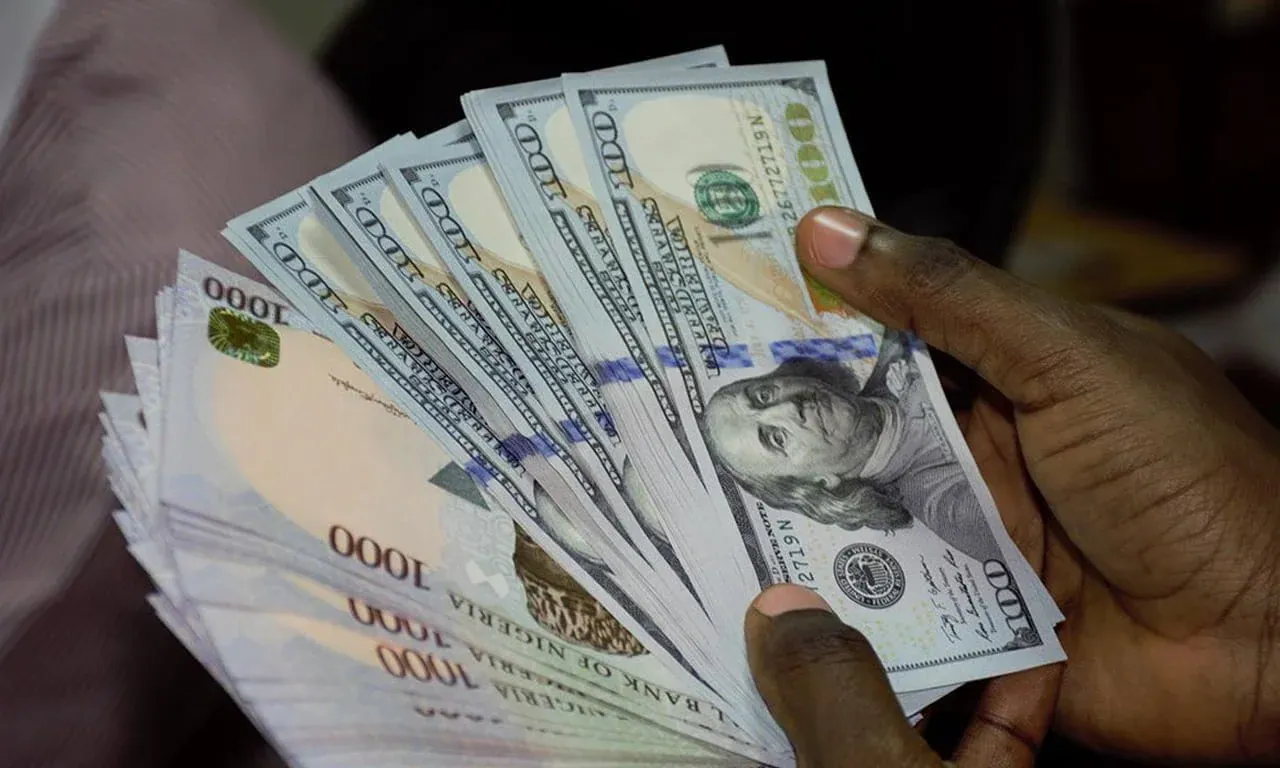
Nigeria's naira strengthened on Friday, closing around ₦1,368 to ₦1,370 per dollar at the official Nigerian Foreign Exchange Market, with the parallel market near ₦1,406 to ₦1,420.
Analysts polled by Reuters this week nonetheless expect it to weaken over the coming days — along with Ghana's cedi and Uganda's shilling. Kenya's shilling and Zambia's kwacha are seen holding broadly steady.
Both things can be true, and the gap between them is the most useful thing to understand about currency coverage: a single day's move is not a trend. Daily rate stories are among the most-read financial content in Nigeria, and they are also the least informative, because they report noise as though it were direction.
The spread is the number worth watching
The more meaningful figure on Friday was not either rate, but the distance between them.
An official rate near ₦1,368 against a parallel rate near ₦1,415 is a gap of roughly 3.4 percent. By the standards of the last several years that is remarkably tight. There were long stretches when the street price of a dollar in Lagos ran dramatically above the official rate, and that divergence was itself the problem — it meant official dollars were rationed, and anyone outside the queue paid a premium.
Narrowing that gap was the central purpose of the FX reforms Nigeria began in 2023. By that specific measure, it is working. By another measure it has been punishing: the naira has lost roughly 69 percent of its value against the dollar since those reforms began.
Both statements describe the same policy. A currency that trades freely finds a lower level; it also stops having two prices.
What's actually pushing on the naira
The pressure most consistently cited is dollar demand from fuel importers, alongside elevated hard-currency requirements from importers and corporate buyers more broadly.
That contains a genuine paradox worth stating plainly: Nigeria exports crude oil, so a higher oil price ought to help it. But Nigeria has long imported a large share of its refined fuel, which means rising crude prices raise the import bill in dollars at the same time they raise export earnings. The two do not cleanly offset, and the timing rarely aligns.
Why the Middle East shows up in a Kampala exchange rate
Uganda's shilling is expected to extend losses specifically because renewed fighting in the Middle East has driven global crude higher.
The mechanism is simple and worth spelling out. Uganda is a net fuel importer. When oil goes up, the country needs more dollars to buy the same quantity of fuel. More dollars leaving means local demand for dollars rises, and the shilling falls. No trading desk decision is required — it follows from the arithmetic of the import bill.
This is the ordinary way distant conflicts reach household budgets: not through headlines, but through the price of a tank of fuel and, a step later, the price of everything moved by truck.
A note on reading rate coverage
If you are checking rates for a practical reason — a transfer, an invoice, school fees — the figures in any article are already stale by the time you read them. Use the Central Bank of Nigeria's published rate or a live service, and be aware that the rate you can actually transact at depends on which window you have access to.
Nothing here is a forecast or advice. The forecasts referenced are those of traders surveyed by Reuters, and currency markets have a long record of embarrassing people who were confident about the next week.