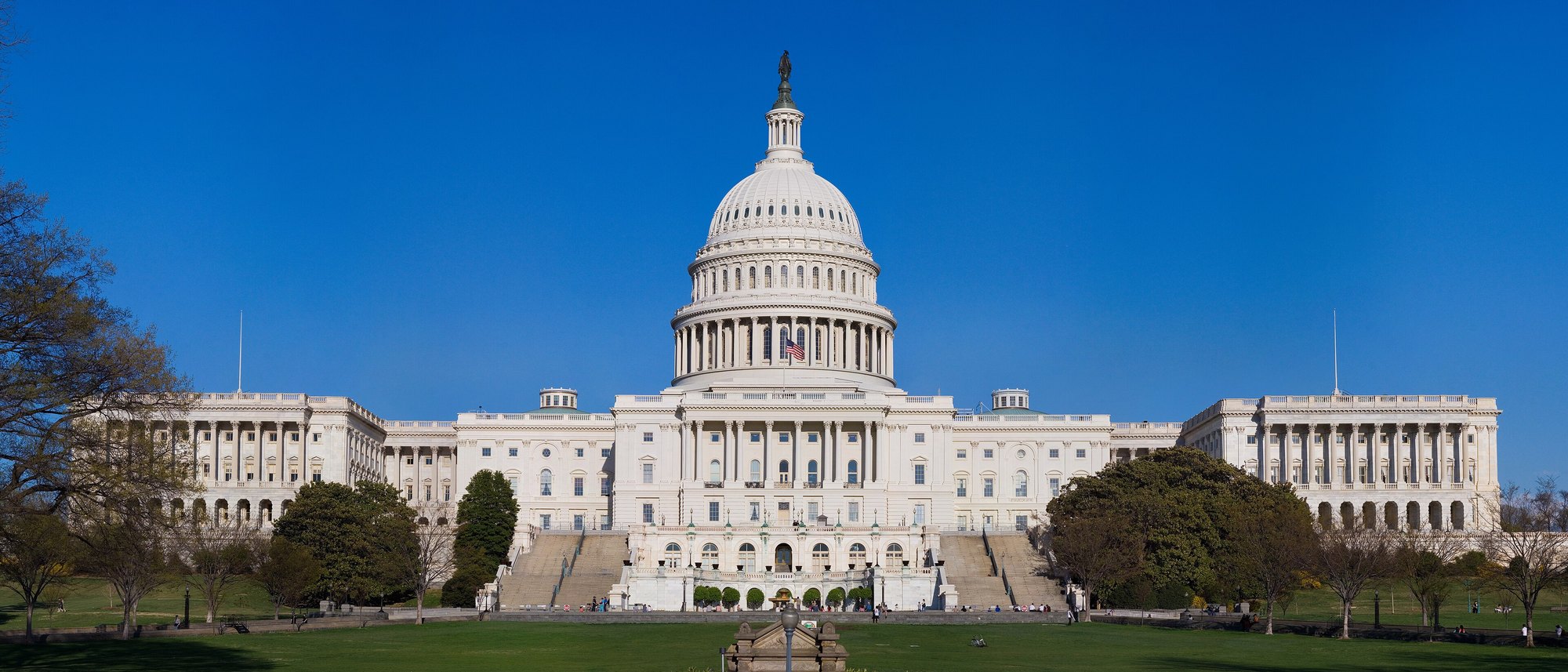
With 16 days until the November 3 midterm elections, Democrats lead in the latest national polls, President Trump's approval rating has hit a record low in one major survey, and both parties say they expect to win.
Here is where things stand.
The polls
Two large national surveys released this month put Democrats 8 points ahead on the question of which party voters want to control the House.
| Poll | Dates | Sample | Democrats | Republicans |
|---|---|---|---|---|
| ABC News/Washington Post/Ipsos | Oct 9–13 | Likely voters | 52% | 44% |
| ABC News/Washington Post/Ipsos | Oct 9–13 | Registered voters | 50% | 42% |
| Pew Research Center | Sept 28–Oct 4 | Registered voters | 44% | 36% |
In the ABC/Post/Ipsos poll, the registered-voter margin has grown from 3 points in July. Independents who are likely to vote favour Democrats 56% to 35%.
Trump's approval in that poll is 33% among all adults, with 66% disapproving, which the pollsters call a record personal low, below the 38% he registered after January 6, 2021. Among registered voters it is 37%. His weakest issue is the cost of living (21%); his strongest is immigration (38%). Seventy-five per cent rate the economy negatively, and 71% now call gasoline unaffordable, up from 28% in February.
Enthusiasm also favours Democrats. In Pew's survey, 63% of those backing Democratic candidates say they are extremely motivated to vote, compared with 46% of those backing Republicans.
Pew also asked who people expect to win: 55% expect Democrats to take the House and 40% expect Republicans to keep it. On the Senate, the public is split, 48% to 46% in Republicans' favour.
National polls measure the overall environment. They do not decide individual House districts or Senate races, and the gap between a national lead and seats won can be large.
The House: "a working majority"
Republicans hold one of the narrowest House majorities in modern times. Speaker Mike Johnson says they will keep it, though he has dialled back predictions of a bigger one.
"It's not going to be a giant majority," Johnson told the Associated Press in an interview in Bangor, Maine. "But I genuinely believe that we will have a working majority."
"We run to win, and that's biblical: You run to win," he said. "And I believe that we will." Johnson says House Republicans have raised nearly half a billion dollars, and he plans to visit more than 20 states and 40 districts before Election Day. He says the political mood reminds him of 2024.
Democrats, led by Hakeem Jeffries, who would become speaker if they win, are preparing a first-100-days agenda for a new Congress, the AP reported. Democratic candidates are centring their campaigns on Trump, the cost of living and the war with Iran, Fox News reported.
The Senate: four seats
Republicans hold 53 seats. Democrats hold 47, counting two independents who caucus with them. Democrats need a net gain of four for a majority; with a 50-50 Senate, Vice President JD Vance would break ties.
The Cook Political Report said on October 6 that "the question isn't whether Democrats will gain seats, but how many," and put its range of likely Democratic gains at two to six seats, "squarely within the range of the four seats they need." It moved Kansas to Toss Up, New Hampshire to Lean Democrat and North Carolina to Likely Democrat.
Republicans point out that Democrats must win in states Trump carried, including Ohio and Iowa, which he won by double digits. Fox News' Power Rankings currently show each party at 47 seats, with six toss-ups and three leaning races. CNN analyst Harry Enten said this week that the Senate remains "way too close to call."
The races drawing the most attention, according to ratings compiled by The Hill and NewsNation:
| State | Matchup | Ratings |
|---|---|---|
| Alaska | Mary Peltola (D) vs. Sen. Dan Sullivan (R) | Cook: Toss Up · Sabato: Lean D |
| Iowa | Ashley Hinson (R) vs. Democratic nominee | Cook, Sabato: Toss Up · Inside Elections: Tilt R |
| Kansas | Adam Hamilton (D) vs. Sen. Roger Marshall (R) | Cook: Toss Up |
| Ohio | Sherrod Brown (D) vs. Sen. Jon Husted (R) | Competitive |
| Maine | Troy Jackson (D) vs. Sen. Susan Collins (R) | Competitive |
| Texas | James Talarico (D) vs. Ken Paxton (R) | Competitive |
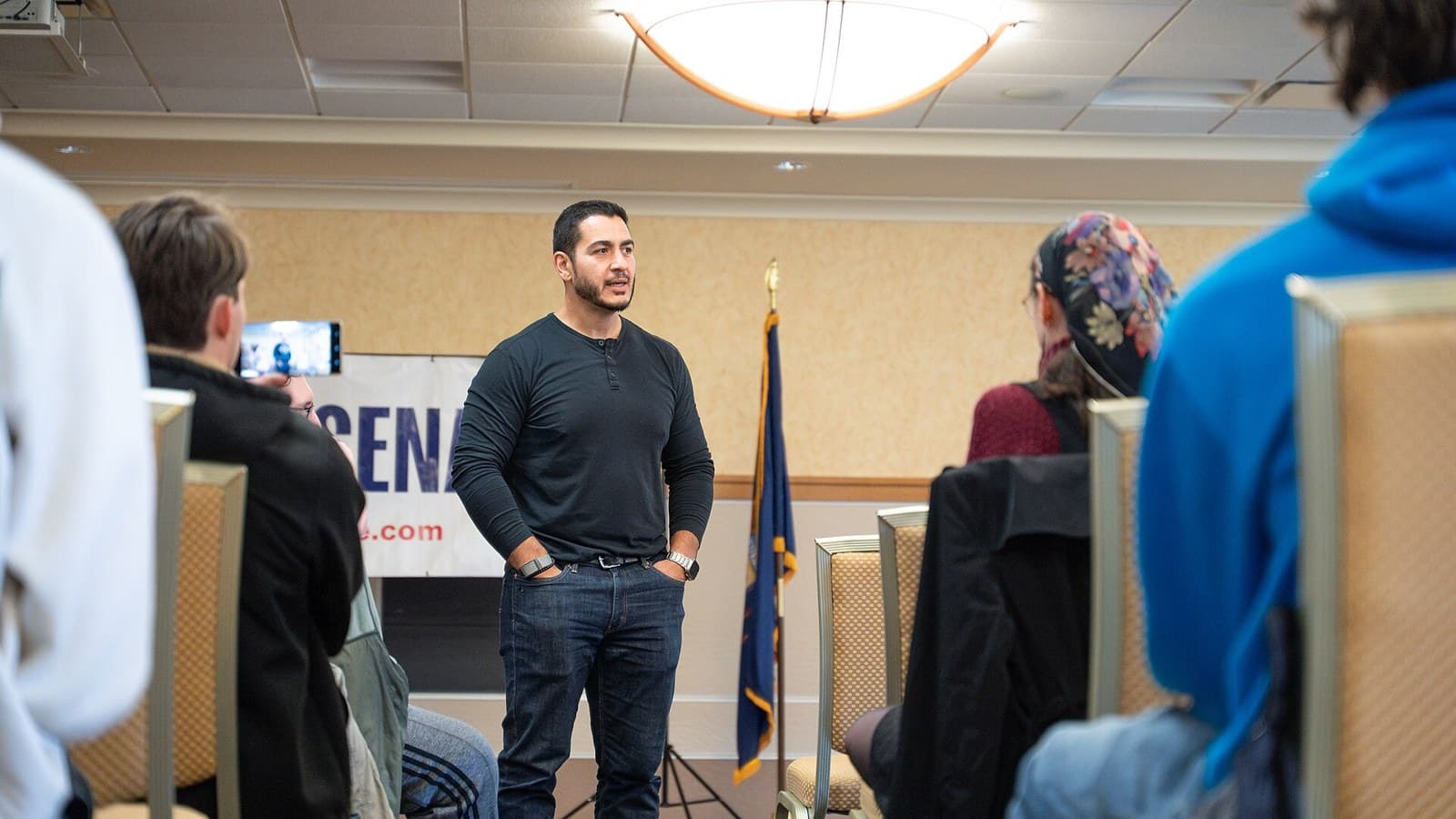
| Michigan | Abdul El-Sayed (D) vs. Mike Rogers (R), open seat | Competitive |
| North Carolina | Roy Cooper (D) vs. Michael Whatley (R), open seat | Cook: Likely D |
| New Hampshire | Chris Pappas (D) vs. John E. Sununu (R), open seat | Cook: Lean D |
Individual race polls are close in several of these. An InsiderAdvantage poll in Kansas (Oct 9–10) had Hamilton at 47.5% and Marshall at 46.7%. A Bowling Green State/YouGov poll in Ohio (Sept 29–Oct 9) had Brown ahead 48% to 42%. A Quantus Insights poll in Michigan (Oct 5–6) had El-Sayed at 47.6% and Rogers at 46.5%, within its margin of error.
The case each side is making
Republicans point to their fundraising, the narrow but still-standing House majority, and a Senate map that requires Democrats to win in Republican-leaning states. Johnson dismissed criticism that Congress has ceded power to Trump as "absolute nonsense."
Democrats argue that voters are unhappy with prices and the direction of the country, 72% of whom say it is on the wrong track in the ABC/Post/Ipsos poll, and that their voters are more motivated to turn out.
What to watch
Turnout. Whether Democrats' enthusiasm edge in the polls shows up in early voting and on Election Day.
Rating changes. Whether forecasters keep moving Senate races toward Democrats, as Cook and Sabato have this month, or whether races tighten.
The economy. Gas prices and the cost of living are the issues voters rate Trump lowest on, and the ones both parties are campaigning on.
Published Sunday, October 18, 2026. Poll figures are from the ABC News/Washington Post/Ipsos poll (Oct. 9–13; ±2 points overall, ±2.2 among registered and likely voters) and the Pew Research Center (Sept. 28–Oct. 4). Senate ratings are from the Cook Political Report, Sabato's Crystal Ball and Inside Elections as reported by Cook, The Hill and NewsNation, and change frequently. Johnson's remarks are from an Associated Press interview.