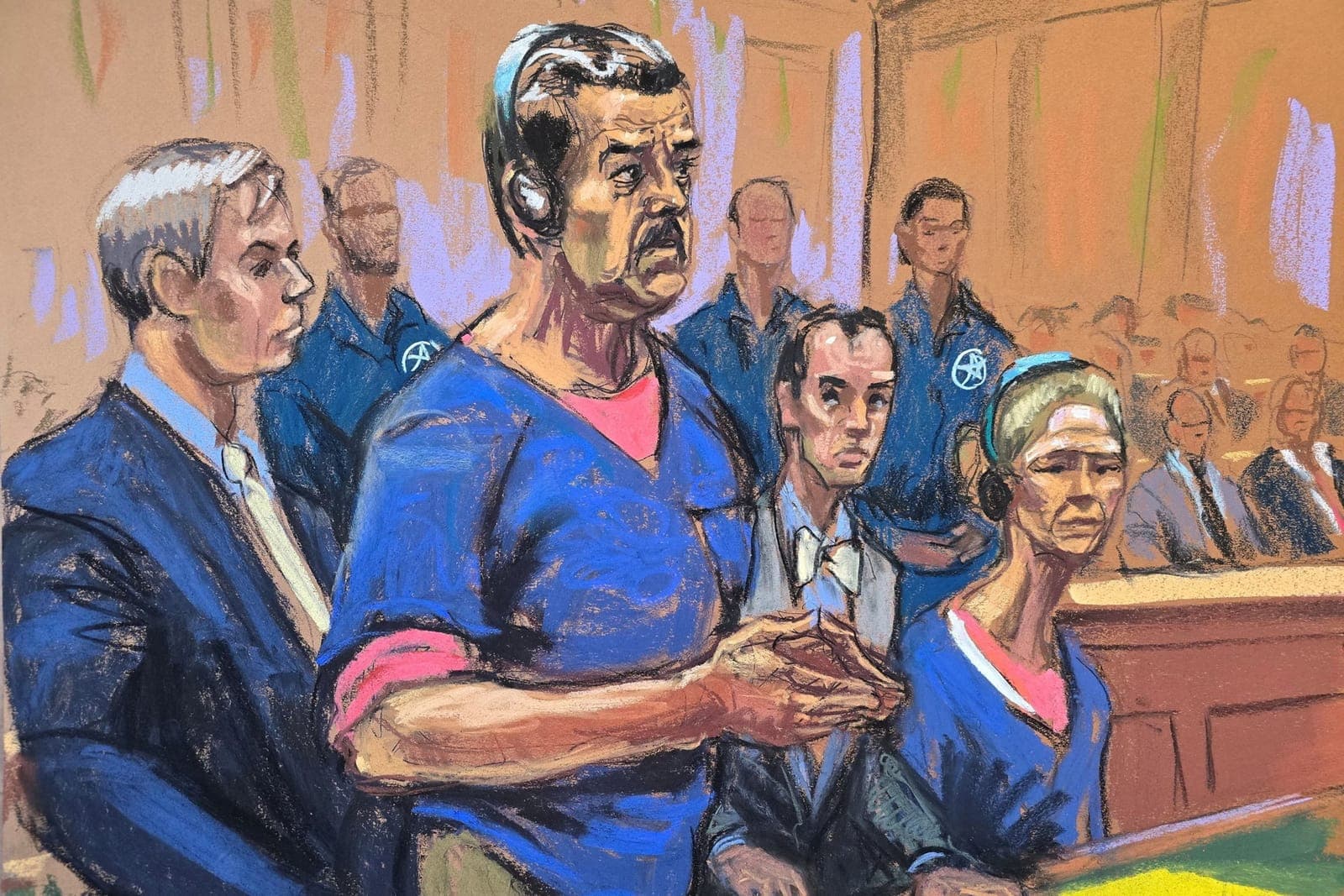
A federal judge in New York has set a trial date of June 1, 2027, for former Venezuelan president Nicolás Maduro and his wife, Cilia Flores, in the US drug-trafficking case against them. Judge Alvin Hellerstein scheduled the date on Wednesday at the request of attorneys for both sides, during a brief hearing in which neither defendant spoke.
Both Maduro and Flores have pleaded not guilty to the charges, and both have disputed the fundamental legitimacy of the proceedings against them. The hearing lasted about 15 minutes and turned largely on procedure — setting the trial timeline and previewing the legal fights to come.
The charges
Maduro faces four counts, including a "narco-terrorism" conspiracy charge and a cocaine-importation conspiracy charge. If convicted, he could face life in prison. The indictment, first brought years before his appearance in a US courtroom, alleges that Maduro took part in a conspiracy to traffic cocaine into the United States while serving as Venezuela's head of state.
Neither Maduro nor Flores has requested release on bail, and both remain in US custody ahead of the trial.
A contested path to a US courtroom
How Maduro came to stand before an American judge is itself one of the central disputes in the case. He and Flores were taken into US custody following a US military operation in Caracas in January 2026. The two sides describe that operation in sharply different terms.
The administration of President Donald Trump has characterized the action as a "surgical law enforcement operation" carried out to enforce a criminal indictment. Critics, including international legal scholars cited in reporting on the case, have described it as an unlawful abduction of a sitting head of state and questioned whether a US court has the authority to try him at all. Venezuelan authorities have said the operation killed dozens of people; those casualty figures have not been independently verified. These competing characterizations — law-enforcement action versus illegal seizure — are likely to sit at the heart of the pretrial arguments.
The defense strategy
Maduro's lawyer, Barry Pollack, signaled the outlines of the defense. He said he intends to challenge the case first on the grounds of sovereign immunity — the legal principle that a foreign head of state cannot be prosecuted in another country's courts for official acts. If that argument succeeds, it could end the case before it ever reaches trial. Pollack also said he expects to challenge the legality of the military operation used to capture Maduro and bring him to the United States.
The immunity question is expected to be aired at a further pretrial hearing later this year, on a motion to dismiss the case. At his arraignment in January, Maduro rejected the charges outright, saying, "I am not guilty. I am a decent man, the constitutional president of my country."
What has changed in Caracas
While the case proceeds in New York, Venezuela's political landscape has shifted. The presidency has since been filled by interim President Delcy Rodríguez, who has moved the country into closer alignment with US interests — a realignment that forms the backdrop to a prosecution with implications well beyond a single courtroom.
With the trial more than ten months away and significant pretrial motions still to be decided, the June 2027 date is best understood as a marker rather than a certainty. The immunity ruling, in particular, could reshape — or halt — the case long before a jury is ever seated.