The Aeon Mall in Kumamoto reopened on June 13 — six weeks before Tuesday.
It had been rebuilt after the 2016 Kumamoto earthquake, and it had become a small emblem of that recovery: in the aftermath of the last disaster, a supermarket inside it handed out discounted rice balls to survivors. The June reopening was meant to be a fresh start for one of the region's main shopping and entertainment centres.
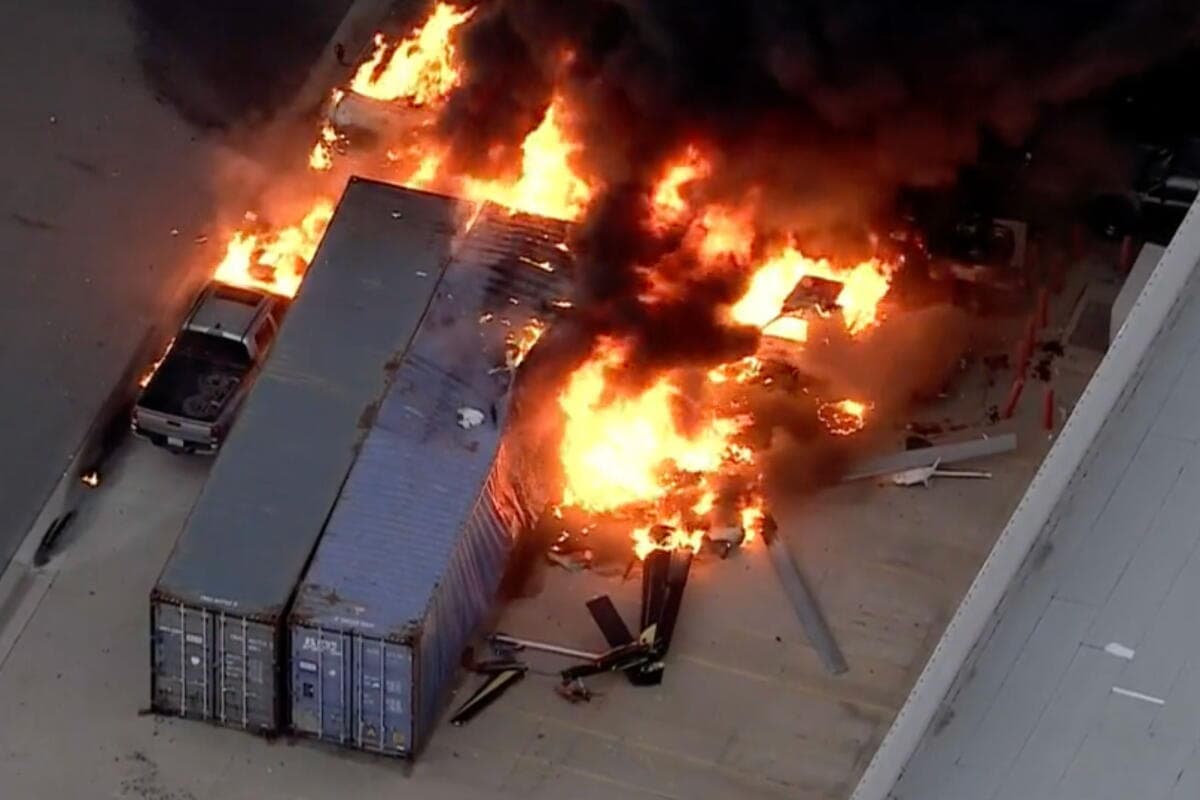
On Tuesday afternoon a magnitude 6.8 earthquake struck Kyushu. Part of the mall's second floor gave way. Staff got shoppers out. About an hour later, an explosion tore through the building, blowing out walls and stripping it back to its steel frame.
NHK reported that 20 to 30 employees were initially unaccounted for. Witnesses said they smelled gas. The cause has not been formally established.
What the earthquake did, and what it didn't
At least 28 people are dead — a number that has climbed repeatedly since Tuesday and will likely change again.
Here is the part worth understanding. The shaking did not level Kumamoto City. Japan's building codes, retrofitting programmes and drills are the most rigorous on earth, and by the ordinary measure of a shallow, near-M7 quake beneath a city of 700,000, the direct structural toll was limited.
What killed people was what the earthquake set in motion:
- The gas explosion at the mall, an hour after the ground stopped moving
- A chimney collapse at a Nippon Paper Industries factory in Yatsushiro
- Fires in Kumamoto City
- Structures weakened by the main shock and finished by aftershocks
This is the pattern in modern Japanese earthquakes, and it is the reason the country's disaster planning has shifted toward secondary hazards — gas, fire, industrial infrastructure — rather than collapse alone. A building can survive the shaking and still kill the people inside it an hour later.
The physical damage
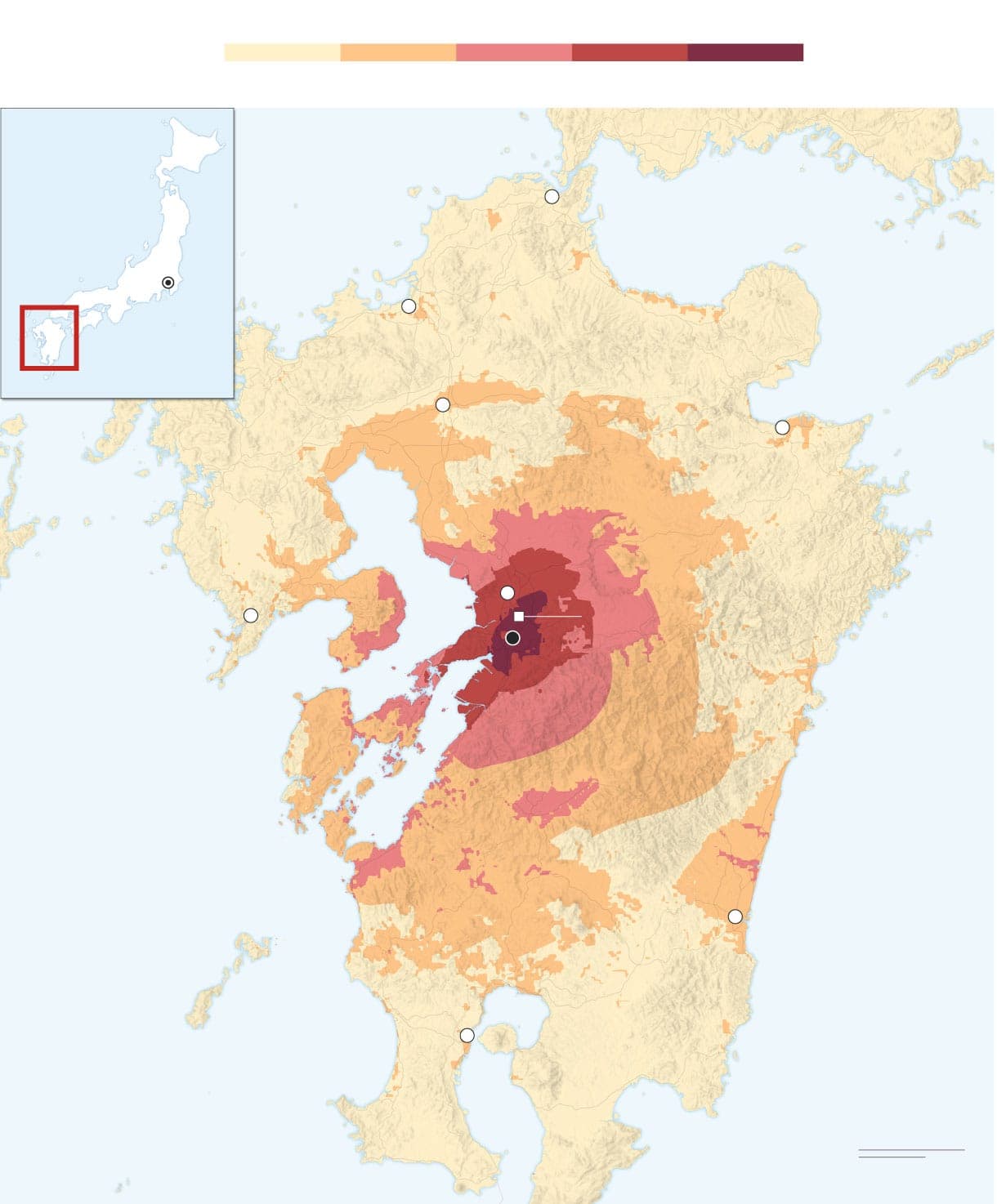
The quake struck at 4:30 p.m. local time with an epicentre near the coastal city of Uto, about 48km southwest of Kumamoto City, at a depth of roughly 10km. It was felt across the water in South Korea.
- Sections of the Kyushu Expressway split apart
- Part of the wall surrounding Kumamoto Castle collapsed — the same landmark badly damaged in 2016
- Thousands of homes lost power; tens of thousands were without electricity or running water into Wednesday
- A tsunami advisory was issued and later lifted
- Officials reported no abnormalities at the two-reactor Sendai Nuclear Power Plant in neighbouring Kagoshima prefecture
Roughly 300,000 people were instructed to go to evacuation centres.
Heat is now part of the emergency
It is late July in southern Japan. Rescue crews are cutting into concrete in summer heat and humidity, and shelters have needed additional power supplied specifically to run air conditioning.
That is not a footnote. Heat sets the clock on how long a trapped person survives, how long crews can work a shift, and how dangerous a crowded gymnasium becomes for elderly evacuees. Japan's Self-Defence Forces have joined the search, alongside firefighters who travelled from Taiwan.
The Japan Meteorological Agency has logged more than 60 aftershocks, including a magnitude 4.1 just after midnight Wednesday. Each one stops the digging.
On the magnitude confusion
You will see both 7.1 and 6.8.
The 7.1 was the Japan Meteorological Agency's preliminary figure, issued within minutes. The USGS later revised its own estimate to 6.8. Early magnitudes are computed from limited data and get refined as more seismograph readings arrive; a downward revision of this size is routine and does not mean anyone got it wrong.
It also makes little difference to the people in Kumamoto. Intensity at the surface — what the shakemap above measures — is what damages buildings, and near a shallow epicentre that was at the top of Japan's seismic intensity scale regardless of which number the catalogues settle on.
Why Kyushu
Japan sits on the Pacific Ring of Fire, where the Pacific, Philippine Sea, Eurasian and North American plates grind against one another. The country records thousands of earthquakes a year and minor tremors roughly every five minutes.
Kumamoto specifically sits on an active fault system that produced the 2016 sequence — two large quakes 28 hours apart that killed dozens and damaged the castle. That is the event this mall was rebuilt after.
This is a developing story. The death toll, casualty figures and the number of people unaccounted for are being revised by Japanese authorities.