A heat dome has expanded across much of the central United States, pushing temperatures above 100 degrees from Dallas to North Dakota and placing roughly 70 million people under heat advisories.
Extreme heat warnings are also active well outside that corridor — in Southern California's Coachella Valley, the San Diego County deserts and the San Gorgonio Pass near Banning — while heat indices of 100 to 106 are forecast across Delaware, New Jersey, southeastern Pennsylvania and northeastern Maryland. Scattered severe storms are possible along the edges of the heat.
The number that matters isn't the afternoon high
Forecasters covering this event keep returning to overnight lows, and that emphasis is not filler.
The human body manages heat stress by recovering during cooler hours. When nighttime temperatures stay high for several consecutive days, that recovery window closes, and the strain accumulates rather than resetting each morning. This is why a five-day stretch of 99-degree days with warm nights is more dangerous than a single 105-degree afternoon followed by a cool evening.
It is also why heat waves kill people who felt fine on day one. The current forecast has overnight lows failing to drop enough for meaningful recovery, which is the specific feature that makes this event worth taking seriously rather than simply enduring.
What the alert levels actually mean
The National Weather Service updated this terminology recently, replacing "excessive heat" with "extreme heat" to make the language plainer. Three levels are in use:
Heat Advisory — hot enough to pose a health risk, particularly to vulnerable people. The lowest tier, and the one covering most of the affected area right now.
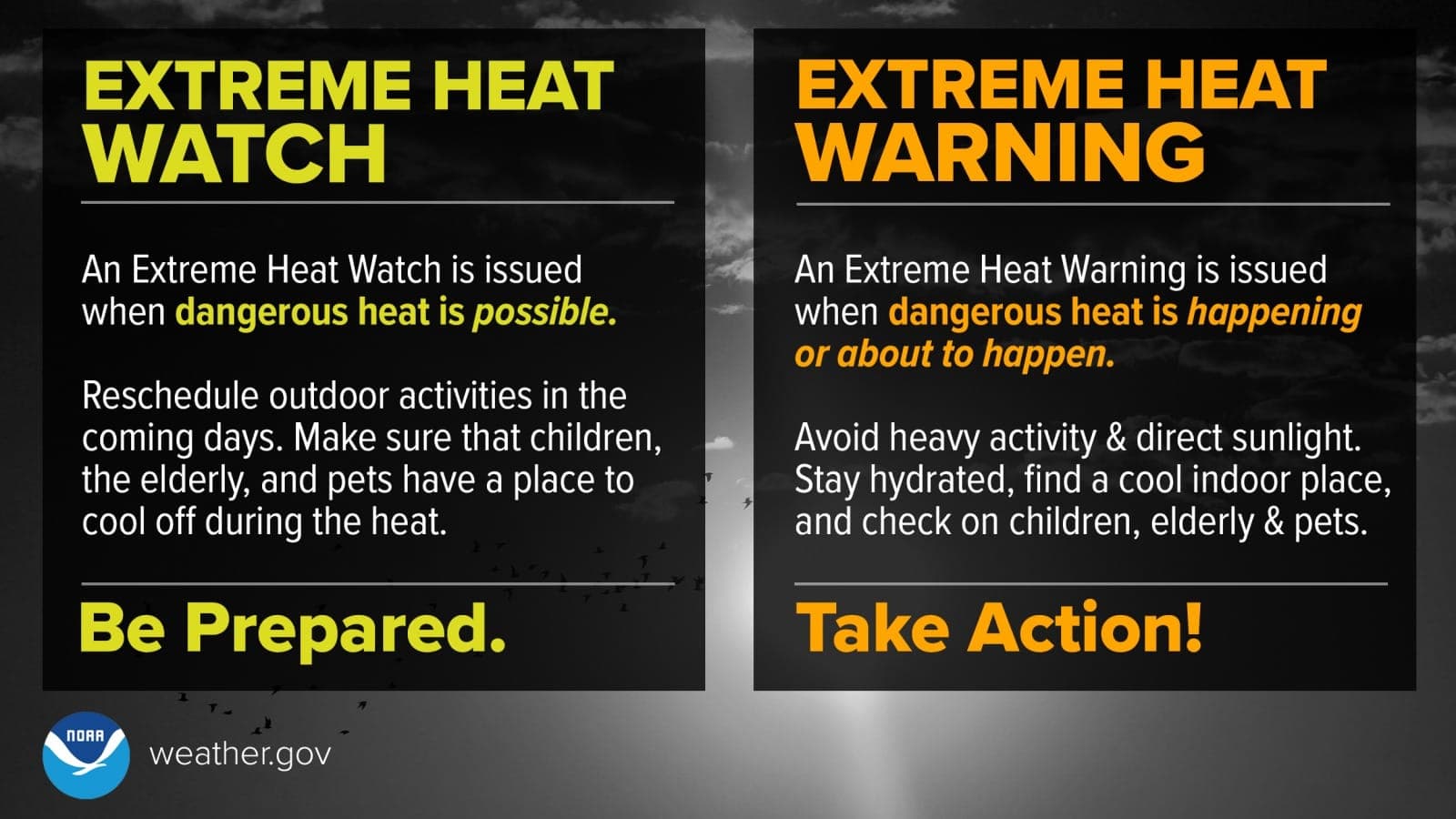
Extreme Heat Watch — conditions are favorable for a dangerous heat event in the coming days, but timing or location remains uncertain. The instruction is to prepare: check on the people you would worry about, confirm your cooling works, plan around the hottest hours.
Extreme Heat Warning — dangerous heat is occurring, imminent, or highly likely. The instruction is to act.
The distinction between watch and warning is the same one used for tornadoes and severe storms: a watch is about possibility, a warning is about certainty.
Recognizing the difference between exhaustion and stroke
Heat exhaustion generally presents as heavy sweating, skin that is cold, pale or clammy, a fast but weak pulse, nausea, muscle cramps, tiredness, dizziness or headache. Move to a cool place, loosen clothing, sip water, apply cool cloths. If symptoms worsen or last longer than an hour, seek medical help.
Heat stroke is a medical emergency. The signs are a body temperature around 103 degrees or higher, skin that is hot and may be dry or damp, a fast strong pulse, confusion, slurred speech, or loss of consciousness. Call 911. Move the person somewhere cool and work to lower their temperature while help arrives. Do not give fluids to someone who is not fully conscious.
The confusion between the two matters because the sweating stops. A person who stops sweating in extreme heat is not improving.
Who is most at risk
Older adults, infants and young children, pregnant people, people with heart or respiratory conditions, people on medications that affect temperature regulation or hydration, outdoor workers, and anyone without reliable air conditioning.
The last of those does most of the work. The majority of heat deaths in the United States happen indoors, in homes without functioning cooling. If you know someone in that situation — particularly someone older who lives alone — a phone call during a stretch like this is the single most useful thing on this page.
Many cities open cooling centers during extreme heat events; local emergency management or 211 can point you to the nearest one.
Practical notes for the next few days
Shift outdoor activity to early morning. Drink water before you feel thirsty. Never leave children or pets in a parked car, where interior temperatures climb dangerously within minutes even with windows cracked.
Conditions and alerts change quickly. The authoritative source for your specific location is weather.gov, which lists active watches, warnings and advisories by county.