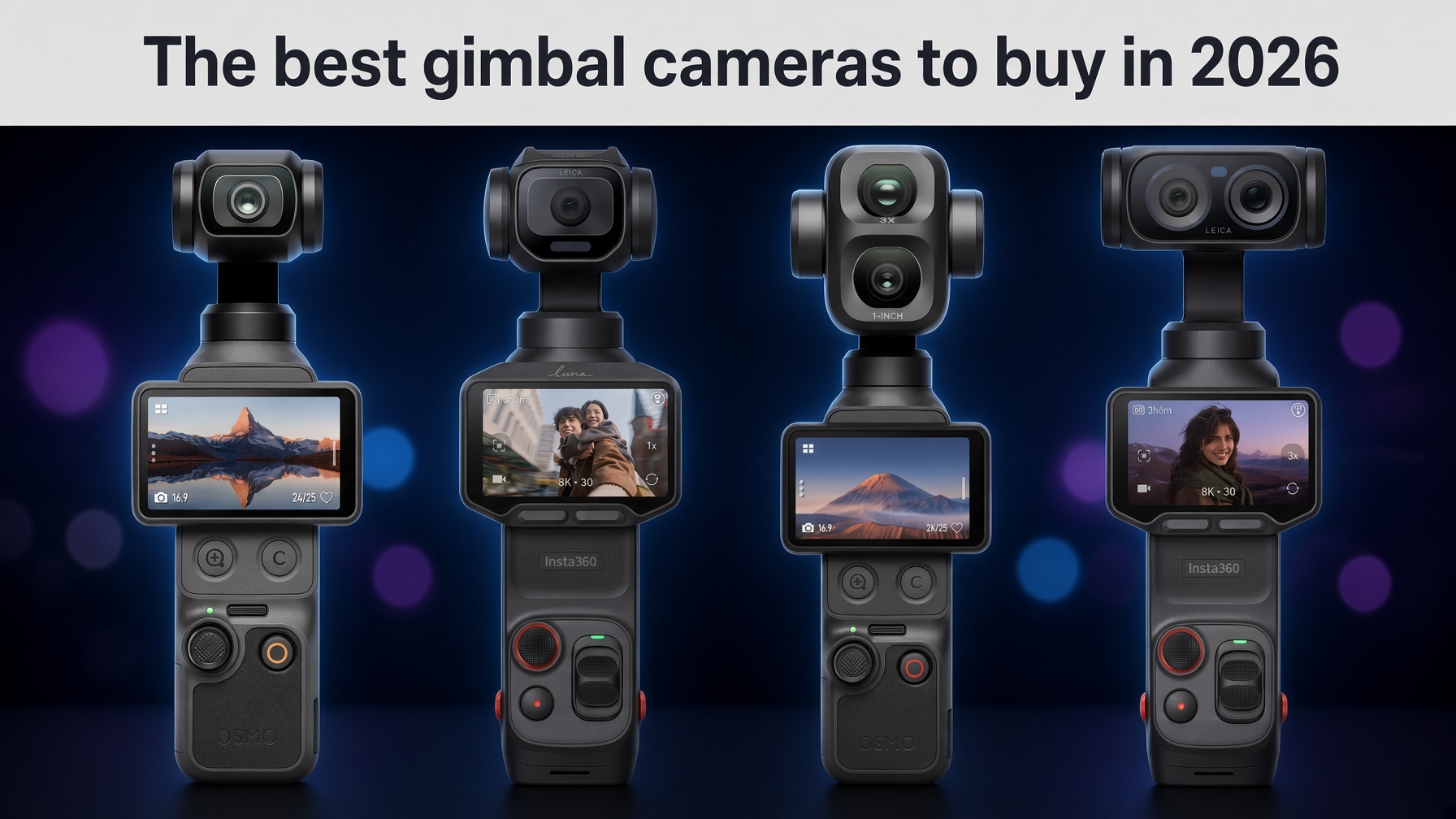
For years, if you wanted a tiny camera on a motorized gimbal, there was one answer: DJI's Osmo Pocket. This year Insta360 finally built a real rival, the Luna line.
Both companies now sell two versions:
- Single lens: DJI Osmo Pocket 4 vs Insta360 Luna Pro
- Dual lens (a main camera plus a 3x telephoto): DJI Osmo Pocket 4P vs Insta360 Luna Ultra
Here is how they compare, and which to buy.
First, the thing that decides it for American buyers
DJI does not sell the Pocket 4 or Pocket 4P in the United States.
DJI is on the FCC's Covered List, and the Pocket 4 series never received the wireless authorization it needs to be sold here, as we reported when it launched. You will find them on Amazon and eBay, but from third-party resellers. That means no DJI US warranty, no official repairs, and uncertainty about future support. Importing one for personal use is a legal gray area.
Insta360 sells both Luna models officially in the US. If you live here and want a warranty, that may settle it before you look at a single spec. DJI's older Pocket 3 is still officially sold in the US if you want to stay with DJI.
If you live elsewhere, read on: it is a genuinely close fight.
Single lens: Osmo Pocket 4 vs Luna Pro
| DJI Osmo Pocket 4 | Insta360 Luna Pro | |
|---|---|---|
| Sensor | 1-inch | 1-inch |
| Lens | 20mm f/2.0 | 20mm f/1.8 (Leica) |
| Max video | 4K, up to 240fps | 8K 30fps; 4K 120fps; 1080p 240fps |
| Vertical video | — | 4K 30fps |
| Internal storage | 107GB | 47GB |
| Screen | 2-inch, built in | 2-inch OLED, detachable as a remote with its own mic |
| Weight | 190g | about 215g |
| Price | About $560 at third-party US sellers | $599.99 |
| Sold officially in US | No | Yes |
Where the Pocket 4 wins. Reviewers treat it as the benchmark single-lens pocket camera, with excellent tracking and color. It has more than twice the internal storage, it is lighter, it shoots 4K at up to 240fps for slow motion, and it is usually cheaper.
Where the Luna Pro wins. It shoots 8K, which gives you room to crop and reframe. Its screen detaches and becomes a wireless remote with a built-in microphone and up to 20 meters of range, so you can set the camera down and frame yourself from a distance. It also records sharper 4K vertical video, which matters if you post mostly to TikTok, Reels or Shorts.
The catch with the Luna Pro. At $599.99 it costs only $170 less than the dual-lens Luna Ultra. TechRadar's review called that "a pricing problem" and said most buyers would be better off stretching to the Ultra. Its digital zoom also softens noticeably past 2x, and reviewers found its photos soft.
Verdict:
- Outside the US: the Pocket 4. Cheaper, lighter, more storage, and the more refined camera.
- In the US: the Luna Pro is the only official choice, but look hard at the Luna Ultra first. Buy the Pro if you shoot mostly vertical video or the extra $170 matters.
Dual lens: Osmo Pocket 4P vs Luna Ultra
| DJI Osmo Pocket 4P | Insta360 Luna Ultra | |
|---|---|---|
| Main camera | 1-inch, 20mm f/2.0 | 1-inch, 20mm f/1.8 |
| Telephoto | 1/1.28-inch, 60mm f/1.8 | 1/1.3-inch, 60mm f/2.0 (3x) |
| Max video | 4K 240fps (wide), 4K 200fps (tele) | 8K 30fps with Dolby Vision; 4K 120fps |
| Log / dynamic range | 10-bit D-Log 2, rated 17 stops (main lens only) | 10-bit I-Log on both lenses, rated 14 stops |
| Internal storage | 103GB | 47GB |
| Screen | 2-inch, 1,000 nits | 2-inch OLED, detachable as a remote |
| Remote | Separate accessory | Built in |
| Battery in testing | About 210 minutes | About 120 minutes (less in 8K) |
| Charging | 80% in about 18 minutes | Not specified |
| Weight | 230g | 233g |
| Price | About $620 to $710 depending on bundle | $769.99 |
| Sold officially in US | No | Yes |
Battery figures are from Digital Camera World's testing; both companies rate theirs at up to four hours under ideal conditions.
Where the Pocket 4P wins. Battery life, by a wide margin in real use. Twice the storage. Faster charging. The widest rated dynamic range of any of these cameras on its main lens, which helps with bright skies and dark interiors. It is cheaper, and it works with DJI's existing Pocket accessories.
Where the Luna Ultra wins. 8K with Dolby Vision. The detachable remote screen is built in, where DJI makes you buy one. Log recording works the same on both lenses; on the 4P, the best log mode is only on the main camera, which makes matching footage between lenses harder. It also includes fold-out tripod legs.
Verdict: Digital Camera World called it "a close call." The Luna Ultra is the more capable and flexible camera. The Pocket 4P is the more practical one: it lasts longer, holds more and costs less.
- Outside the US: the Pocket 4P for most people, unless you want 8K or a built-in remote.
- In the US: the Luna Ultra. It is the best camera of the four you can buy with a warranty.
The short version
- Want the best camera you can officially buy in the US? Luna Ultra, $769.99.
- Want to spend less in the US? Luna Pro, $599.99, or DJI's older Pocket 3.
- Outside the US, best value? Osmo Pocket 4.
- Outside the US, best all-rounder? Osmo Pocket 4P.
Published Saturday, October 17, 2026. Specifications, test results and prices come from Digital Camera World, TechRadar, DroneXL, RedShark News and the manufacturers; third-party prices for DJI cameras in the US change often. The image above is an AI-generated illustration, not photography of the actual products.