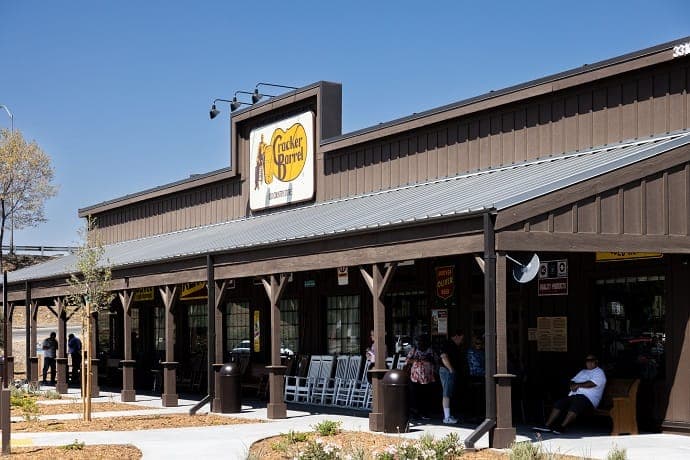
Cracker Barrel is getting out of the fast-casual biscuit business. The company has completed the sale of its Maple Street Biscuit Company brand — including the trademark and the assets tied to 35 of its restaurants — to Biscuit Belly, LLC, and is closing the remaining 16 Maple Street locations outright. In one move, a chain Cracker Barrel spent years building into its portfolio is being both sold off and shut down.
For customers of those final 16 stores, the outcome is blunt: the doors are closing. For the other 35, the sign out front is about to change.
The terms of the exit
The deal hands Biscuit Belly the Maple Street name and the operations of 35 restaurants. The 16 locations left out of the sale will be closed as part of the same divestiture, marking a complete withdrawal from the concept rather than a partial trim.
Cracker Barrel expects the exit to carry a real accounting cost. It anticipates non-cash charges of roughly $37 million to $39 million in the fourth quarter of its 2026 fiscal year, plus additional cash charges of about $6 million to $8 million associated with leaving the business. Those are the kinds of write-downs a company takes when it concludes an acquisition hasn't panned out and decides to cut its losses.
Raising the outlook while shedding the brand
Tellingly, Cracker Barrel paired the retreat with a more optimistic view of its own numbers, raising its profit outlook alongside the announcement. That combination — divest a struggling side venture, lift guidance on the core — is the clearest signal of the strategy at work. The company is narrowing its focus back to the flagship Cracker Barrel Old Country Store business and treating Maple Street as a distraction it is better off without, charges and all.
Who's buying, and what happens next
The buyer, Biscuit Belly, is a Louisville, Kentucky-based biscuit-sandwich concept, and it has clear plans for its new acquisition. The company intends to rebrand the acquired Maple Street outlets under its own Biscuit Belly banner over an 18-to-24-month window, folding them into its existing footprint rather than running them as a separate chain. With the deal, Biscuit Belly says it expects to grow to more than 60 locations by the end of 2028 — turning Cracker Barrel's exit into its own expansion.
That is the quiet logic of the transaction: a struggling brand inside a larger company can be a strategic burden for the seller and a growth engine for a smaller, focused buyer that lives and breathes the same product.
A bet that didn't stick
Maple Street was originally an attempt by Cracker Barrel to plant a flag in the fast-casual, breakfast-and-biscuit space — a faster, more urban complement to its sprawling roadside restaurants. Years on, the company has decided that experiment isn't worth continuing, and it is redirecting attention and capital back to the brand that built it.
For Cracker Barrel, the message to investors is that it would rather take a one-time hit and simplify than keep subsidizing a concept that never reached the scale it hoped for. For the communities losing one of those 16 shuttered locations, the accounting is simpler still: a neighborhood breakfast spot is closing its doors, while dozens of others prepare to reopen under a new name.