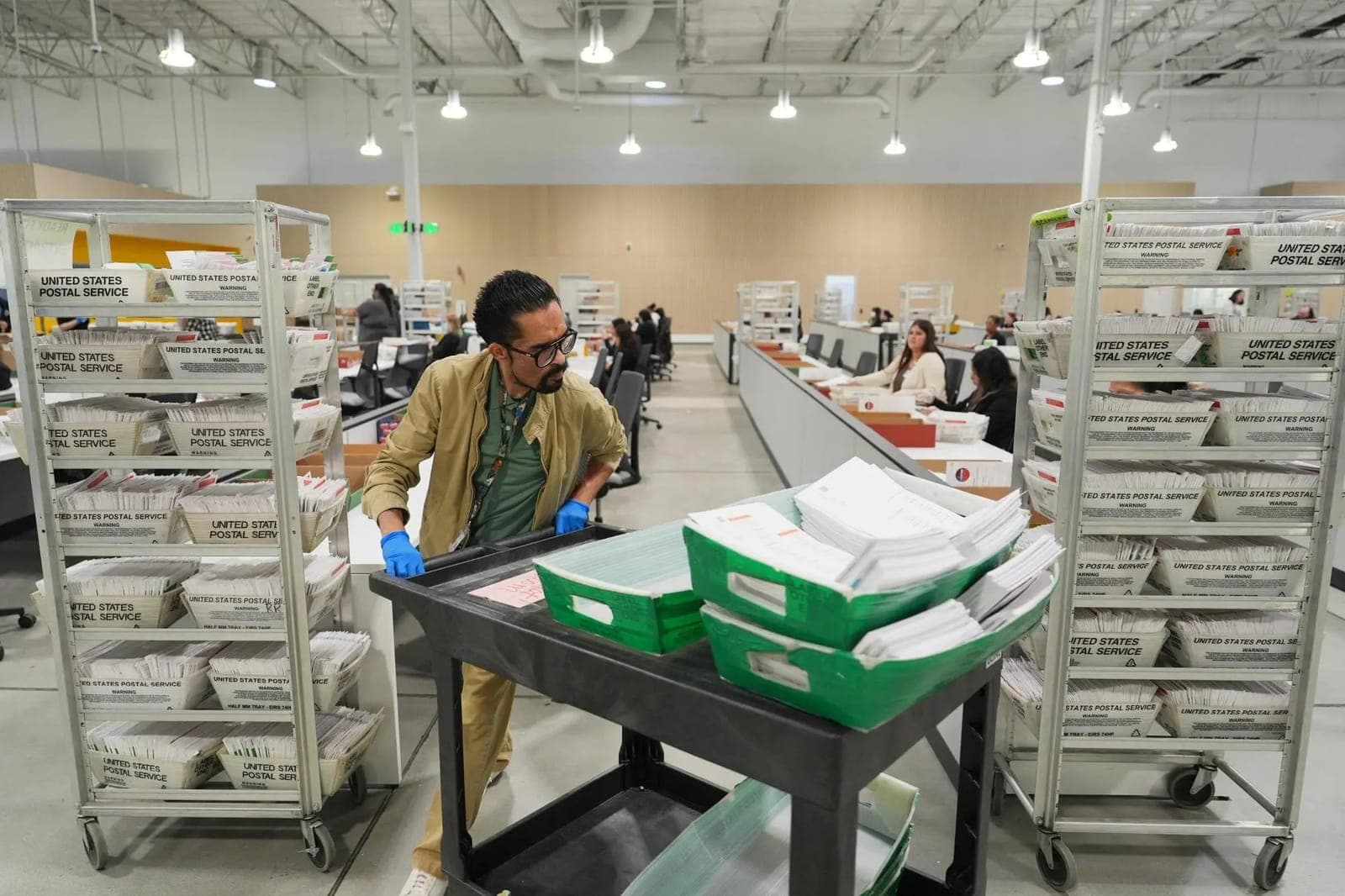
Nearly 150,000 California voters had their mail ballots rejected in the state's June primary, a notable jump from recent elections even as California has built one of the most accommodating mail-voting systems in the country. According to data compiled by the secretary of state's office, 148,241 mail ballots were set aside — a rejection rate of 1.73% of all mail ballots cast. The largest single reason was not a signature problem or any hint of fraud, but simple lateness.
California mails a ballot to every registered voter and, unusually, counts ballots that arrive up to seven days after Election Day, so long as the envelope is postmarked by Election Day itself. Even with that week-long grace period, late-arriving ballots drove the increase — and the details of why point less to voters and more to the mail.
What the numbers show
The 148,241 rejected ballots mark a clear rise from recent primaries: 108,982 were rejected in 2024 (a 1.56% rate), and 105,818 in 2022. Lateness alone accounted for 93,479 of the June rejections, by far the biggest category, up from roughly 76,000 in 2024 and 70,000 in 2022 — even though turnout in those earlier primaries was smaller.
The other reasons trailed well behind. Nearly 44,000 ballots were rejected because the voter's signature didn't match the one on file, and more than 8,300 because the return envelope was left unsigned. In 743 cases the voter had already cast a ballot, and a smaller number were tossed because the ballot was missing from the envelope or multiple ballots were stuffed into one. Notably, the state data did not break the rejections down by party registration. The highest rejection rate, 3.52%, was in Tulare County in the Central Valley, followed by Alpine and Merced counties at 3.36%.
Why so many ballots came in late
Voting experts say the surge in lateness rejections is the part that "does really demand the question why this is happening," in the words of Mindy Romero of the nonpartisan Center for Inclusive Democracy. A leading suspect is a change in how the U.S. Postal Service applies postmarks. Under updated agency policy, a postmark may reflect not the day a ballot was first dropped in the mail but the day it was handled at a processing center — and as the Postal Service consolidates those centers, they are increasingly far from some communities, which can push postmark dates past Election Day.
Kim Alexander, president of the nonpartisan California Voter Foundation, put it bluntly: "Ballots rejected due to lateness are caused primarily to being postmarked too late to count, not because they arrived too late to count." She noted the problem may also be tied to a late surge of ballots in June, as many voters waited until the final days to decide a wide-open and chaotic governor's race. California officials had, in fact, urged voters earlier this year to mail ballots early, warning that postal changes could slow delivery.
The concern is bipartisan in its mechanics if not its politics. In January, a group of mostly Democratic senators wrote to the Postal Service warning that processing changes could affect postmark dates in a year that will decide control of Congress. On Thursday, Wisconsin Senator Tammy Baldwin and Governor Tony Evers pressed the agency over ballots that arrived late in their state in April.
The political backdrop — and what the data does not show
California's slow, weeks-long vote counts have long made it a target of criticism, and this year was no exception. After the June primary, President Donald Trump renewed his complaints about the state's elections, and the Justice Department opened an investigation into Los Angeles County's election operations. Separately, a federal judge in June halted a Trump executive order that sought to build a federal voter list and restrict who could receive a mail ballot.
Amid that scrutiny, it is worth being precise about what the rejection figures do and do not indicate. There is no evidence that the rejected ballots reflect fraud; mail voting has grown popular with Democrats and Republicans alike, and a 2025 Brookings Institution study found mail-ballot fraud to be vanishingly rare — on the order of four cases per 10 million ballots. What the data instead describes is a procedural failure that fell on legitimate voters: tens of thousands of Californians who cast their ballots but had them disqualified over timing they may not have controlled. That distinction — between votes lost to logistics and votes lost to wrongdoing — is likely to shape how lawmakers, election officials and the Postal Service respond before November.