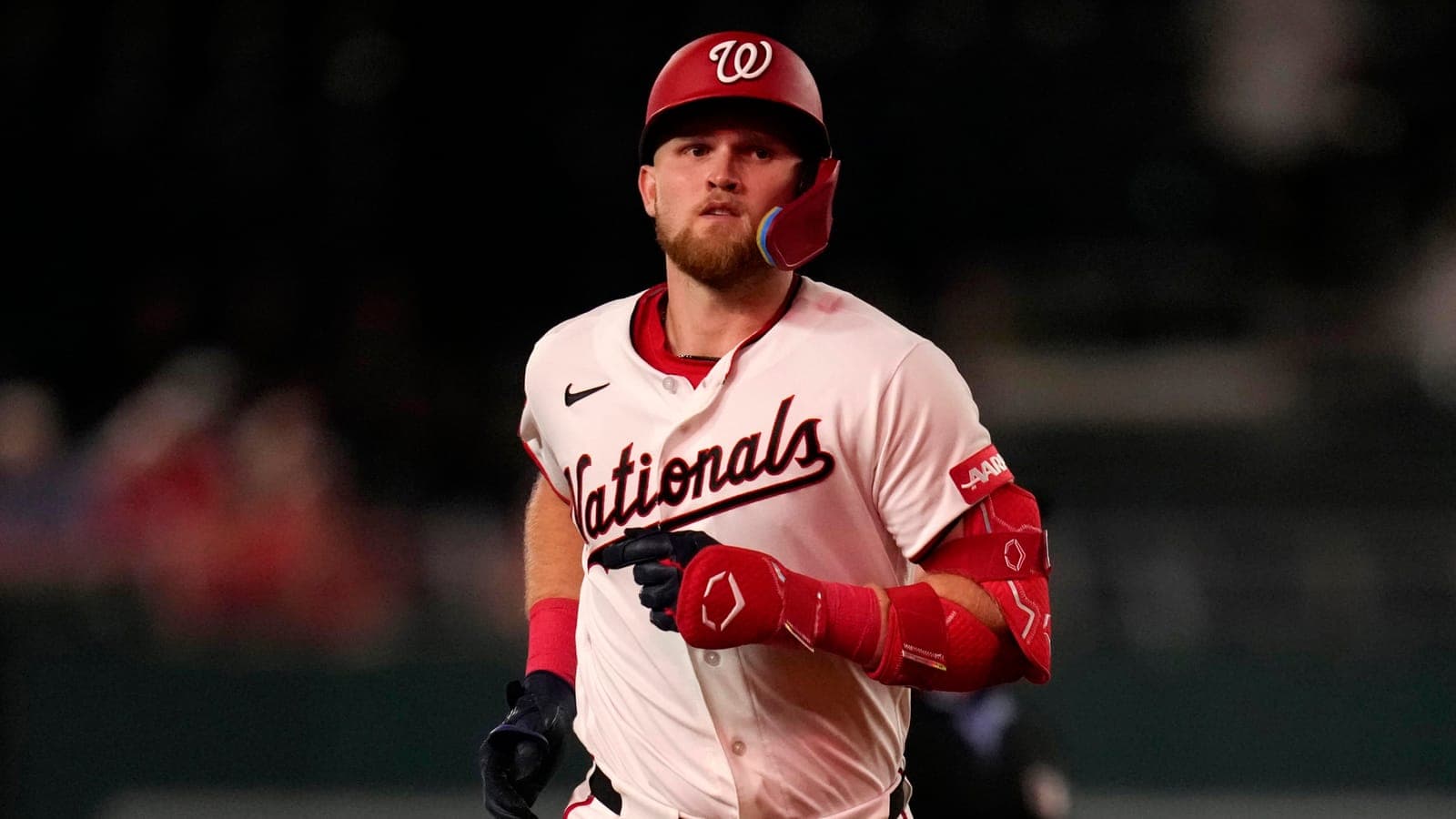
The Boston Red Sox and Washington Nationals agreed on Saturday night to a one-for-one trade: left-handed starter Connelly Early to Washington, infielder Curtis Mead to Boston.
The deal was reported by sources and had not been formally announced at the time of writing. It comes just over a week before the August 3 deadline.
Neither team is renting
Most deadline trades are a contender buying a few months of a veteran from a team that has given up. This is not that.
Mead has four years of team control remaining after this season. Early is controlled through 2031. Both clubs are in the playoff race, and both are acquiring years rather than months — which makes this closer to an offseason trade that happened to occur in July.
What Boston is buying
Mead is in the middle of a genuine breakout: .256/.351/.505 with 17 home runs and 48 RBIs in 86 games.
The number that makes it interesting is the one before it. Mead hit five home runs in his first 152 major-league games. He has hit 17 in 86 this year.
That is not a gradual improvement; it is a step change, and it is the entire question in this trade. A power spike that abrupt is either a real adjustment — swing change, approach, health — or a hot stretch that regresses. Boston is paying four years of control on the belief that it is the former, and the .351 on-base percentage alongside it is the detail that argues they may be right. Power surges built purely on chasing tend not to come with improved plate discipline.
What Washington is buying
Early is 24, put up a 3.44 ERA with 9.1 strikeouts per nine across 17 starts, and is controlled through the end of the decade.
He is also, right now, hurt. He went on the injured list on July 1 with posterior elbow inflammation and has not pitched since. Washington is acquiring a starter it cannot use immediately, which is only sensible if the acquisition is about 2027 through 2031 rather than about this August.
There is one more wrinkle worth noting. Nationals president of baseball operations Paul Toboni drafted Early when Toboni was in the Red Sox front office. Executives reacquiring players they scouted and selected themselves is a recurring pattern in baseball, and it usually means the buyer has conviction that predates the public track record.
How to read it
Boston converts a currently-injured starting pitcher into a bat that is producing now and is under control through the end of the decade. Washington converts a hitter having his best season into a young arm they know intimately and will not have to pay market price for until 2031.
Both explanations are coherent, which is what a good one-for-one trade looks like. Whether it stays that way depends almost entirely on two questions: whether Mead's power is real, and whether Early's elbow is.