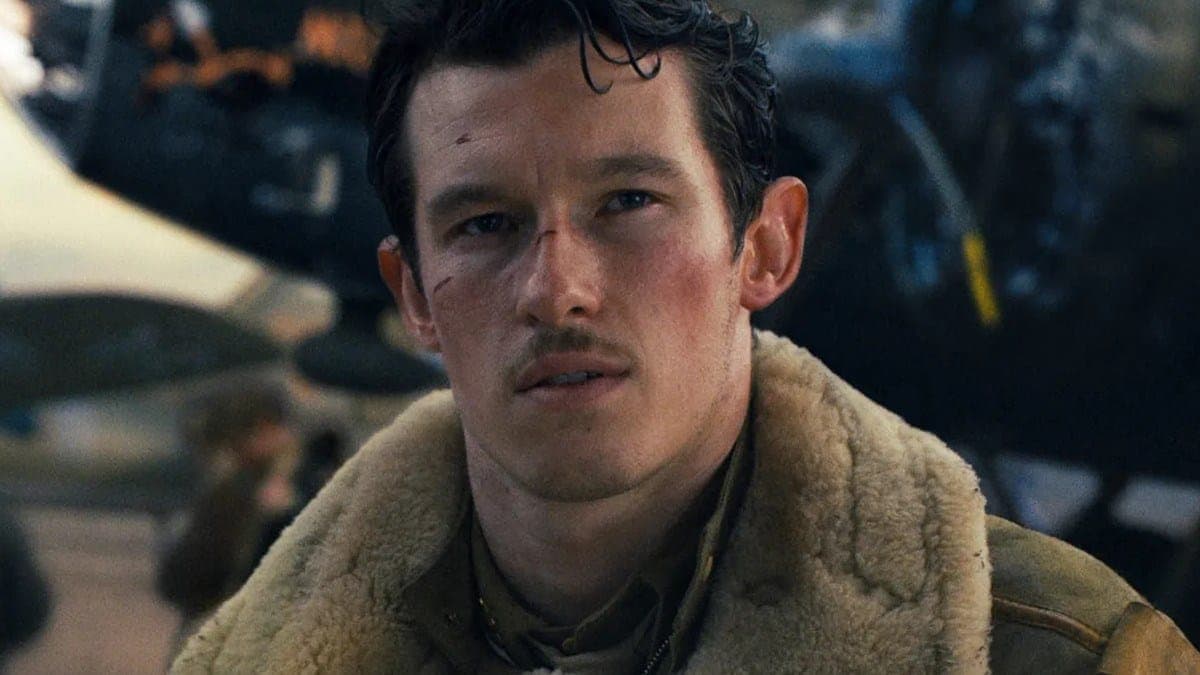
Apple TV released the first teaser for Neuromancer at San Diego Comic-Con, and gave it a date: January 22, 2027, with two episodes at launch and the remaining eight weekly through March 19.
Callum Turner stars as Case. He was not in San Diego, but sent a video message to introduce the footage.
The cast
Briana Middleton plays Molly — the mirrored-lens street samurai who is, for a great many readers, the reason the book endures.
Around them: Mark Strong, Peter Sarsgaard, Clémence Poésy, Dane DeHaan, Max Irons and André De Shields. That is a deep bench for a genre series, and the sort of ensemble that suggests Apple is treating this as a prestige swing rather than a franchise seed.
Graham Roland (Dark Winds) and J.D. Dillard (Devotion) co-created the series, with Roland as showrunner and Dillard directing the first three episodes.
Forty years of failing to film it
Neuromancer was published in 1984. It won the Hugo, the Nebula and the Philip K. Dick award — the first novel to take all three — and it gave the language the word cyberspace.
It has also defeated everyone who tried to adapt it. The rights have moved through studios and directors for four decades, with film versions repeatedly announced and repeatedly collapsing, to the point that "unfilmable" became the standard adjective attached to it.
The reasons are structural. The novel's appeal is heavily textural — dense, slangy prose describing a world in fragments, with a plot that is deliberately hard to hold. Much of what makes it thrilling on the page is the sensation of not quite following it. That is difficult to film and nearly impossible to trailer.
A ten-episode series is a more plausible container than a two-hour film ever was, which is probably the single best argument for this attempt over the previous ones.
The problem of arriving late
The other difficulty is that Neuromancer won.
Its ideas — jacked-in consciousness, corporate sovereignty, artificial intelligence pursuing its own ends, a global network experienced as a place — stopped being speculative and became the ambient furniture of the culture. The Matrix alone borrowed enough to make Gibson's imagery feel familiar to people who have never read him.
So an adaptation now faces the fate of every hugely influential work filmed decades late: the audience has already absorbed the imitations. The teaser's job was to suggest the show knows that and has a reason to exist anyway, and the early response indicates it made a reasonable case.
January will settle it.