Netflix released Elite Force on July 22 with no particular fanfare. Within hours it was the most-watched show on the service worldwide, and it has since charted in the top 10 in 104 countries, including the United States, the United Kingdom, Canada, Mexico and New Zealand.
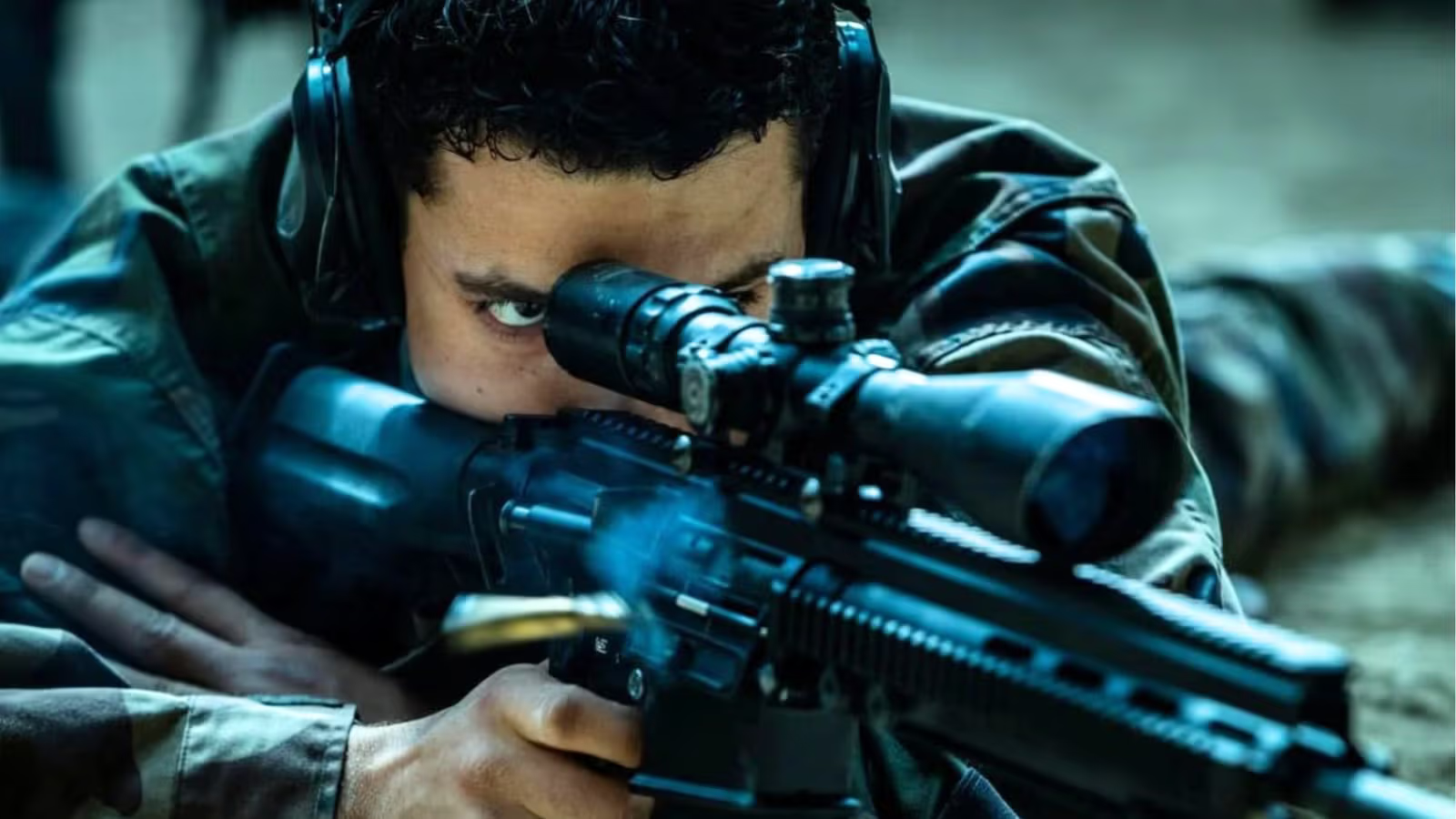
The six-episode French series — titled simply GIGN in France — follows David, a senior officer in the Groupe d'intervention de la Gendarmerie nationale, France's elite counterterrorism and hostage-rescue unit, who is pulled back into the field after an attack targets the unit itself. Tomer Sisley plays David; Tristan Zanchi plays Max, the rookie whose relationship with him drives most of the season.
It was created by Julien Leclercq, who also directed, with Sylvain Caron. Leclercq made Ganglands, the crime series that became one of Netflix's earlier French successes, and the new show trades on the same instinct: tight episode counts, real locations and very little downtime.
What the star said about season 2
Netflix has not renewed the show. But in an interview with France Info, Sisley indicated the conversation is live.
"We're working on it, and I think it will obviously depend on the success of the first season," he said. "But if the audience responds well, yes, I think we all want it."
He added a detail that matters more than it might sound: "In fact, the GIGN is ready to open the doors of the Satory barracks to us again if we film a second season."
The Satory barracks, part of a military base in Versailles, are the real headquarters of the GIGN. Access to them is not something a production can assume, and the unit's willingness to grant it a second time is a signal about how the first collaboration went.
Why the access matters
The authenticity is the show's actual differentiator, and it is the reason it stands out in a Netflix action catalog that is not short on tactical thrillers. The production worked directly with the real unit, and the result is a series where the procedural texture — how a team moves through a building, how an operation is planned and called off — carries scenes that would otherwise be routine.
That is also the hardest thing for a competitor to copy. Any streamer can commission an action series; very few can get a national counterterrorism unit to hand over its headquarters.
Where it stands
Season one ends with several threads deliberately unresolved, which is the usual posture for a show hoping to continue. We are not detailing them here — the series has been out for two days and much of the coverage has already given away its central reveal.
For now, the numbers are doing the arguing. A six-episode French-language series reaching No. 1 globally in a matter of hours is the kind of result that tends to answer the renewal question on its own, and Sisley's comments suggest the creative team is not waiting to find out.