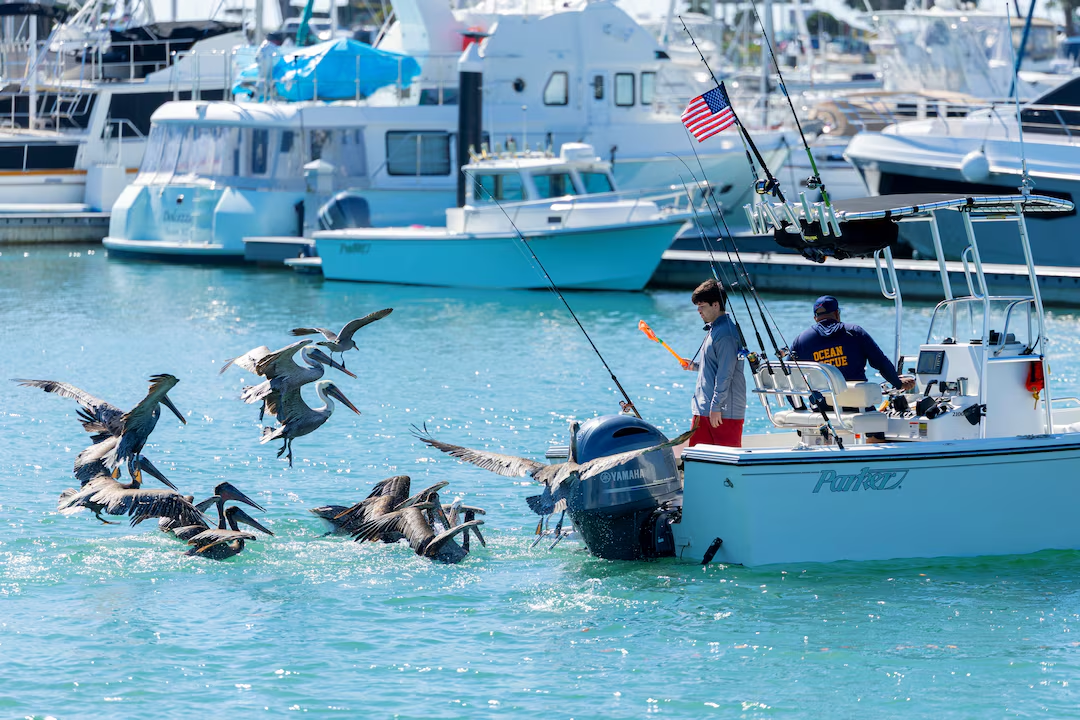
At Dana Wharf Sportfishing in Dana Point, anglers have landed 5,000 yellowfin tuna this year. Last year, co-owner Donna Kalez told Reuters, they caught two.
That one number says what is happening off Southern California. An unusually strong El Niño has pushed warm water up the coast, and tropical animals have followed it.
What has arrived
The first sea turtle nests on the West Coast. On September 16, a beachgoer found an endangered olive ridley sea turtle nesting at Seal Beach. Three days later, lifeguards found a second nest at Huntington Beach. NOAA says they are the first sea turtle nests ever recorded on the US West Coast. Until now, the nearest known nesting was in Baja California Sur, Mexico.
The eggs have been moved to the Aquarium of the Pacific in Long Beach to protect them from storm surf. If they are viable, they should hatch around early November.
A fish never seen in California. An angler at the Venice Fishing Pier caught a longfin bigeye, which normally lives off Mexico. "For California, this is a first," said Bill Ludt, associate curator of ichthyology at the Natural History Museum of Los Angeles County. The museum kept the specimen.
A venomous sea snake. A yellow-bellied sea snake, possibly sick, came ashore at Crystal Cove in September. A beachgoer pushed it back into the water with a palm frond. Ludt says there have only been six or seven confirmed sightings in California, and the last was during the 2015–16 El Niño.
Sharks, rays and big fish. Whale sharks, hammerheads, manta rays and flying fish have all been reported. Anglers are catching dorado, wahoo, swordfish and, near Newport, a blue marlin. One San Pedro boat came back with about 140 tuna for 15 anglers, against 15 to 20 on a good normal day. Chris Lowe, who runs the Shark Lab at Cal State Long Beach, says a white shark nursery has returned to Santa Monica Bay for the first time since 2011.
"There's kind of a buzz," said Nate Jaros of the Aquarium of the Pacific. "Fishermen are loving it for sure. I'm as interested as anybody else. It's strange times."
Who loses
The animals arriving are the ones that can swim. The ones that suffer are the ones that cannot leave.
"It's good for some sharks and probably bad for others," Lowe said. Sharks and tuna can move with the water. Animals that live in one place cannot.
The biggest short-term loser may be kelp. It needs cold water, and California's kelp forests are home to a huge range of local life. When the kelp thins, everything that lives in it is affected.
Sea lions, seals and dolphins face less food. Warm water drives away the sardines and anchovies they depend on. During the last long warm spell, from 2013 to 2016, thousands of underweight sea lion pups washed up on California beaches. Warm water can also feed toxic algal blooms.
Jorge Velez-Juarbe, curator of marine mammals at the Natural History Museum, told LAist he expects more marine mammal deaths over the next few months. Stressed animals may strand or behave unusually, "sometimes maybe more aggressively than they normally would." He does not expect long-term damage to native populations once the water cools.
It started before El Niño
The water was already warm. A coastal marine heat wave has been tracked off central and Southern California since May 2025, and NOAA says El Niño did not cause it. The region went into El Niño already hot.
That matters, because NOAA has said the bigger concern is "how long elevated temperatures persist." A single warm winter is something the coast recovers from. A heat wave that runs into an El Niño, and possibly past it, is a longer test.
This El Niño also arrived alongside a run of eastern Pacific hurricanes. The big surf has destroyed homes and stripped sand from some Southern California beaches, and California has declared a state of emergency.
What to watch
The turtle eggs, due to hatch around early November if they are viable. And whether olive ridleys come back to nest next year.
The kelp, and whether the forests thin over the winter.
Sea lion strandings on Southern California beaches.
What turns up next. "We still aren't fully through it," Ludt said. Experts say smaller reef fish, like damselfish, angelfish and pufferfish, could still arrive. Forecasters expect this El Niño to peak between November and January.
If you see something unusual, the Natural History Museum asks you to email nature@nhm.org. For a stranded or sick animal, keep your distance and call NOAA's hotline at (866) 767-6114.
Published Saturday, October 17, 2026. Reporting draws on Reuters, LAist, ABC7 Los Angeles and The Log, and on NOAA's published assessments. Catch figures are as reported by the operators.