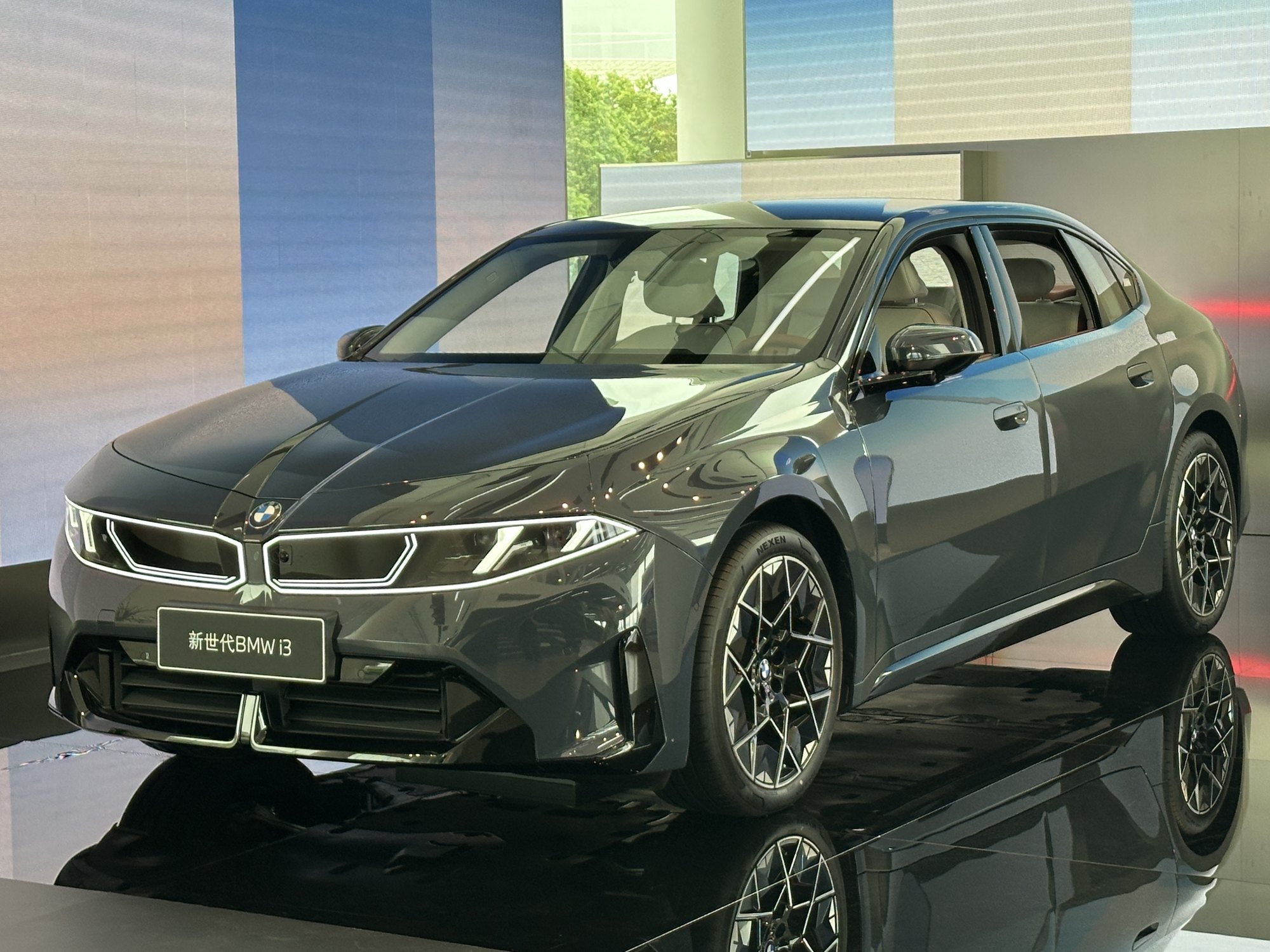
BMW says a new i3 electric sedan drove 754 miles (1,213 km) on a single charge, arriving with just 1% battery left. The car was a China-only, long-wheelbase i3 50L, and BMW ran the test itself; the i3 sold in the US and Europe uses a smaller battery and is rated well below that.
Quick facts
| Car tested | BMW i3 50L (China, long wheelbase, rear-wheel drive) |
| Distance | 1,213 km (754 miles) on one charge |
| Battery | 113.4 kWh; finished with 1% |
| Average consumption | 8.8 kWh/100 km (about 7.1 miles/kWh), per BMW |
| China CLTC rating | about 1,000 km (621 miles) |
| Verified by | BMW China; no independent certification |
| US i3 50 xDrive | $61,500 + $1,350 destination; up to 468 miles (BMW estimate) |
How was the test done?
BMW China says the car was driven on a mix of expressways, national highways, rural roads and city streets, which BMW described as "real-world driving conditions for ultimate range validation." It reached its destination with 1% charge remaining.
What BMW has not disclosed: the average speed, how long the drive took, the split between highway and city, or the temperatures. No outside organisation verified the run.
That matters. Long-distance efficiency drives are usually done gently, and several outlets, including Autoblog and BMWBlog, noted the car probably wasn't hurrying. The result beats the car's own Chinese CLTC rating of about 1,000 km by nearly 20%, and CLTC is already a more forgiving test than Europe's WLTP or the US EPA cycle.
Which BMW i3 was it?
The i3 50L is a long-wheelbase version built for China, with a body about 108 mm (4.3 inches) longer than the global car, a single rear motor and a 113.4 kWh battery, according to Carscoops. Autoblog notes the Chinese i3 uses a different battery composition from the rest of the world.
You can't buy it in the US or Europe. The i3 sold there is the dual-motor i3 50 xDrive, built in Munich, with a 108.7 kWh battery and up to 463 hp.
What is the range of the new BMW i3?
- Europe (WLTP): BMW first quoted up to 900 km, as a provisional figure; later published figures put the i3 50 xDrive at 912 km (567 miles).
- US (EPA-style): BMW estimates 446 to 468 miles for the i3 50 xDrive, according to Electrek, up from an earlier estimate of about 440 miles.
- China (CLTC): about 1,000 km (621 miles) for the long-wheelbase car.
All of these are official test-cycle figures. Real-world range, especially at 75 mph in winter, will be lower.
When does the BMW i3 go on sale, and how much is it?
- US: the i3 50 xDrive is priced at $61,500 plus a $1,350 destination fee ($62,850). Reservations opened with a $1,000 deposit. A sportier i3 60 xDrive is due in 2027.
- Germany: from €65,900, with a First Edition at €75,340. Market launch is autumn 2026, with cheaper versions expected later.
- China: the long-wheelbase i3 is built locally; BMW has also started making its sixth-generation batteries in Shenyang.
How does it compare with rivals?
| Car | Official range | US price (incl. destination) | Notable efficiency figure |
|---|---|---|---|
| BMW i3 50 xDrive (US/EU) | up to 468 mi (BMW est.); 912 km WLTP | $62,850 | n/a |
| BMW i3 50L (China only) | ~1,000 km CLTC | not sold in US | 1,213 km test, 8.8 kWh/100 km (BMW) |
| Tesla Model 3 Premium RWD | 363 mi EPA | $43,880 | n/a |
| Lucid Air Grand Touring | 512 mi EPA | n/a | 1,205 km Guinness-certified drive (July 2025) |
| Mercedes-Benz CLA (EV) | n/a | n/a | 23.2 kWh/100 mi in Edmunds testing |
Model 3 figures from Edmunds' 2026 pricing guide; Lucid and Mercedes figures as reported by The Autopian and Notebookcheck. Test methods differ, so efficiency figures are not directly comparable.
Records versus real life
BMW's run edges past the 1,205 km Lucid Air Grand Touring drive that Guinness World Records recognized in July 2025, but it was not independently certified, so it isn't an official record. It also lines up with other efficiency showcases: Mercedes' Vision EQXX concept averaged 8.7 kWh/100 km on its road trip, and Volkswagen's one-off Mission Efficiency prototype managed 7.51 kWh/100 km over 1,278 km with one charging stop.
The useful takeaway isn't the 754 miles. It's that BMW's new sixth-generation drivetrain is genuinely efficient. Owners driving at normal speeds will see far less, and as Autoblog put it, most drivers would start looking for a charger long before 1%.
What to watch
The EPA rating. BMW's US numbers are still estimates; the official label will settle what American buyers can expect.
Independent tests. Highway range tests by outlets such as Car and Driver and Edmunds will show how close the i3 gets to its estimates in normal driving.
The big battery. BMW hasn't said whether the 113.4 kWh pack will ever come to the US or Europe.
Published Sunday, October 18, 2026. The 754-mile figure is BMW's own claim and has not been independently verified. Range figures are official estimates and test-cycle results; real-world range varies with speed, temperature and driving style.